What a day in Kotor actually cost me in 2026
Tracking every euro I spent in the old town
I wanted a real number, not the vague “Kotor is cheap” line every blog repeats, so I kept every receipt for one August day inside the walls and just outside them. The short version: I spent 47 EUR, and I could have spent 30 EUR or 70 EUR on the exact same day depending on where I sat down. The gap has almost nothing to do with what’s on the plate and everything to do with how many metres you are from the Sea Gate.
08:30 — coffee on the Square of Arms
A macchiato at one of the cafés facing the main square, Trg od Oružja, cost me 1.80 EUR. That’s fair — it’s the same price you’d pay on a nice square in most of coastal Montenegro, and coffee is the one thing here that doesn’t get marked up much even with a view of the cathedral. Expect 1.20-2 EUR for coffee across Kotor and Budva; anything past 2.50 EUR is a resort hotel, not a normal café. Card worked here, but I’d already pulled cash from an ATM near the old town’s money and ATM points because I knew the day ahead would need it.
09:15 — the 1,350 steps to San Giovanni
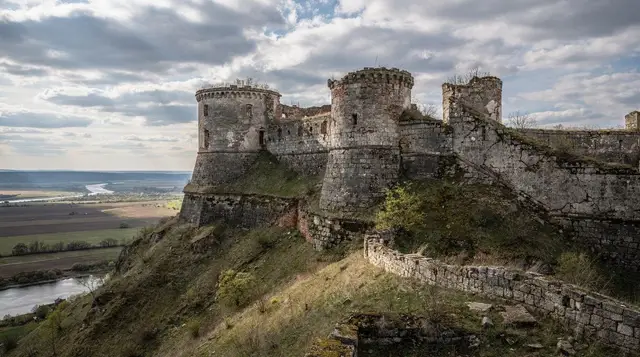
The San Giovanni fortress ticket booth wanted 8 EUR that morning. It’s worth saying clearly: this price has moved around between 8 and 15 EUR in past seasons, so treat 8 EUR as what I paid on that particular day, not a promise. Whatever it lands on when you go, budget for the fortress separately from everything else — it’s the single most variable line item in a Kotor day. The climb itself took me just over an hour with photo stops, and I’ve written up the full climb in detail elsewhere, including why I wouldn’t do it after 10am in August.
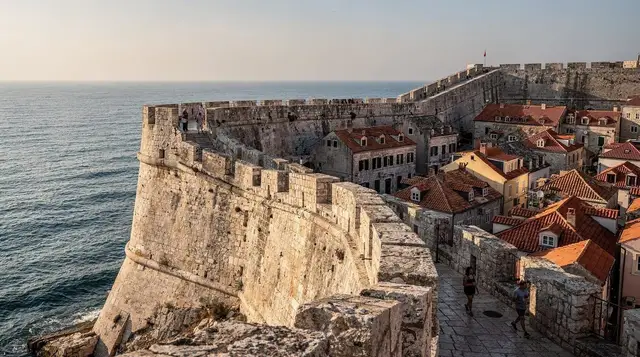
By 10:15 the cruise crowd was arriving in the old town below — cruise season in Kotor now runs to roughly 505 calls and over 700,000 passengers a year, and the difference a big ship day makes to both queues and menu prices is real. I was glad to already be on the way down.
12:30 — lunch, and where the real gap is
This is the part worth reading twice. I ordered grilled squid and a side salad at a small konoba one street back from the Sea Gate, on a lane most cruise passengers never turn into. The bill: 14 EUR, cash only — there was a handwritten sign by the till, no ambiguity. I walked back through the square an hour later and checked the menu board at one of the terrace restaurants with the best view of the cathedral: the same grilled squid dish was listed at 23 EUR, plus a card surcharge some of these terraces still quietly add.
That’s roughly a 60% premium for a table you can see the bell tower from, on food that’s very likely coming out of a similar kitchen. It’s not a scam — the rent on that square is real — but it is a choice, and most visitors make it without realising there was one.
| Where | Dish | Price | Payment |
|---|---|---|---|
| Konoba, side street | Grilled squid + salad | 12-15 EUR | Cash only, usually |
| Terrace, main square | Same dish | 20-25 EUR | Card, often with surcharge |
| Coffee, main square | Macchiato | 1.20-2 EUR | Card or cash |
| Beer, either location | Nikšićko 0.5L | 2.50-4 EUR | Card or cash |
The cash-only point matters more than it sounds. Several of the small places I ate at over three days in Kotor simply didn’t have a card machine, or had one that “wasn’t working” — a common enough excuse that it’s worth assuming cash by default. I’d rather carry 40-50 EUR in small notes for a day like this than find out mid-meal that the only card reader in the room belongs to the place I was trying to avoid.
15:00 — the boat to Perast
The last big spend of the day was a taxi-boat from the old town harbour out to Perast and back, a short hop along the bay rather than the 20-minute drive. I paid 18 EUR for the round trip, agreed before we left the dock — informal taxi-boats here don’t run meters, so the price is whatever you negotiate, and 15-20 EUR each way is the going range depending on the season and how busy the operator is. If you’d rather not haggle on a jetty, a set-price option like the Bay of Kotor speedboat tour covers the same stretch of water with a fixed fee and a stop at Our Lady of the Rocks built in.
For a day with less negotiating involved, a half-day option like the Kotor, Perast and Budva highlights tour bundles Perast with Budva at a set price, which is worth comparing against doing it yourself once you’ve priced two or three taxi-boats.
Tallying the day
- Coffee: 1.80 EUR
- San Giovanni fortress: 8 EUR
- Lunch (konoba, side street): 14 EUR
- Water and a second coffee: 3 EUR
- Boat to Perast and back: 18 EUR
- Snack in Perast: 2 EUR
Total: 46.80 EUR. Had I eaten both meals on the main square and skipped the fortress, I’d have landed closer to 30 EUR. Had I eaten on the terraces both times and booked a private boat rather than sharing a taxi-boat, it would have pushed past 70 EUR without doing anything more than the version I actually did.
None of this factors in accommodation, which is its own conversation — see the Montenegro daily budget guide for a fuller breakdown across a whole trip. If you want a slower, more organised look at how to spend one day here without doing your own price detective work, the Kotor in one day itinerary and a guided option like the Montenegro highlights day trip with guide both fold the fortress, old town and a coastal stop into one planned day at a known price.
Questions about the real cost of a day in Kotor
Is Kotor expensive compared to Dubrovnik or Split?
No — a coffee, lunch and an attraction ticket in Kotor generally come in a third to half cheaper than the same combination across the border in Dubrovnik, mostly because Montenegro’s overall price level is lower even though it also uses the euro.
Why do some restaurants in Kotor only take cash?
Card machine fees and patchy connectivity in the old town’s narrow lanes push some smaller, family-run konobas to stay cash-only rather than pass on card surcharges. It’s worth checking common tourist patterns before assuming “cash only” is a red flag — most of the time it’s just how the place has always run.
How much should I tip in Kotor?
Tipping isn’t obligatory in Montenegro. Rounding up the bill or adding 5-10% at a sit-down restaurant is normal and appreciated; see the tipping etiquette guide for specifics by service type.
Does the San Giovanni fortress ticket price change by season?
Yes — the entry fee has moved between roughly 8 and 15 EUR across recent seasons, so check the price on the day rather than trusting an old blog post, including this one.
Is it cheaper to negotiate a taxi-boat or book a set-price tour to Perast?
A negotiated taxi-boat can be cheaper if you’re comfortable haggling and travelling light, usually 15-20 EUR return per person. A fixed-price boat tour costs a little more but removes the negotiation and often adds a stop at Our Lady of the Rocks.
Does eating one street back from the main square really save that much?
In my experience, yes — the same dish was around 40% cheaper one street back from the Sea Gate than on the terraces facing the cathedral, for what looked like comparable quality.
Is July or August the most expensive time to visit Kotor?
Yes. Prices, queues and high-season friction all peak in July and August; late May to mid-June and September offer similar weather with noticeably lower prices and shorter lines at the fortress.
How do I avoid parking costs adding to the day?
Kotor’s old town has almost no parking of its own. Using the marina or Škaljari car parks rather than circling for street parking, as covered in the parking in Kotor guide, avoids both the fee creep and the wasted time.
tours.Budget travel
Verified deep-linked GetYourGuide tours. Book through these links and we earn a small commission at no cost to you.
GetYourGuide does not provide a product photo for this activity — the image shows the meeting point, photographed by us.