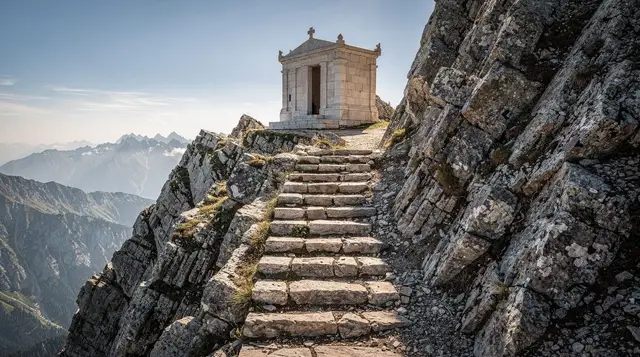
Climbing San Giovanni Fortress above Kotor
How hard is the climb to San Giovanni Fortress?
It is about 1,350 steps and 260 metres of ascent from the old town, taking 45 minutes to 1 hour 30 depending on fitness and stops. The path is unshaded stone, so start before 8am in summer, carry water, and wear proper shoes since several sections are loose or slippery.
What the climb actually involves
San Giovanni Fortress (also written San Giovanni or Sveti Ivan) sits about 260 metres above Kotor’s old town, and reaching it means climbing roughly 1,350 stone steps cut into the hillside behind the city walls. There is no cable car, no shortcut, and almost no shade for the entire route. Photos taken from the water make the fortress look like a single building; in practice it is a chain of ramparts, a small church, and ruined walls strung along the ridge, with the path itself being the main event.
Budget 45 minutes for a fast, fit walk up with no stops, and closer to 1 hour to 1 hour 30 if you pause for photos, water breaks, or are climbing with children. Coming down takes 25 to 40 minutes and is harder on the knees than the ascent is on the lungs, since the steps are uneven and the descent puts more strain on joints.
This is not a technical hike. It is a straightforward but relentless stairway that rewards planning: the wrong time of day turns an interesting walk into an unpleasant one, and the wrong footwear turns it into a genuine hazard.
Entry fees and what they cover
There is a paid section of the route, controlled by a ticket booth partway up, roughly where the path passes through the old fortifications and the trail steepens. Below the booth, inside the old town itself, walking is free.
| Detail | |
|---|---|
| Entry fee (day) | Roughly 8–15 EUR depending on the season and year; the price has moved around, so treat this as a range rather than a fixed number |
| Payment | Cash and card generally accepted at the booth; cash is the safer assumption in peak season when queues form |
| Evening/night | Booth typically unstaffed after closing, gate often left open — climbing becomes effectively free, though this is not a guaranteed or official arrangement |
| Weather closures | Heavy rain can close the site or make the ticket booth stop selling entry for safety reasons |
| Children | Reduced pricing is common for children; check the posted rate at the booth rather than assuming a fixed discount |
The fee funds basic maintenance of the fortress walls and the church of Our Lady of Health partway up the route. It buys access to the upper ramparts and the fortress ruins at the summit — the lower stretch of steps through the old town’s fortifications is walkable without paying anything.
Step by step: what you pass on the way up
The route starts inside the old town, near the northern stretch of the city walls, and climbs in a series of switchbacks rather than a straight staircase. Roughly:
- First 15–20 minutes — steepest section, walled on both sides, passing through the oldest fortifications. This part is free to walk and is where most casual visitors turn back.
- The ticket booth — where the paid section begins, usually staffed during daylight hours in season.
- Church of Our Lady of Health (Gospa od Zdravlja) — a small chapel roughly two-thirds of the way up, built as a plague-era votive site. A natural rest point with the first real panoramic view over the bay.
- Final push to the fortress — narrower, more exposed steps with drop-offs and no railing on several stretches. This is the section where slippery stone and poor footwear cause the most stumbles.
- Fortress ruins and upper ramparts — the walls of San Giovanni proper, offering a full view down the Bay of Kotor toward Perast and, on a clear day, out toward the bay’s mouth.
There is no toilet, shop, or water point anywhere on the route above the old town gate. Whatever you carry up is what you have.
When to climb: morning, evening, or after dark
Timing matters more on this walk than almost anywhere else near Kotor, because the entire path is exposed stone with no tree cover.
| Window | Conditions |
|---|---|
| Before 8am | Coolest air, softest light for photos, path mostly empty |
| 8am–10am | Still manageable in most seasons, booth usually just opening |
| 10am–4pm | Peak heat in summer; also the cruise ship window, so the lower free section can be crowded |
| Late afternoon | Heat easing, but light gets harsh and low for photos looking into the sun |
| After sunset | Booth typically unattended, cooler air, but poor footing on uneven stone and no lighting on most of the path |
In July and August, a start before 8am is close to essential. Midday temperatures on an unshaded stone staircase are genuinely uncomfortable, and heat exhaustion on the descent is the most common way visitors end up needing help on this route. Late May, June, and September offer a wider comfortable window — see the best time to visit Kotor for how the wider season plays into this.
Climbing after dark is popular with a subset of visitors chasing the free entry and quiet views, but it comes with real trade-offs: no lighting beyond what you bring, and stone steps that are already worn smooth becoming harder to judge in the dark. A headtorch is close to mandatory if you go this route, not optional.
What to bring
- Water — at least 0.5 to 1 litre per person; there is nowhere to refill above the old town.
- Closed, grippy shoes — trainers or hiking shoes, not sandals. Sections of the upper path are smooth stone that turns slick with any moisture or dust.
- Sun protection — hat and sun cream; there is no shade on the paid section at all.
- Cash — for the ticket booth, as card readers are not always reliable in poor signal.
- A headtorch — only relevant for an evening or night climb.
- A light layer — the summit ridge catches wind even on a still day in the old town below.
Full packing advice for Montenegro more broadly is in the what to pack guide, but for this specific walk, footwear is the one item worth getting right.
The free alternative: the Ladder of Kotor
For visitors who want the view without the entry fee, or who prefer a longer, quieter route, the Ladder of Kotor (the old mule track once used to move goods and livestock over the ridge) climbs the hillside from a different starting point behind the old town and eventually meets the same general area as the fortress path. It is unmaintained by comparison, has no ticket booth, and takes considerably longer — realistically 2 to 3 hours round trip rather than 1 to 1.5. Full route notes are in the Ladder of Kotor hiking guide.
It is a genuinely different experience from the fortress steps: fewer people, rougher path, and no fortress ruins at the end unless you connect back onto the paid section. Anyone short on time or fitness should stick to the main staircase; anyone with a full morning and a preference for solitude over convenience should consider the Ladder instead.
Getting to the trailhead and combining it with other stops
The climb starts from inside Kotor’s old town, so there is no separate transport logistics — if you are already staying in or near Kotor, you walk to the base. Anyone parking in Kotor for the day should expect the usual constraints near the walls and use the marina or Škaljari parking areas rather than hunting for street parking close to the entrance.
Most visitors combine the climb with a wider walk through the old town, doing the fortress first (before the heat and crowds build) and the flat old town streets afterward. It also fits naturally into a one-day Kotor itinerary as the morning anchor, since it is the most physically demanding thing on most people’s Kotor list and is best done fresh.
For those who arrive by cruise ship, timing is worth reading carefully in the cruise ship days in Kotor guide — the lower, free stretch of the path overlaps with the busiest tourist hours, and a mid-morning start after most excursion buses have left can mean a noticeably quieter climb.
If stairs on this scale are not realistic for your group, the accessibility guide to Kotor’s old town covers what is genuinely reachable without them, and a private guide can tailor a lower-effort version of the old town visit — see the note on a private archaeologist-led half-day tour of Kotor below.
Making a longer day of it
Several operators build the fortress climb into a wider hiking day rather than treating it as a standalone stop. A guided downhill hike from Krstac into Kotor that finishes at San Giovanni Fortress flips the usual approach: most of the walking happens on the way down from higher ground, with the fortress as the last leg rather than the first, which avoids the steepest uphill stretch in the heat of the day.
For a different kind of morning that pairs naturally with an early fortress climb, a cable car ride combined with a visit to Perast and Our Lady of the Rocks covers the bay from water level rather than from the ramparts, and works well as an afternoon follow-up once the legs have recovered. Visitors who want more altitude after San Giovanni, rather than less, sometimes go on to a guided via ferrata route on Mount Lovćen, though that is a genuinely different, more technical undertaking and not something to attempt on the same day as the fortress steps.
Night walk versus daytime climb
For visitors weighing whether to do this after dark instead of during the day, the trade-offs are worth spelling out plainly. A night ascent usually means no entry fee, cooler temperatures, and a quieter path, but it also means climbing 1,350 uneven stone steps with only a headtorch for light, no staff nearby if something goes wrong, and views over the bay that are pretty but far less detailed than in daylight. The full case for and against is covered in the night walk along Kotor’s city walls guide, which applies the same logic to the lower, walled section of the route.
Our view: the climb is worth doing once in daylight for the view and the fortress itself, and the night version is a nice-to-have for a second visit or for photographers chasing a specific shot, not a substitute for the daytime climb on a first trip to Kotor.
Health and practical notes
Anyone with knee, hip, or heart conditions should treat this as a genuine physical exertion, not a casual stroll — it is a sustained, steep stair climb in direct sun for much of the year. Pharmacies and basic medical information for the region are listed in the health and pharmacies guide, worth knowing before, not during, the climb. There is no first aid point on the path itself.
Frequently asked questions about the San Giovanni Fortress climb
How many steps are there to San Giovanni Fortress?
Around 1,350, climbing about 260 metres from the old town gate to the fortress ruins. The exact count depends slightly on where you start measuring, so treat 1,300 to 1,400 as the realistic range rather than a precise figure.
How much does it cost to enter San Giovanni Fortress?
The daytime fee has ranged roughly from 8 to 15 EUR in recent years, paid at a booth partway up the route. It has moved around from season to season, so check current signage rather than relying on an old figure.
What time does the fortress open and close?
Hours follow daylight and shift with the season, generally opening around 8am and the ticket booth closing in early evening during summer, earlier in winter. The path has no locked gate, so it remains physically walkable outside booth hours.
Is the climb safe for children or older visitors?
There is no technical climbing involved, just sustained stairs, some without a railing and with a drop to one side. It suits fit children and most adults, but is a poor choice for anyone with knee problems, vertigo, or limited mobility, and cannot be done with a pushchair or wheelchair.
What should I wear and bring?
Closed shoes with real grip, at least half a litre of water per person, a hat, and sun cream. The stone steps are worn smooth by centuries of foot traffic and get slippery when wet, and there is no shade anywhere along the paid section.
Is the fortress closed in bad weather?
Yes, heavy rain can close the site outright, and the stone steps become genuinely dangerous when wet even if the site stays technically open. Check conditions before setting out if rain is forecast.
Is there a free alternative to the ticketed path?
The Ladder of Kotor, the historic mule track behind the fortress, reaches a similar area without an entry fee, though the route is longer, rougher, and harder to follow than the main staircase.
Can I avoid the cruise ship crowds on this walk?
Largely, yes. The lower free stretch through the old town overlaps with the busiest cruise hours of 10am to 4pm, but the paid upper section thins out quickly since most day-trippers on a tight schedule do not go all the way to the top.
Mountain excursions on GetYourGuide
Verified deep-linked GetYourGuide tours. Book through these links and we earn a small commission at no cost to you.
GetYourGuide does not provide a product photo for this activity — the image shows the meeting point, photographed by us.