The view everyone in Kotor’s old town is climbing toward
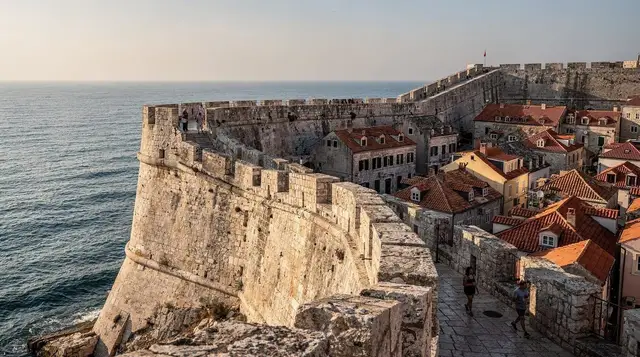
Above the tangle of stone lanes in Kotor’s UNESCO-listed old town, the city walls don’t stop at street level. They keep going, zig-zagging up the bare limestone hillside behind the town for another 260 metres until they reach San Giovanni Fortress (San Giovanni is the Italian name; Montenegrin signage also uses Sveti Ivan). From the ramparts at the top, the whole Bay of Kotor opens out below: the old town’s terracotta roofs, the ferry lanes toward Perast, and on a clear day the mountains ringing Lovćen to the south.
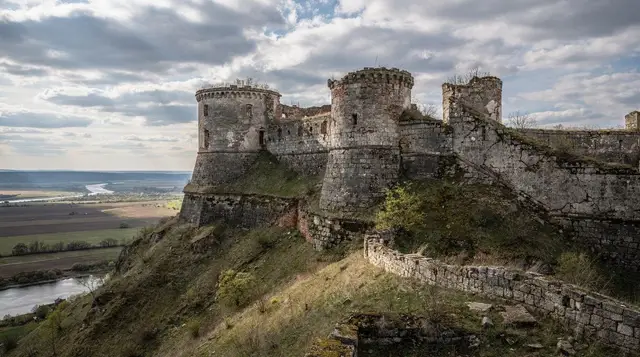
The fortress itself is a modest ruin — a few defensive walls, a small chapel, and the remains of gun positions built up over Venetian and Austro-Hungarian centuries. Nobody climbs 1,350 steps for the ruin. They climb it for the view and, honestly, for the achievement of having done it before breakfast gets too hot to eat outdoors.
This page focuses on the climb itself: what the steps are actually like, what it costs, when to go, and a route most visitors never hear about — the free path north toward Vrmac that continues past the fortress instead of sending you back down the way you came.
The climb: what 1,350 steps actually feels like
The marked route starts inside the old town near the Church of Our Lady of Remedy (Gospa od Zdravlja), close to the northern stretch of wall. From there, the path is entirely stone steps and switchbacks cut into the hillside, climbing about 260 metres in elevation over roughly 1,350 steps to the fortress gate.
It is not a technical hike. There’s no scrambling and no exposure that would trouble anyone reasonably fit, but it is unshaded, uneven in places, and steep enough that most people stop two or three times to catch their breath. Fit walkers reach the top chapel in 25–30 minutes; a more comfortable pace with photo stops takes 45 minutes to an hour. Coming down is faster but harder on the knees than people expect, since the steps are old, worn smooth in places, and occasionally loose underfoot.
| Stage | Distance up | Typical time |
|---|---|---|
| Old town gate to first viewpoint | ~200 steps | 10 minutes |
| First viewpoint to the chapel | ~450 steps | 15–20 minutes |
| Chapel to the fortress gate | ~700 steps | 15–20 minutes |
| Full round trip with stops | 1,350 steps each way | 1–1.5 hours |
A private guided climb or the downhill version some tour operators run — starting high near Krstač and descending through the fortress into Kotor — takes the guesswork out of pacing and timing, which matters more here than on most of the trails around the bay:
a guided hike that starts high above the bay near Krstač and descends through San Giovanni Fortress into Kotor’s old town, which suits anyone who would rather walk downhill on tired legs than climb up in the heat.
The halfway chapel: Our Lady of Health
Roughly two-thirds of the way up, the path passes the small Chapel of Our Lady of Health (Gospa od Zdravlja), built in the 16th century as a votive offering during a plague outbreak. It’s a single-room stone chapel, usually locked, with a narrow terrace in front of it that functions as the obvious rest stop on the climb.
This is the point where most people reassess. The view from the chapel terrace is already good — arguably good enough for casual visitors who don’t want to do the full 1,350 steps — and it’s roughly the last spot with any patch of shade before the path opens onto bare rock for the final push to the fortress gate. If you’re climbing with young children or anyone unsure about the full distance, the chapel is a sensible turnaround point that still delivers most of the view.
Tickets and opening hours
Entry to the fortress itself (not the free path up to the chapel) has required a paid ticket since 2020. The price has varied by season and year, sitting somewhere between roughly 8 and 15 euros — check the current rate at the ticket booth near the start of the route rather than relying on a number quoted online, since it changes without much notice.
Opening hours are seasonal and are not published on a single reliable year-round schedule. In practice the fortress is open roughly 8am to 8pm through the summer season, with shorter hours or closure outside peak months. During or after heavy rain the site can close altogether, since several sections of path and wall have no barrier and become genuinely slick.
Buy your ticket at the booth close to the Church of Our Lady of Remedy; cash and card are both usually accepted in season, cash is the safer bet outside peak months when staffing is thinner.
When to go: heat, light, and cruise-ship timing
Kotor’s old town gets busiest between 10am and 4pm on days with cruise ships in port — more than 700,000 cruise passengers passed through in 2025 across roughly 500 calls, and a single large ship can put 2,000 to 4,000 people into the old town at once. That crowding matters here because the fortress entrance sits inside the walls, and the narrow lanes leading to it clog up during those hours.
The climb itself is worse affected by heat than by crowds, though. There is no shade for most of the route, and the stone steps radiate heat back once the sun is on them. The two options that solve both problems at once:
- At or just after sunrise, before roughly 8am. Cooler air, soft light for photos, and the old town still quiet.
- The last two hours before sunset, when the sun has moved off the steps and the light over the bay turns gold. Check closing time before committing to this option — arriving to a locked gate after a hot climb is a bad way to end the day.
Avoid midday entirely between June and September. Seasonally, late May to mid-June and September give you cooler mornings, thinner crowds, and a good chance of open chapel terraces without a queue.
What to bring
- Closed shoes with grip. Sandals and flip-flops are common mistakes on the smooth, worn sections of stone.
- At least a litre of water per person. There’s no reliable place to refill on the way up.
- A hat and sun cream, even under cloud — the stone reflects heat and there’s minimal shade.
- Cash in small denominations for the ticket booth, as a backup to card.
- A torch or phone light if you’re timing the climb for sunset and walking back down after dark.
The route almost nobody covers: north toward Vrmac
Most visitors treat San Giovanni Fortress as a there-and-back destination: climb up, look at the view, walk back down the same 1,350 steps. What the ticket booth and most guides don’t mention is that the fortifications above San Giovanni connect into an old defensive path running north along the ridge toward Vrmac, the long forested spine that separates Kotor from Dobrota and Prčanj on the inner bay.
This isn’t a signed tourist trail and it isn’t covered on the standard fortress ticket information — no other page on this site walks through it in detail. It’s an unmarked continuation of the old military path system, rougher underfoot than the fortress steps, exposed to sun and wind, and it needs proper shoes, a full water bottle, and a map or GPS track rather than assumption.
Done right, it turns a one-hour there-and-back into a half-day ridge walk with sweeping views down both sides of the bay, eventually meeting the marked routes covered in the Vrmac ridge hiking guide. It is not something to attempt in the last two hours before sunset, and it is not a route for anyone climbing the fortress steps for the first time as a casual outing.
If ridge walking rather than the round-trip steps is what you’re after, a guided option covers similar ground with none of the routefinding risk:
a private guided hike along the Vrmac ridge, which can be arranged to start or finish near the fortress depending on the season and the guide.
The free alternative: the Ladder of Kotor
If the ticket price or the crowded marked steps put you off, the old mule track known as the Ladder of Kotor (Kotorska ljestva) climbs the same hillside from a different starting point further along the base of the city walls. It’s free, longer, and rougher — no chapel, no built viewpoints, no ticket booth — but it eventually meets the same ridge system and can be combined with a visit to the fortress from above rather than through the paid gate. It suits hikers more than casual sightseers; see the dedicated Ladder of Kotor hiking guide before relying on it as your only route.
Getting to the start and combining it with the rest of Kotor
The trailhead is inside the old town, a five-minute walk from the main square past Kotor’s cathedral. There’s no vehicle access and nowhere to park near the entrance — leave the car at the marina or Škaljari parking rather than circling for a space; see the parking in Kotor guide for the realistic options.
Most visitors pair the climb with a full day in the old town, saving the fortress for early morning or early evening and using the middle of the day for the one-day Kotor itinerary, lunch, or a boat trip out on the bay. If the climb itself doesn’t appeal — bad knees, small children, or simply not the mood for 1,350 steps — a boat tour covers Kotor’s landmarks from the water instead:
a boat tour covering the highlights of Kotor, Perast and Budva from the water, or for a slower look at Perast and the bay’s islands without the climb, a tuk-tuk tour to Perast with free time and a swimming stop.
Anyone extending the day further afield toward the mountains can also read up on Lovćen National Park and the Njegoš mausoleum, reachable by the old Njeguši road above the bay:
a private tour up to Lovćen is a reasonable way to see the mountain viewpoint over the bay without driving the switchbacks yourself.
For planning how much time to allot to San Giovanni against everything else around the bay, see how many days you need in Kotor and the bay and what to pack for Montenegro if you’re arriving without hiking shoes already in your bag.
San Giovanni Fortress: frequently asked questions
How many steps are there to San Giovanni Fortress?
The signed path from the old town counts to roughly 1,350 steps, gaining about 260 metres from sea level to the fortress walls. The figure varies slightly by source because sections of the old cobbled path have crumbled and been rerouted over the years, but 1,350 is the number posted locally.
How much does it cost to climb to San Giovanni Fortress?
A paid ticket has been required since 2020, and the price has moved between roughly 8 and 15 euros depending on the season and year. Buy it at the small booth near the Church of Our Lady of Remedy, close to the start of the marked path.
What are the opening hours?
Hours are seasonal and change from year to year, typically running from around 8am to 8pm in summer and shorter, sometimes closed, in winter. There is no reliable year-round online timetable, so check the posted hours locally rather than an old schedule.
Is there a free way up?
Yes. The Ladder of Kotor, an old mule path, climbs the same hillside from further along the base of the walls and is not ticketed, though it is longer and less maintained, with no chapel or built viewpoints.
Is San Giovanni Fortress open when it rains?
It is sometimes closed, or the ticket booth left unstaffed, during heavy rain, since the stone steps become slippery and a few sections have unprotected drops. Plan the climb for a dry day rather than arriving and hoping.
Can I combine the fortress with a hike to Vrmac?
Yes. From the upper fortifications above San Giovanni, an unmarked path continues north along the ridge toward Vrmac rather than doubling back down the tourist steps, though it requires proper shoes, water, and daylight to spare, and isn’t something to start late in the day.
What should I wear and bring?
Closed, grippy shoes rather than sandals, at least a litre of water per person, a hat, and sun cream, since most of the climb has no shade. A torch is worth carrying if you plan to be up there near dusk.