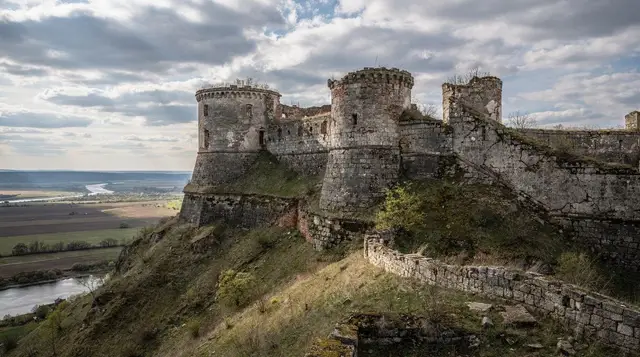
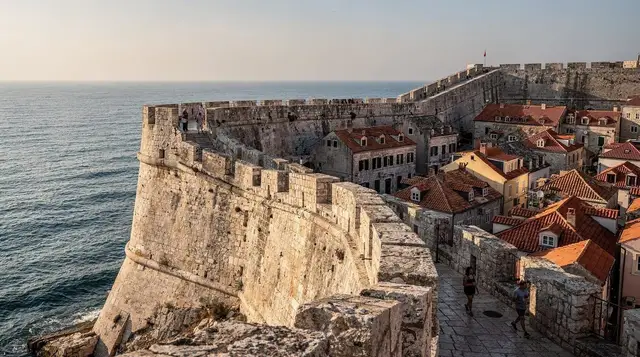
Most people arrive in Kotor with a vague picture: fortress walls, a bay that looks like a fjord but isn’t, cats everywhere. What actually helps on day one is smaller and more mechanical — which gate you’re standing at, where the bus or ferry actually puts you down, and whether the guesthouse you booked is a two-minute walk from the harbour or up three flights of stairs behind a lane too narrow for your suitcase wheels. This page covers that groundwork. For the climb to San Giovanni fortress or a lane-by-lane walking route, see the dedicated guides linked below.
Arriving: bus, cruise ferry and Tivat airport
Kotor’s bus station sits on the coastal road on the north side of the old town, close to the River Gate side of the walls, about 500 metres from the Sea Gate along a flat harbour-front pavement. Coming from Budva, Tivat or Herceg Novi, this is where you’ll be dropped, and it’s an easy walk with luggage — unlike anything inside the walls, where the paving turns to smooth, uneven stone.
Cruise ships dock directly opposite the Sea Gate, close enough that passengers walk off the gangway and into the old town in under five minutes. That proximity is exactly why the hours between roughly 10am and 4pm can feel overwhelmed on a big-ship day: two to four thousand people can be ashore at once during the April-to-October season, when the port logs upwards of 500 calls and over 700,000 passengers a year. Arrive before 9:30am or after 5pm and it’s a different, much calmer town. For a fuller breakdown of which days and hours to plan around, see the guide to cruise-ship days in Kotor.
If you’re flying in, Tivat airport (TIV) is the closest option at roughly 7 kilometres and 15-20 minutes by road; a taxi runs 20-30 EUR if you haven’t booked ahead, and flights there are mostly seasonal. Podgorica (TGD), about 90 minutes away, runs year-round but has no direct bus link. Full transfer options, including what a fair taxi price actually looks like, are covered in the Tivat airport transfer guide and the taxis in Kotor guide — worth reading before you land, since meters are required by law but rarely used with visitors at the port or the airport rank.
The three gates, and how they organise the town
Kotor’s walled old town is compact — the full circuit of the 4.5-kilometre ramparts takes 30 to 45 minutes on its own — and it’s built around three entrances, not one. Knowing which is which saves you from walking the long way round with bags.
The Sea Gate (Vrata od Mora), facing the harbour, is the main entrance and the one almost everyone uses. Built in 1555 under Venetian rule, it opens straight onto the Square of Arms, the old town’s largest open space and the natural point to get your bearings. If your accommodation, a restaurant booking or a boat tour meeting point is described as “near the main square,” this is the reference point.
The River Gate (Vrata od Rijeke), on the north side near where the Škurda river reaches the bay, is quieter and closer to the bus station. It’s the practical choice if you’re walking in from a northern car park or the bus stop rather than the harbour.
The Gurdić Gate, on the south side near a natural spring, is the smallest and least used of the three. It’s the closest entrance to the start of the climb up to San Giovanni fortress and the old mule track known as the Ladder of Kotor, so it’s worth knowing if that’s on your itinerary for the following day — though the climb itself, its step count and timing, belongs to its own guide rather than here.
| Gate | Side | Best used for |
|---|---|---|
| Sea Gate | Harbour / west | Main entrance, cruise dock, Square of Arms |
| River Gate | North | Bus station arrivals, quieter approach |
| Gurdić Gate | South | Fortress climb start, spring, fewer crowds |
The morning market at the Sea Gate
Just outside the Sea Gate, on the square between the walls and the harbour, Kotor runs a daily produce market: fruit and vegetables from the bay’s smallholdings, jars of honey, home-made rakija, local cheese and dried herbs, sold from a cluster of stalls rather than a formal building. It starts early and winds down by early-to-mid afternoon, and — like the old town itself — it’s at its best before 9am, ahead of both the heat and the cruise crowds. It’s not a tourist reconstruction; it’s where a fair share of Kotor’s own households still shop, which is part of why the produce turns over daily rather than sitting out for photographs.
St Tryphon Cathedral: the landmark at the centre
Once you’re through whichever gate, St Tryphon Cathedral is the building to orient yourself by. Consecrated in 1166, it’s one of the oldest structures in the old town, built in Romanesque style with later Baroque additions inside. Its most obvious feature from the outside is also its most telling: the two front towers don’t match.
Earthquakes in 1667 and again in 1979 damaged the cathedral, and the towers were rebuilt at different times to different heights and finishes — asymmetry as a record of the town’s seismic history rather than a design choice or a flaw to overlook. Inside, the cathedral holds a treasury of reliquaries and silverwork tied to Kotor’s patron saint; entry carries a small fee, separate from any city walls or fortress ticket.
Where to stay: inside the walls or outside
This is the decision most visitors get wrong in one direction or the other, usually because they’ve only weighed “atmosphere” against “price” without factoring in stairs, noise and luggage.
| Inside the old town walls | Outside (Dobrota, Škaljari, Muo) | |
|---|---|---|
| Walk to sights | 2-10 minutes | 10-20 minutes, or a short taxi |
| Typical price, summer | Higher for the space you get | Lower, more room for the money |
| Noise | Church bells, restaurant terraces, cruise-day foot traffic | Quieter, especially evenings |
| Access | Often several flights of stairs, no lift, cobbled lanes | Usually step-free or near a road |
| Parking | None on-site; nearest paid lots a walk away | Frequently included or nearby |
| Best for | Short stays, car-free travellers, evening atmosphere | Longer stays, drivers, families with luggage |
Staying inside the walls means falling asleep and waking up inside a UNESCO site, and having the old town to yourself once the day-trippers clear out in the early evening — genuinely worth it for two or three nights. It also means dragging a wheeled suitcase over uneven stone, possibly up three or four flights with no lift, and paying more for less square footage than the same money buys ten minutes away in Dobrota or Škaljari.
Both are quieter residential stretches of the bay with easier parking and access, covered in more depth in the where to stay in Kotor Bay guide. Prčanj, a little further round the bay, is another quiet option for anyone prioritising a calm base with a car over a walk-everywhere old-town stay.
Parking, luggage and getting around once you’re settled
Parking directly at the walls is scarce and, in season, effectively unavailable — this isn’t a town built with cars in mind. The realistic options are the car park by the marina or the one at Škaljari, both a short walk from the Sea Gate, rather than circling residential streets hoping for a space. If you’re driving in for the day rather than staying over, budget extra time for this alone; the full picture, including where locals actually park, is in the parking in Kotor guide.
Wheeled luggage and old-town cobblestones don’t get along. If your accommodation is more than a couple of turns from a gate, factor in either a short taxi to the door (agree the price first) or simply carrying bags the last stretch. This matters more than it sounds on a hot August afternoon with a full suitcase and no lift in sight.
Day trips and boat tours that start from the gates
Kotor’s gates aren’t just for walking in and out — most organised tours and boat trips meeting points are described relative to the Sea Gate or the harbour just outside it. A half-day loop such as the combined Kotor, Perast and Budva sightseeing tour typically picks up here, as does the guided Montenegro highlights day trip that covers Perast and the bay’s viewpoints in a single outing.
For a shorter, slower option, an e-tuk-tuk tour out to Prčanj, Tivat and Trojica Hill is a reasonable way to see the bay’s quieter shore without renting a car or tackling the coastal road yourself. None of these require you to have sorted out lodging first — but knowing which gate you’re being collected from saves a confused ten minutes at departure time.
If your first full day is really about the old town itself rather than the wider bay, an itinerary for one day in Kotor or a fuller three-day plan sequences the cathedral, the market, the fortress climb and a boat trip in a sensible order — useful once you’ve got the gates and your accommodation sorted from this page.
Kotor old town: practical questions answered
Which gate should I use to enter Kotor old town?
The Sea Gate, facing the harbour and the cruise berth, is the main entrance and the one nearly everyone uses first. It opens directly onto the Square of Arms. The River Gate and the Gurdić Gate are smaller, quieter, and better if you’re arriving from a car park on the north or south side of the walls.
Is it worth paying more to stay inside the old town walls?
Inside the walls buys you a five-minute walk to everything and a genuinely different atmosphere after the day-trip crowds leave around 5pm, but rooms are smaller, often up several flights of stairs with no lift, and cost more for less space than a comparable place in Dobrota or Škaljari ten minutes away.
What is the market outside the Sea Gate?
It’s Kotor’s daily produce market: fruit, vegetables, honey, cheese and rakija sold from stalls on the square between the harbour and the Sea Gate. It runs from early morning and thins out by early afternoon, and it’s calmest before 9am, ahead of the cruise-ship rush.
Why does St Tryphon Cathedral have two different towers?
The cathedral was consecrated in 1166, but earthquakes in 1667 and again in 1979 damaged the building and its towers were rebuilt at different times with different heights and finishes, which is why they don’t match. It’s original enough to be a landmark, not a flaw to look past.
How far is Kotor from Tivat airport?
About 7 kilometres, roughly 15-20 minutes by road, with a taxi typically costing 20-30 EUR if you haven’t arranged a transfer in advance. Tivat handles mostly seasonal flights; Podgorica airport is further out and open year-round.
Can I park inside the old town?
No, and there is very little parking directly outside the walls either, especially in summer. The realistic options are the car park by the marina or the one at Škaljari, both a short walk from the Sea Gate, rather than circling for a space near the walls.
Where does the bus from Budva or Tivat drop you off in Kotor?
Kotor’s bus station sits on the coastal road on the north side of town, about 500 metres from the Sea Gate along the harbour front. It’s a flat, easy walk with luggage, unlike the cobbled lanes inside the walls.