Mogren Beach guide: Budva's tunnel beach, Mogren I and Mogren II
What is Mogren Beach and is it worth visiting?
Mogren is a pair of pebble-and-sand coves just north of Budva old town, reached through a short tunnel cut into the cliff. Mogren I is scenic but packed by mid-morning in summer; a five-minute path over the headland leads to the quieter Mogren II. It's worth an early visit, not a midday one.
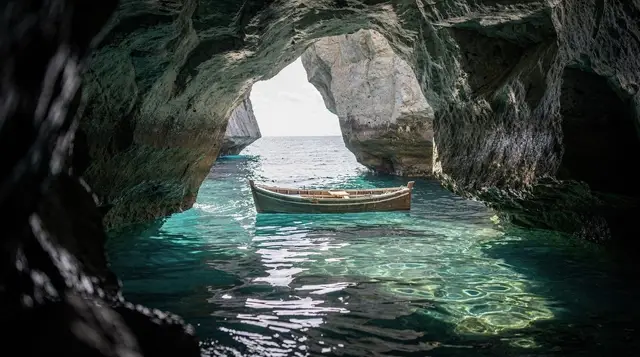
Two coves through a hole in the cliff
Mogren Beach is not one beach but two, separated by a rocky headland and reached from Budva old town through a tunnel bored straight through the cliff at the northern end of the ramparts. Walk past the citadel walls, find the low stone archway, and a short, slightly uneven passage plus a flight of steps drops you onto Mogren I in under five minutes on foot. There is no road access and no car park at beach level, which is part of the appeal and part of the crowding problem: everyone arrives the same way, on foot, from the same old town gate.
The proximity is the whole story here. Most beaches worth mentioning on this coast need a drive, a bus, or at minimum a taxi from wherever you’re staying. Mogren needs a pair of legs and ten minutes. That convenience is why it fills up faster than beaches twice its size a short drive away, and why the advice below leans so heavily on timing.
Mogren I: the one everyone reaches first
Mogren I is the cove you land in straight out of the tunnel. It’s a mixed pebble-and-sand shoreline, backed by pale cliffs and pine scrub, with a beach bar, a scatter of sunbed concessions, and, in season, a paddleboard and kayak rental stand near the northern end. The water is clean and deepens gradually, which is part of why families default to it rather than pushing on to Mogren II.
The problem is exactly what you’d predict from a beach five minutes from a cruise-adjacent old town: by mid-morning in July and August, Mogren I is at or past comfortable capacity. Sunbed rows fill, the strip of free sand shrinks to a few metres at the waterline, and the bar queue backs up. None of this is exaggerated for effect — it’s a direct consequence of a small cove absorbing both overnight guests staying in Budva and everyone doing a day trip from Kotor or Tivat who decides a beach morning fits before lunch in the old town.
If your priority is simply “swim near Budva old town without walking far,” Mogren I still does the job — you just need to accept the trade-off on timing, covered below.
Mogren II: quieter, smaller, five minutes further
A rough path climbs over the low headland at the southern end of Mogren I and drops down into Mogren II. It’s a five-minute scramble, part dirt path and part worn rock, not difficult but not stroller-friendly and unsuitable in flip-flops for some walkers. The reward is a noticeably smaller cove with a fraction of the crowd, minimal facilities — sometimes a single informal drinks stand, sometimes nothing — and a more exposed, slightly wilder feel with pine woods coming right down to the rock.
Mogren II won’t be empty in August; word has got around. But the numbers are a different order of magnitude from Mogren I, and the short, moderately awkward walk filters out a meaningful share of visitors who won’t bother. Bring your own water and snacks if you’re settling in at Mogren II for the day, since you can’t assume a functioning kiosk.
| Mogren I | Mogren II | |
|---|---|---|
| Distance from tunnel | Immediate | 5-minute path over headland |
| Crowd level, July-August | Full by mid-morning | Busy but manageable |
| Facilities | Bar, sunbeds, watersports rental | Minimal or none |
| Shoreline | Sand and pebble mix | More rock, smaller sand strip |
| Best for | Convenience, families | Quieter swim, some walking tolerance |
Crowds: why arriving early actually matters here
This is the single most important piece of practical advice for Mogren: it is a small beach next to a major tourist centre, and it behaves accordingly. On a clear day in peak season, expect Mogren I close to full by 10 a.m., with free sand essentially gone and sunbed rows sold out or close to it. Arriving before 9 a.m. gives you a genuinely different experience — the water clear, the sand uncrowded, the tunnel walk itself quiet.
The same logic that keeps the old town in Kotor manageable before 9.30 a.m. and after 5 p.m. applies here, scaled down to a beach instead of a walled town: it’s not that Mogren gets objectively worse as the day goes on, it’s that a fixed, small amount of shoreline gets divided among a growing number of people until there isn’t enough of it to go around. Afternoons, particularly on weekends and in the first half of August, are the least comfortable window. Late afternoon light, after roughly 5 p.m., brings a partial second wave as the day’s heat eases, though by then plenty of sunbeds free up as day-trippers head back for dinner.
Outside July and August — late May, June, and September — the calculus relaxes considerably. Mogren I rarely reaches the same saturation point, and Mogren II can be genuinely uncrowded even at midday.
Getting there from Kotor
There’s no direct boat or dedicated shuttle to Mogren specifically; you get to Budva first, then walk. From central Kotor, the coast road to Budva takes about 30 minutes by car, less by the more direct route if traffic on the corniche is light — though that stretch of road is narrow and busy enough in peak season to add real time, so budget more like 40-45 minutes door to door in July and August. Coastal buses run the Kotor-Budva route reasonably often, with no online booking system; you buy on board or at the station and expect standing room in high season.
Parking near Budva old town is limited and largely paid in summer; the municipal car parks on the edges of the old town are a more realistic bet than hunting for street parking close to the tunnel entrance. Once parked, it’s a walk of ten to fifteen minutes through the old town to reach the Mogren tunnel, depending on where you left the car.
If you’d rather not manage the logistics yourself, a guided option that strings together several beach stops along the Budva riviera beach-hopping day with swimming stops covers Mogren alongside other coves without you needing to work out bus timetables or parking.
Facilities, sunbeds and what things cost
Mogren I has the fuller set-up: a beach bar serving coffee, drinks and simple food, sunbed and umbrella rental in the usual pattern for this coast, and seasonal watersports rental near the northern rocks. Expect to pay in the range of 10-15 EUR for a sunbed pair with umbrella in peak season, less in shoulder months when concessions sometimes drop prices to fill rows. Entry to the beach itself is free — you’re only paying if you want furniture, and there is always some strip of free sand or rock if you bring your own towel and arrive early enough to claim it.
Mogren II has little to nothing in the way of paid infrastructure most seasons. Treat it as bring-your-own: water, snacks, and a towel, since counting on a working kiosk there is optimistic. Toilets exist near Mogren I’s bar area; there’s nothing equivalent at Mogren II.
Neither cove has a permanently staffed lifeguard tower outside the busiest weeks of summer, so the same general caution applies as elsewhere on this coast: know your own swimming ability, and don’t count on rescue infrastructure being present.
What to combine it with
Mogren’s location makes it an easy add-on rather than a destination requiring its own day. Pair a morning at Mogren I with an afternoon in the old town highlights of Budva once the beach empties out and the streets cool down — walking Mogren early and touring the citadel and old town later in the day avoids the worst crowding at both.
If Mogren is full or you simply want a different kind of beach, Jaz Beach is a short drive away and considerably larger and sandier, with more room to spread out; Bečići offers a long, developed sand strip with more resort infrastructure; and the view of Sveti Stefan, the closed island-hotel, is worth the short continuation south even though the islet itself can no longer be entered. For a structured comparison of the coast’s beach options, see our guide to the best beaches near Kotor and the breakdown of pebble versus sand beaches in Montenegro.
Travellers weighing whether paid sunbeds are worth it anywhere on this coast, including at Mogren, may also want our note on free versus paid beaches in Montenegro.
For a broader, activity-based day rather than a beach day specifically, a guided jet ski trip departing from nearby Cavtat or an inland alternative like the Budva quad adventure tour into the hills above the coast both work as a contrast to a slow morning at Mogren, without adding much travel time since both depart from the same stretch of coastline.
If you’re deciding where to base yourself
Mogren’s main argument is proximity to Budva rather than the beach’s own scale. If beach access without a car is a priority for your whole trip, that tips the Kotor versus Budva base decision toward Budva, since nothing comparably close sits within old-town walking distance of Kotor itself — Kotor’s own shoreline is mostly working harbour and marina rather than swimming beach. Staying in Kotor and treating Mogren as a half-day trip out remains entirely workable; it just means building the 30-45 minute coast drive or bus ride into your morning rather than walking out of your hotel onto sand.
Practical summary
| Detail | Mogren I | Mogren II |
|---|---|---|
| Access | Tunnel + steps from old town, ~5 min | Add ~5 min path over headland |
| Sunbed pair, peak season | ~10-15 EUR | Rarely available |
| Free sand available | Only if early | More often |
| Toilets | Yes, near bar | No |
| Suitable for young children | Reasonably, watch footing | Less so, rockier access |
Frequently asked questions about Mogren Beach
How do you get to Mogren Beach from Budva old town?
Walk to the northern end of the old town walls, near the citadel, and look for the tunnel entrance cut through the rock. The tunnel and a short flight of steps drop you onto Mogren I in under five minutes; no vehicle access exists.
What is the difference between Mogren I and Mogren II?
Mogren I is the first cove, closest to the tunnel, with most of the sunbeds and the beach bar; it fills up fastest. Mogren II lies over a low headland along a five-minute dirt-and-rock path and is smaller, quieter and has fewer facilities.
Is Mogren Beach sand or pebbles?
Both. The shoreline is a mix of coarse sand and fine pebbles, with a rockier strip toward the headland. Water shoes help on the pebble sections but aren’t essential.
Is Mogren Beach free?
Yes, entry is free. Sunbeds and umbrellas are paid, typically 10-15 EUR for a pair in peak season, and you can also lay a towel on unrented sand at no cost if you arrive early enough to find space.
How early should you arrive at Mogren Beach in summer?
Before 9 a.m. if you want a sunbed on Mogren I in July or August. By 10 a.m. both coves are close to full on a clear day, since Mogren sits a five-minute walk from the old town and draws both hotel guests and day visitors.
Can you walk from Mogren Beach to Jaz Beach?
Not directly along the shore. A coastal path continues past Mogren II toward Jaz Beach for part of the way, but the last stretch requires either doubling back to the main road or a short taxi/bus ride; most visitors treat them as separate trips.
Is Mogren Beach suitable for children?
Mogren I has calmer, shallower water near the tunnel entrance and is manageable for families, though there’s no dedicated shallow zone or lifeguard tower that’s consistently staffed outside peak hours. Watch footing on the pebbled sections.
Is Mogren Beach better than Jaz Beach?
They serve different purposes. Mogren wins on convenience, being a five-minute walk from Budva old town with no car needed; Jaz Beach is larger, sandier and less crowded but needs a short drive or taxi. See our comparison of pebble and sand beaches for more detail.
Beach & swimming tours on GetYourGuide
Verified deep-linked GetYourGuide tours. Book through these links and we earn a small commission at no cost to you.
GetYourGuide does not provide a product photo for this activity — the image shows the meeting point, photographed by us.