Pebble vs sand beaches in Montenegro
Are Montenegro's beaches sand or pebble?
Most of the Montenegrin coast is pebble, shingle or concreted-over platforms, because the karst limestone shoreline has almost no river deltas to deposit sand. The main sand exceptions are Velika Plaža and Ada Bojana near Ulcinj, and the tombolo beach at Sveti Nikola island off Budva.
Setting expectations before you pack a beach towel
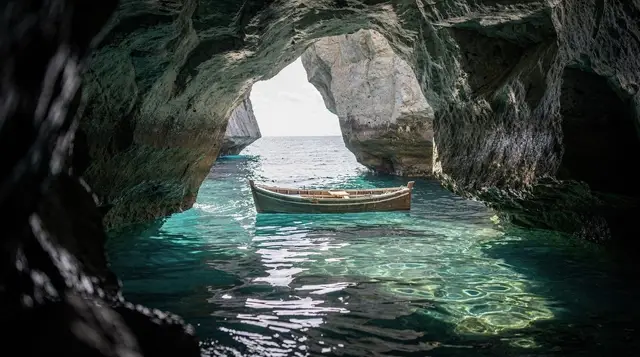
Photos of Montenegro sold on brochures and Instagram lean heavily on turquoise water, dramatic mountains and a narrow ribbon of coastline — and all of that is accurate. What those photos rarely show clearly is what is actually underfoot. If you are picturing the fine, pale sand of an Aegean island or a Spanish costa, most of the Montenegrin coast will not match it. The great majority of beaches here are pebble, shingle, or concrete platforms bolted onto the rock. That is not a flaw in the destination; it is simply the geology, and knowing it before you arrive changes what you pack and where you plan your beach days.
This guide explains why the coast is built the way it is, which beaches are genuinely pebble versus genuinely sand, and where the handful of real sand exceptions sit — mostly a long way south of Kotor, down toward Bar and Ulcinj.
The geology: karst limestone, not river deltas
Sand beaches form where rivers carry sediment down from inland and deposit it at the coast over thousands of years, or where long, gentle continental shelves grind rock into fine grains over time. Montenegro’s coast has neither condition in most places. The Dinaric Alps run close to parallel with the Adriatic and drop steeply into it, so there is very little flat coastal plain. The rock itself is karst limestone — the same porous, fissured stone that produces the region’s caves and underground rivers — and it erodes into angular fragments and pebbles rather than fine grains.
Add to that the fact that very few rivers reach the sea directly along this stretch of coast (much of the region’s rainfall disappears underground into karst channels instead of running off in surface rivers), and you get a shoreline dominated by shingle, pebble, gravel and bare rock, with sand appearing only where local conditions are different — chiefly around actual river mouths.
The one significant exception is the Bojana river, which flows out of Lake Skadar and reaches the Adriatic near Ulcinj in the far south. It has been depositing sediment there for a very long time, which is exactly why the two genuine sand beaches on this coast — Velika Plaža and Ada Bojana — are both clustered around that river mouth.
What “pebble beach” actually means here
Not all pebble beaches are equal, and the difference matters for comfort. On the Bay of Kotor and around Herceg Novi, some swimming spots are coarse, fist-sized stones that are genuinely hard to walk on barefoot. Around Budva and Petrovac, the shingle is finer — closer to gravel than to boulders — and more tolerable without footwear, though still nothing like sand. Further south toward Bar, beaches start mixing coarse sand with fine shingle before giving way to the true sand of Velika Plaža.
A few practical patterns worth knowing:
- Pebbles retain heat. On a hot August afternoon, dry pebbles near the waterline can be uncomfortably hot underfoot — sandals or water shoes solve this too.
- Wet, rounded pebbles are slippery, especially on a slope entering the water. Twisted ankles are a genuinely common minor injury on this coast.
- Sea urchins live on rocky and pebbly shallows around the bay and along parts of the Budva Riviera. Stepping on one barefoot is painful and the spines can be difficult to remove. This is one of the more mundane but real risks of a Montenegrin beach day.
- Some beaches are simply concrete or stone platforms built out over rock, with ladders down into the water rather than a shoreline to walk into. These are common in Kotor Old Town and around Perast, where there is no natural beach at all.
None of this makes the coast unpleasant to swim from — the water is clean and clear almost everywhere — but it does mean the “walk barefoot into gently shelving sand” experience is the exception, not the rule.
Bring water shoes: the single most useful packing tip
If there is one concrete piece of advice from this page, it is this: pack a pair of water shoes (sometimes sold as aqua socks or reef shoes) before you arrive, or buy a cheap pair from any beach kiosk or supermarket once you’re here — they typically cost under ten euros. They solve three problems at once: hot pebbles, slippery wet stones, and sea urchin spines. Flip-flops help a little on the walk down but come off in the water and do nothing against urchins. For a family with children who will spend hours in and out of the water on pebble beaches around Budva or the bay, water shoes are worth packing before anything else beach-related.
The three real exceptions: where the sand actually is
Velika Plaža, near Ulcinj
Velika Plaža (“Great Beach”) is a roughly 12 km stretch of genuine sand — fine, greyish-gold, sloping gently into the water — running along the coast south of Ulcinj town. It is the closest thing Montenegro has to the postcard sand beach, and it is also the windiest stretch of the coast, which is why it doubles as a windsurfing and kitesurfing spot at its northern end. From Kotor it is roughly a two-hour drive, making it a long day trip rather than a casual afternoon out. Full detail in the Velika Plaža guide.
Ada Bojana
Just south of Velika Plaža, where the Bojana river meets the sea, Ada Bojana is a river-delta island with sand beaches on its seaward side. It has a long-standing reputation as a relaxed, partly naturist stretch of coast, with fish restaurants built on stilts over the river channel. It sits close enough to Velika Plaža to combine both in a single long day from Kotor. See the Ada Bojana guide for access and what to expect.
Sveti Nikola island, off Budva
Much closer to Kotor — about 30 minutes to Budva, then a short boat taxi out to the island — Sveti Nikola has a sand-and-fine-shingle beach on its sheltered eastern side, formed as a tombolo connecting what were once separate islets. It is the most realistic sand option for anyone based around Kotor or Budva who doesn’t want to commit a full day to reaching the far south. Details in the Sveti Nikola Island beach guide.
Everywhere else — Jaz Beach, Mogren Beach, Bečići, Petrovac, Canj, the whole of the Bay of Kotor — is pebble, shingle or a mix of shingle and coarse sand, not fine sand.
Pebble vs sand: a coastline overview
| Beach / area | Distance from Kotor | Surface | Notes |
|---|---|---|---|
| Kotor Bay (Dobrota, Prčanj) | 0–15 min | Concrete platforms, rock | Little to no natural shoreline |
| Jaz Beach | ~35 min | Pebble / coarse sand mix | Popular, some beach clubs |
| Mogren Beach | ~30 min | Fine shingle | Two coves, short walk from Budva old town |
| Bečići | ~35 min | Fine shingle | Long promenade, hotel-lined |
| Petrovac | ~50 min | Shingle | Small, sheltered bay |
| Canj | ~1 h | Coarse sand / fine shingle | Quieter than Budva Riviera |
| Sveti Nikola island | ~35 min + boat | Sand / fine shingle | Boat access only, off Budva |
| Ulcinj town beach | ~2 h | Pebble | Not to be confused with Velika Plaža |
| Velika Plaža | ~2 h | Fine sand | ~12 km long, windy |
| Ada Bojana | ~2 h | Fine sand | River-delta island, partly naturist |
Treat the driving times as fair-weather estimates outside July and August; see the border and road notes elsewhere on this site for how much longer the coastal corridor can take in peak season.
Regions compared: bay, riviera, and the far south
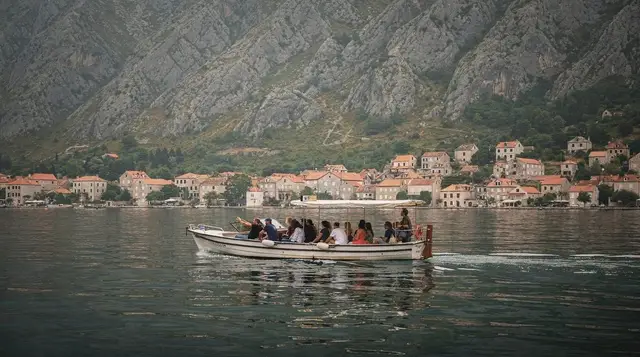
The Bay of Kotor itself is the least beach-friendly part of the coast — a ria (a drowned river valley, not a fjord) with steep shores and almost no natural sand or shingle strand, which is part of why day-trippers based in Kotor generally drive out to swim rather than swimming locally. The Budva Riviera, covering Budva, Bečići, Rafailovići and Petrovac, is shingle and fine pebble with a lot of built-up beach infrastructure — sunbeds, bars, showers — which makes the surface underfoot easier to manage even though it is not sand. The far south, from Bar down through Ulcinj, is where the coastline flattens out and the only real sand appears, at the cost of a much longer drive.
Boat trips: an easier way to reach sand and quiet coves
Given how far the main sand beaches sit from Kotor by road, a boat-based day trip is a reasonable way to combine several stops without repeating the same drive. A wild-beaches and coastline charter along the southern coast, such as the Bar Riviera wild beaches and coastline cruise charter, takes in stretches of shoreline that are difficult to reach by car, including small coves with a different mix of sand and rock than the main resort beaches.
For visitors who want to see the south of the country — Velika Plaža, Ada Bojana and the towns around them — without driving themselves, a guided option like the South Montenegro private tour or the full-coverage Edge of Montenegro tour covers the distance in a single organised day. If your priority is simply getting some boat and beach time in without the long drive south, a shorter option such as the Montenegro day trip with boat ride and beach time stays closer to the bay and the Budva Riviera.
Practical checklist for a Montenegrin beach day
- Pack or buy water shoes — cheap, widely available, solves three problems at once.
- Expect to pay for a sunbed and umbrella at organised beaches (roughly 10–20 EUR for a pair in peak season); free, unmanaged stretches exist but with no facilities.
- If fine sand between your toes matters to your trip, budget a full day for Velika Plaža or Ada Bojana rather than trying to fit it in alongside other sightseeing.
- Check the free vs paid beaches guide before assuming a beach club is your only option.
- For a broader first look at where to swim near Kotor and Budva, start with the best beaches near Kotor guide.
FAQ: sand and pebble beaches in Montenegro
Are there any real sand beaches in Montenegro?
Yes, but they are concentrated in the far south. Velika Plaža near Ulcinj is a 12 km stretch of fine grey-gold sand, and neighbouring Ada Bojana is sand as well. Sveti Nikola island off Budva has a sand-and-fine-shingle tombolo on its sheltered side. Everywhere else on the coast, sand is the exception rather than the rule.
Why are Montenegro’s beaches pebbles instead of sand?
The coast sits on karst limestone, with the Dinaric Alps dropping almost straight into the Adriatic. There is very little flat coastal plain and few rivers reaching the sea to carry sediment down and deposit it as sand. The main exception is the Bojana river delta near Ulcinj, which is why the sand beaches cluster there.
Are there sand beaches near Kotor itself?
No. The Bay of Kotor has almost no beaches of any kind along its inner shoreline; what little swimming access exists near the old town is concrete platforms and short pebble strips. For an actual beach day from Kotor, you need to drive 20 to 45 minutes to Budva, Tivat or the Lustica peninsula, and further again for sand.
Do I need water shoes for Montenegro’s beaches?
For pebble and rock beaches, yes, strongly recommended. Wet, rounded stones are slippery, some beaches have sharp patches underfoot, and sea urchins are common on rocky shallows. A pair of neoprene water shoes costing a few euros from any beach shop or supermarket makes a real difference and packs flat.
Is Ada Bojana good for families with small children?
The sand and the gently shelving river-mouth side suit small children better than most of the coast, but parts of Ada Bojana are unofficially naturist and the currents where the river meets the sea can be stronger than they look. Stick to the supervised, signposted sections and ask locally before letting children swim near the river mouth.
Are Budva’s beaches sand or pebble?
Pebble and fine shingle, not sand, including the main town beach and Mogren. Jaz Beach, a short drive from Budva, is a mix of pebble and coarse sand that reads closer to sand at the waterline. None of them match the postcard image of fine white sand.
What about Petrovac, Bečići and Rafailovići?
All pebble or fine shingle. Bečići is often marketed as a sand beach in older brochures; it is fine, comfortable shingle, not sand. The water shoes advice applies at all three, though the shingle here is finer and less punishing than the coarser pebble beaches further north around the bay.
Beach & swimming tours on GetYourGuide
Verified deep-linked GetYourGuide tours. Book through these links and we earn a small commission at no cost to you.
GetYourGuide does not provide a product photo for this activity — the image shows the meeting point, photographed by us.