Sveti Nikola Island: Budva's Hawaiian Island beach guide
How do you get to Sveti Nikola Island and is it worth the trip?
Small passenger boats shuttle from Budva's old town harbour to Sveti Nikola Island roughly every 15-20 minutes in July and August, a crossing of 10-15 minutes for around 3-4 EUR return. The main beach gets crowded by mid-morning, but the island has several smaller coves reachable on foot or by kayak where the sand thins out fast.
The island the locals call Hawaii
Sveti Nikola Island sits about 2 km off Budva, a low wooded hump of land facing the old town’s walls across a narrow channel. Montenegrins call it Havajsko Ostrvo, the Hawaiian Island, for one specific reason: it has actual sand. Most of this coastline runs to pebble and coarse shingle, including the beaches right in front of Budva old town, so a genuine sand strip stands out enough to earn the nickname, even though some of that sand has been topped up over the years rather than being entirely natural.
The island is roughly 2 km long, uninhabited apart from a handful of seasonal beach operators, and covered in pine and scrub. Almost every visitor lands on the same stretch of beach directly across from Budva’s harbour, which is exactly why it gets crowded, and exactly why the quieter coves further round the shoreline are worth the extra ten minutes on foot.
Getting there: the boat shuttle
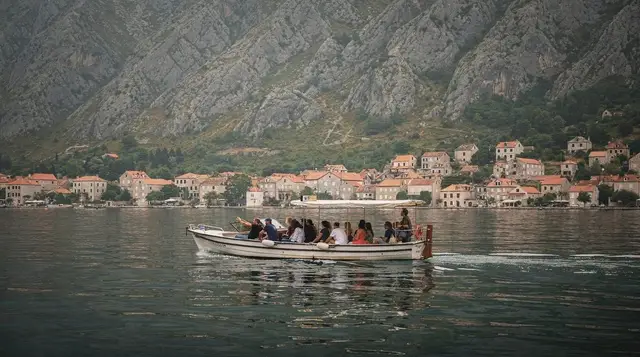
Small open passenger boats run from the quay beside Budva’s old town walls, near the marina and the main harbour promenade, from roughly May through October. In July and August they leave every 15-20 minutes through the middle of the day; outside peak season the frequency drops and it’s worth checking the departure board on the quay rather than assuming a boat is imminent. The crossing itself takes 10-15 minutes.
A return ticket costs around 3-4 EUR per adult, paid in cash either on the boat or at a small ticket kiosk on the quay. There’s no need to book ahead for the standard shuttle; queues build up around midday in August but rarely take more than 20-30 minutes to clear.
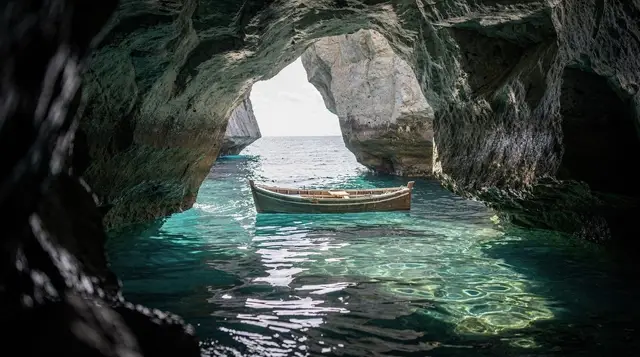
If you’d rather combine the crossing with something more active than a five-minute ferry ride, a couple of operators run kayak trips out to the island instead of the passenger boat, which gets you there under your own effort and gives you a proper look at the coastline on the way. One covers the crossing and a walk on the island itself with a kayak-and-hike route out to Sveti Nikola Island, while a smaller-group version, a small-group kayak tour that explores the sea caves around the island, spends more time paddling the shoreline instead of walking it.
The main beach vs the coves
The beach where the shuttle boats land is the one everyone pictures: a curve of imported sand facing back towards Budva, with sunbeds, umbrellas and a couple of snack bars. It’s genuinely pleasant in the early morning, and genuinely packed by 10:30 in July and August, when sunbeds fill and the water off the shore gets busy with swimmers and pedalos.
What most day-trippers don’t do is walk past it. The island has several smaller coves round its southern and eastern sides, reached by a rough path through the pine trees, some no more than a rocky inlet with room for a handful of towels. They have no facilities whatsoever, no shade beyond what the trees offer, and often no sand at all, just flat rock and pebble, but the water is clearer and there’s a decent chance of having a cove to yourself outside the very peak weeks. Bring proper shoes for the path and enough water, because there’s nowhere to buy any once you’re past the main beach.
The comparison in practice:
| Main beach (landing point) | Southern and eastern coves | |
|---|---|---|
| Surface | Sand, maintained | Rock, pebble, patchy sand |
| Crowds, July-August | Busy 10:00-17:00 | Light to moderate |
| Sunbeds | Available, 10-15 EUR | None |
| Food and drink | Snack bars, kiosks | None – bring your own |
| Toilets | Basic, seasonal | None |
| Access | Straight off the boat | 10-15 minute walk on a rough path |
| Water clarity | Fair, busy with swimmers | Better, fewer people in the water |
What it costs
A sunbed and umbrella pair on the main beach runs roughly 10-15 EUR in July and August, broadly in line with what you’d pay on the mainland beaches in Budva itself. Prices soften in June and September and there’s some room to negotiate outside the busiest fortnight of the year. Snack bar prices sit a notch above equivalent spots on the Budva promenade, which is normal for anywhere you have to reach by boat. Bring your own towel regardless – renting one, where it’s offered at all, adds another few euros for no real benefit.
If you skip the sunbeds entirely and head for the coves with your own gear, the only cost is the return boat ticket.
Best time to go
The two calm windows are before 9:30 and after 17:00. Early morning gets you first pick of sunbeds and a shot at the coves before the day’s crowd fans out along the path; late afternoon empties the main beach as day-trippers head back for dinner in Budva, and the light turns better for photos of the island looking back towards the mainland. The stretch from late May to mid-June and again in September gives the same beach with a fraction of the August crowd and noticeably cooler queues for the boat.
July and August are the island’s busiest weeks by a wide margin, tracking the same high-season crush that hits the whole Budva Riviera and the wider coast around it. If your dates are flexible, shifting even a week either side of the first half of August changes the experience considerably.
Swimming, snorkelling and the water around the island
The channel between Budva and the island is shallow and calm, which is part of why the crossing feels so short and unthreatening even for nervous swimmers. Once round to the coves, the water off the rocky points is clearer than the main beach simply because far fewer people are in it, and a mask and snorkel are worth packing if you have them; there’s nothing dramatic to see, but the visibility and the quiet make it worthwhile.
For a more organised look at the water around the island and the coastline further south towards Sveti Stefan, a half-day cruise such as a boat trip combining the Blue Lagoon, Sveti Stefan and a snorkelling stop covers more ground than the island shuttle alone and includes snorkelling gear.
Combining the island with the rest of the Budva Riviera
Sveti Nikola Island works well as half a day rather than a full one; the crossing is short, the main beach is compact, and most visitors are ready to move on after three or four hours. That leaves time to walk Budva old town in the same day, or to compare the sand here with the pebble beaches at Jaz Beach or Mogren Beach a little further along the coast, both a short taxi or bus ride from central Budva.
If you’re weighing up sand against pebble more broadly across the coastline, the general pattern is covered in our pebble versus sand beaches guide, and the practical question of which beaches charge for sunbeds and which don’t is answered in the free versus paid beaches guide.
A few operators fold the island into a wider shore excursion alongside Sveti Stefan and Budva’s old town, useful if you’re coming off a cruise ship or only have a single day on this stretch of coast: a guided day covering Budva and Sveti Stefan from Kotor, or a shorter boat-only version, a boat trip out to Sveti Stefan and Katič islands from Budva, that passes close to Sveti Nikola on the way.
Basing yourself in Budva vs Kotor
Sveti Nikola Island sits directly off Budva, so anyone based there has the shortest possible run to the boat, a walk of a few minutes from most central accommodation. From Kotor it’s around 30 minutes by road, manageable as a half-day add-on to a Budva visit but not something to do as a rushed side trip. If you’re still deciding where to stay for a trip that mixes Kotor’s old town with beach time on this stretch of coast, our comparison of Kotor versus Budva as a base weighs up the trade-offs, and the daily budget guide gives a sense of what a beach day like this adds to overall costs.
Practical notes
- Cash only for the boat ticket and most beach services on the island; there are no ATMs.
- No shade beyond the umbrellas on the main beach and the pine trees over the coves – bring sun protection regardless.
- The path to the further coves is uneven rock and root, not suitable for flip-flops or anyone with mobility limitations.
- Last boats back to Budva typically stop in the early evening in season; check the return time when you buy your ticket rather than assuming boats run late.
- Beach towels, water and snacks are worth bringing from the mainland if you’re heading past the main landing point.
Frequently asked questions about Sveti Nikola Island
How do you get to Sveti Nikola Island from Budva?
Wooden passenger boats leave from the harbour next to Budva’s old town walls and the marina promenade from roughly May to October, running every 15-20 minutes at peak season. The crossing takes 10-15 minutes and a return ticket runs about 3-4 EUR per adult, paid in cash on the boat or at a small kiosk on the quay.
Why is Sveti Nikola Island called the Hawaiian Island?
Locals nicknamed it Hawaiian Island (Havajsko Ostrvo) because it has genuine sand beaches, which are unusual on a coastline where Budva, Bečići and most of the Budva Riviera are pebble or coarse shingle. The sand is imported and replenished in places, but the effect is a beach that feels different from the mainland.
Is Sveti Nikola Island beach crowded?
The main beach facing Budva, where the boats land, is busy from about 10:00 to 17:00 in July and August, with sunbeds filling early. The island is roughly 2 km long and wooded, and the smaller coves on its southern and eastern sides see a fraction of the traffic if you’re willing to walk 10-15 minutes from the landing point.
Are there facilities on Sveti Nikola Island?
The main beach has sunbed and umbrella rental, a couple of snack bars and drinks kiosks, and basic toilets, all seasonal and priced higher than equivalent spots in Budva itself. The smaller coves have no facilities at all, so bring your own water, shade and food if you’re heading beyond the main landing.
Can you swim around the whole island?
Yes, and it’s one of the better reasons to come. The water off the eastern and southern coves is clearer than the main beach, since it sees far fewer swimmers, and a few short snorkelling stretches near the rocky points are worth the fins if you brought them.
How much does a sunbed cost on Sveti Nikola Island?
Expect to pay roughly 10-15 EUR for a sunbed and umbrella pair in July and August on the main beach, similar to or slightly above prices on the Budva mainland beaches. Prices are negotiable outside the peak weeks and non-existent once you move to the unstaffed coves, where you sit on your own towel on sand or rock.
Is Sveti Nikola Island good for kids?
The main beach is a reasonable choice for families because the sand is easier underfoot than shingle and the bay is sheltered, but there’s no lifeguard cover to rely on and the boat crossing adds a layer of logistics with small children. The coves further round the island are better suited to older kids and adults who can walk the path.
What is the best time of day to visit Sveti Nikola Island?
Take one of the first boats, before 9:30, to get a sunbed on the main beach and see the coves before the day’s crowds spread out. Late afternoon, after about 17:00, is the other quiet window, when the light softens and most day-trippers have gone back to Budva.
Beach & swimming tours on GetYourGuide
Verified deep-linked GetYourGuide tours. Book through these links and we earn a small commission at no cost to you.
GetYourGuide does not provide a product photo for this activity — the image shows the meeting point, photographed by us.