Why Dubrovnik works as a day trip from Kotor
Dubrovnik sits close enough to Kotor that a day trip is genuinely realistic, not just theoretically possible. The distance is 75 to 95 km depending on the route, which on an open road is a 1h30 to 1h45 drive. The complication is the border: Montenegro is outside the EU, Schengen, and the eurozone in law even though it uses the euro as currency, so every crossing into Croatia is a full passport check, not a wave-through. Outside July and August that check adds ten or fifteen minutes. Inside those two months it can add hours, and that single fact should shape your entire day.
Compared with staying in Kotor old town for another day, Dubrovnik gives you a different register of old town: bigger, more polished, more restored after the 1990s war damage, and considerably more visited. If you’re trying to decide whether it’s worth the trip at all, the short version is that Dubrovnik’s Stradun and city walls are a genuinely different experience from Kotor’s tighter, scruffier lanes — see the fuller comparison in our Kotor versus Dubrovnik guide if you’re choosing where to spend a limited number of nights rather than just a day.
Crossing the border: Debeli Brijeg and the alternative
The coastal crossing at Debeli Brijeg / Karasovici carries almost all the Kotor–Dubrovnik traffic, which is exactly why it’s also the slowest. In mid-July and August, queues of 2 to 5 hours are common, and Saturdays are consistently the worst day of the week because that’s when weekly rental changeovers stack tour buses, rental cars, and private transfers on top of the normal traffic. Since 2025 the EU’s Entry/Exit System (EES) has added extra processing time on the Croatian side, which has made the bad days slightly worse rather than better.
The alternative is the Vitaljina crossing, further inland and less obvious on a map, which often clears in 10 to 20 minutes even when Debeli Brijeg is backed up for hours. It adds some driving distance and isn’t signposted as clearly, but if you’re heading out in peak season it’s worth entering into your navigation app deliberately rather than defaulting to the coast road. Crossings into Bosnia and Albania, by contrast, are rarely a problem — it’s specifically the Croatian coastal border that gets clogged.
A practical rule that holds most summers: leave Kotor by 7:00–7:30am and you’ll likely clear the border in under 30 minutes. Leave after 9am in July or August and you’re gambling with an hour-plus wait that eats directly into your time in Dubrovnik.
| Crossing | Typical wait (July–Aug) | Typical wait (other months) |
|---|---|---|
| Debeli Brijeg / Karasovici | 2–5 hours, worst on Saturdays | 10–20 minutes |
| Vitaljina | 10–20 minutes | Under 10 minutes |
Getting there: driving, driver, or organised tour
Self-drive gives you the most control over timing but means you’re the one managing the border queue and Dubrovnik’s notoriously limited and expensive parking near the old town. If you’re renting for the whole trip, our car rental in Montenegro guide covers cross-border insurance, which you’ll need to confirm before driving into Croatia — not every Montenegrin rental agreement covers it automatically. Parking in Kotor itself before you set off is worth planning too; see the Kotor parking guide for where to leave a car overnight if you’re staying centrally.
A private driver or transfer removes the border stress and lets you sleep on the way back, which matters after a full day of walking. Our Dubrovnik–Kotor transfer guide has current pricing and what to expect from drivers who do this route daily and know which crossing is running faster that morning.
An organised day tour from Kotor, several of which route via Cavtat or stop in Perast on the way, bundles the driving, border handling, and often a guided walk of the old town into one booking. This is the least effort option and the one most first-time visitors choose, particularly if the idea of navigating Dubrovnik’s one-way system and paid parking zones on your own is unappealing.
A guided small-group option covering the crossing and a Kotor-and-Perast pairing on the return leg is the small group tour to Kotor and Perast run from the Dubrovnik side, useful if you want to see how the trip works in reverse or are staying a few nights in Dubrovnik with a Montenegro day planned in.
Public bus exists on the coastal route but has no centralised online booking system, and timings aren’t built around a comfortable same-day return — it’s a workable option if you’re not on a tight schedule, covered in our buses in Montenegro guide, but most day-trippers find a driver or a tour more reliable for a single push there and back.
What to see with one day: a realistic itinerary
Morning: the city walls before the heat
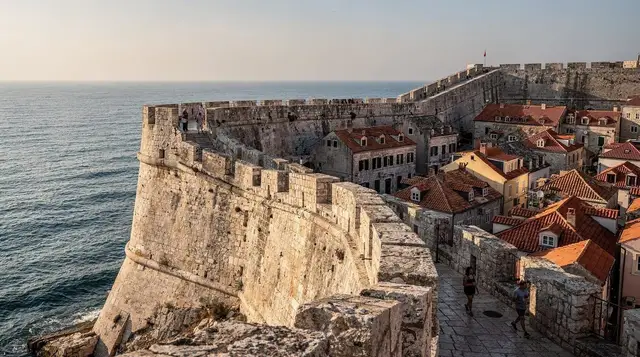
If you take one piece of advice from this page, make it this: do the city walls first, before 9:30am, and ideally straight after arriving. Dubrovnik’s walls have almost no shade, and by 11am in July or August the combination of sun, stone, and crowds makes the full 2 km circuit a genuine slog rather than the highlight it should be. Early morning also means you’ll share the ramparts with a fraction of the midday crowd and get clean views over the terracotta rooftops and the Adriatic without queueing at the entrance.
Budget 1.5 to 2 hours for the full walls circuit including photo stops. Entrance fees are seasonal and have moved around in recent years, so check the current price before you go rather than relying on an old figure.
Stradun and the old town
Below the walls, the Stradun — Dubrovnik’s polished limestone main street — runs the length of the old town between the Pile and Ploče gates. It’s worth walking end to end once for orientation, then ducking into the narrower side lanes climbing away from it, which is where the crowds thin out fastest. The Stradun itself is also where prices are highest: a coffee or an ice cream here costs meaningfully more than the same order two streets back.
Franciscan and Dominican monasteries, the Rector’s Palace, and the cathedral are all within a few minutes’ walk of the Stradun if you want indoor stops to break up the heat. None of them need more than 20–30 minutes unless you have a specific interest.
Cable car to Srđ
The Dubrovnik cable car climbs to Srđ hill above the old town in under four minutes and gives a wide panoramic view back down over the walls and out to the islands — a genuinely different perspective from anything at street level. It gets busy midday and the queue can run 30–45 minutes in peak season, so pair it with your early walls visit if you want to avoid the wait, or save it for the last hour before sunset when the light is better anyway.
Game of Thrones sites
Dubrovnik’s old town doubled as King’s Landing for several seasons of the show, and a fair share of visitors are here specifically for that. Fort Lovrijenac, the Jesuit Stairs, and several courtyards inside the walls are recognisable without any guiding, but a dedicated tour fills in which scene was shot where and gets you into a couple of interior locations you’d otherwise walk past. If that’s your main reason for the trip, a full-day private Game of Thrones tour of Dubrovnik is built specifically around the filming locations rather than the general highlights, and works well combined with a private crossing from Kotor.
Seeing Dubrovnik from the water
A large share of Dubrovnik’s best views are from the sea, not the streets — the walls photograph very differently from a boat than from below them. A short boat trip covering the walls, Lokrum island, and the coastline is a good way to rest your legs mid-afternoon after the walls-and-Stradun push; the Poseidon boat tour of Dubrovnik’s coastline covers this without requiring you to drive anywhere extra.
If you’d rather combine Dubrovnik with a swim stop and the Blue Cave near Cavtat, the Cavtat, Blue Cave, and Elaphiti Islands boat day trip packs several stops into one afternoon, though it’s a fuller day than the walls-and-old-town plan above and better suited to visitors staying overnight in Croatia rather than pushing straight back to Kotor.
Where to stop before or after: Cavtat and Konavle
If you’re driving via Debeli Brijeg, Cavtat sits just off the main road roughly 20 minutes short of Dubrovnik and makes a pleasant, quieter warm-up or wind-down stop — a small harbour town with a fraction of Dubrovnik’s crowds. It doesn’t need more than 45 minutes to an hour unless you want lunch there, but it’s an easy way to break up the drive without adding real distance.
Inland from Cavtat, the Konavle valley is Dubrovnik’s wine and produce region, and if you have any flexibility in your schedule — realistically, only if you’re staying overnight rather than doing the strict single-day version of this trip — a stop at a local winery adds a different, quieter side of the area. The Dingač winery tour with tasting and lunch covers the Pelješac peninsula’s better-known reds rather than Konavle specifically, but it’s the closest bookable option if wine is part of your plan and you’re not trying to be back in Kotor for dinner.
Eating in Dubrovnik without the tourist markup
Restaurants directly on the Stradun and around the main squares charge a clear premium for the location. Walking two or three streets inland, or eating in the Ploče gate area away from the main flow, brings prices down noticeably for the same style of grilled fish, seafood risotto, or pasta. As in Kotor, portions and quality vary more with how close you are to the main tourist path than with the price on the menu — a busy, cheaper-looking place a block off the Stradun is usually a safer bet than an empty one directly on it.
If lunch timing works with your schedule, eating between 12:30 and 1:30pm — before the cruise-ship lunch rush properly sets in — tends to mean faster service and slightly less pressure on kitchens than the 2pm peak.
Combining Dubrovnik with the wider region
For visitors who want to see more of the western Balkans in one trip rather than doing single-destination day trips, Dubrovnik pairs naturally with a wider loop. A guided option that continues from the Croatian side toward Bosnia is the group tour to Mostar and Kravice Waterfalls from Dubrovnik, useful background if you’re weighing up whether to see Mostar directly from Kotor instead — our Mostar day trip from Kotor guide covers that more direct option, and the two countries in one day guide looks at whether combining Croatia and Bosnia in a single push from Kotor is realistic (it generally isn’t, on top of a full Dubrovnik day).
If your trip has more flexibility than a single day allows, our broader best time to visit guide and Montenegro daily budget tool are useful for weighing a Dubrovnik day trip against simply adding an overnight stay in Croatia, which removes the return border crossing from your evening entirely. For most visitors based in Kotor Bay for a week or less, though, the single-day version described above is the more common and entirely workable choice — see our how many days in Kotor and the Bay guide for how a Dubrovnik day fits into a typical week-long stay.
A realistic day plan
| Time | Activity |
|---|---|
| 7:00–7:30am | Depart Kotor |
| 7:30–8:15am | Border crossing (Debeli Brijeg or Vitaljina) |
| 9:00–9:30am | Arrive Dubrovnik, park or drop off |
| 9:30–11:15am | City walls walk |
| 11:15am–1:00pm | Stradun, monasteries, side streets |
| 1:00–2:00pm | Lunch off the main street |
| 2:00–4:00pm | Cable car to Srđ or a short boat trip |
| 4:00–5:00pm | Free time, shopping, or Cavtat stop on the way out |
| 5:00–5:30pm | Depart Dubrovnik |
| 5:30–7:30pm | Return border crossing and drive to Kotor |
This plan assumes an early border crossing both ways. If you’re travelling in peak August and can’t avoid a midday return crossing, build in an extra hour or two of buffer rather than booking anything time-sensitive back in Kotor for that evening.