Two countries in one day from Kotor
Can I visit two countries in one day from Kotor?
Yes. Dubrovnik or Cavtat in Croatia combine well with a Bosnian loop through Trebinje, and Ulcinj pairs with a short crossing into Albania. Add 1 to 3 hours of unpredictable border queueing in July and August, especially at Debeli Brijeg on a Saturday.
Kotor sits close enough to three other countries that stacking two of them into a single day is a real option, not a stunt. Croatia is under two hours away outside peak season, Bosnia and Herzegovina is reachable through Trebinje in about the same time via a different route, and Albania is roughly two hours down the coast past Ulcinj. What is less obvious until you have done it is that combining two borders in one day multiplies your exposure to the thing you cannot control: queueing time at the crossing itself.
This guide covers the two combinations that actually work as a day trip from Kotor — Dubrovnik or Cavtat paired with a loop back through Trebinje, and a run down to Ulcinj with a short dip into Albania — plus the border math that decides whether either one is a good idea on the day you are actually travelling.
Why two countries in a day is possible from here
Kotor’s position in the Bay of Kotor puts it within a 1 to 2.5 hour drive of three separate international frontiers. Nowhere else on the Montenegrin coast has this. From Budva or Petrovac, Croatia is a further stretch and Bosnia and Herzegovina less direct; from Kotor, both are plausible half-day legs, which is what makes a two-country day realistic rather than theoretical.
The catch is that Montenegro is not in the EU, the eurozone or Schengen, despite using the euro. Every one of these border crossings is a full international crossing with a passport check, queueing lanes, and — in the case of Croatia — Schengen’s Entry/Exit System (EES) processing that has added friction on the Croatian side since 2025. None of this is a formality you can wave through; plan around it, not past it.
Combination one: Croatia plus Bosnia and Herzegovina
The classic version: morning in Dubrovnik’s old town or the quieter harbour town of Cavtat, then a return route that swings inland through Trebinje before dropping back into Montenegro, rather than retracing the coast road.
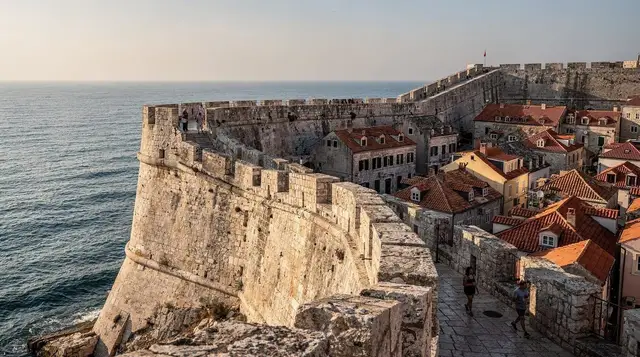
Morning — Dubrovnik or Cavtat. Dubrovnik’s old town is compact and walkable in 2 to 3 hours if you are not doing the city walls properly, which need another hour or more. Cavtat is smaller, has a real working harbour, and gets a fraction of Dubrovnik’s cruise crowds — a reasonable substitute if you want a Croatian coastal town without the volume. Either way, aim to be crossing back into Bosnia and Herzegovina territory by early afternoon; the Trebinje leg and the return border add up faster than they look on a map.
Afternoon — Trebinje. Trebinje is an easy, low-key Bosnian town on the Trebišnjica river, known for its Ottoman-era old bridge and a relaxed riverside café scene, a genuine change of pace from the coast. It is roughly the same driving distance from Dubrovnik as Kotor is, so this leg does not add much beyond the border crossings themselves.
Evening — back to Kotor. From Trebinje, the drive back into Montenegro and down to Kotor takes a little under two hours depending on which crossing you use, putting a realistic return in the early evening if the morning and midday legs stayed on schedule.
| Leg | Approx. drive time from Kotor | Notes |
|---|---|---|
| Kotor to Dubrovnik | 2 h outside peak season | Add 1–3 h at the border in July–August |
| Kotor to Cavtat | Slightly less than Dubrovnik | Quieter alternative, same border |
| Dubrovnik to Trebinje | Around 45 min–1 h | Crosses into Bosnia and Herzegovina |
| Trebinje to Kotor | Under 2 h | Second border crossing back into Montenegro |
A private tour that already routes through Mostar and the Kravica waterfalls covers similar ground with a driver who knows current crossing conditions — worth considering if you would rather not gamble your own schedule on border queues. See a private day trip from Kotor to Mostar and the Kravica waterfalls for that version, which swaps Trebinje for a longer look at Bosnia and Herzegovina’s Herzegovina region.
Combination two: Albania plus a stop in Ulcinj
The southern version pairs the Montenegrin resort town of Ulcinj, with its long sand beach at Velika Plaza, with a short incursion across the Albanian border, usually toward Shkodër.
Morning — drive south to Ulcinj. Around two hours from Kotor along the coast road, with Bar as a reasonable midpoint stop if you want to break up the drive.
Midday — cross into Albania. Shkodër is roughly 2.5 hours from Kotor and closer again from Ulcinj, an old lakeside city with an Ottoman-era bazaar quarter and a hilltop fortress. The Montenegro-Albania border crossings run shorter queues than the Croatian ones; this is the less congested of the two combinations described here, though not exempt from bad days.
Afternoon — back through Ulcinj. Returning via Ulcinj gives you a beach stop or a walk through the old town before the final leg back up the coast to Kotor.
A guided version exists that runs the route the other way, starting from Tirana: a tour from Tirana to Budva and Kotor covers the Albania-to-Montenegro direction for anyone based on that side, useful context if you are weighing which base makes the logistics easier.
The border-queue problem, honestly
This is the part that makes or breaks a two-country day, and it is the part most itineraries gloss over.
Debeli Brijeg / Karasovici, the main coastal crossing to Croatia, is the busiest post on this stretch of coast. In mid-July and August, waits of 2 to 5 hours are routine, and Saturdays are consistently worse because of weekly rental turnover on both sides of the border. Outside those two months, the same crossing usually clears in under half an hour.
Vitaljina, a smaller crossing further inland, is the quieter alternative — often 10 to 20 minutes even when Debeli Brijeg is backed up for hours. It adds some minutes of driving on narrower roads, but in peak season it is frequently the faster overall choice. If your plan depends on a specific return time, build the itinerary around Vitaljina rather than the coast road crossing.
Bosnia and Herzegovina and Albania borders run shorter queues than the Croatian crossing in general, but “shorter” is relative — 20 to 40 minutes is a realistic range rather than a promise. The EU’s Entry/Exit System, rolled out from 2025, has specifically slowed processing on the Croatian side, since Croatia is in Schengen and Montenegro is not; the Bosnian and Albanian crossings are not part of that system and tend to move faster as a result.
The core problem with a two-border day is that these delays do not average out — they compound. A 20-minute wait at the first crossing and a 2-hour wait at the second do not balance to something manageable; they turn a planned 10-hour day into a 12-hour one, often with the worst delay landing right when everyone is tired and hungry. If any part of your day has a fixed time attached — a dinner reservation, a rental car due back by a certain hour, a flight the next morning — do not schedule it for the evening after a Croatia crossing in July or August.
Which combination to pick, and when to skip it
If you only have one day and it falls in July or August, consider dropping to a single country rather than forcing two. A relaxed day in Dubrovnik alone, or Ulcinj and Albania without the Bosnia and Herzegovina add-on, is a better use of a peak-season day than an itinerary that lives or dies on a border queue you cannot see until you are in it.
Outside peak season — late May to mid-June, or September — both combinations are comfortably doable, and this is genuinely the better window: shorter queues, cooler driving, and old towns on both sides of each border that are pleasant to walk rather than crowded.
If you want the logistics handled by someone who tracks border conditions daily, a private guided day trip removes the guesswork. This Mostar and Kravica waterfalls day trip and the broader full-day Montenegro tour from Kotor both build in realistic timing rather than a fixed itinerary that assumes an empty border post.
Planning notes
- Carry your passport, not a copy — every one of these crossings is a full international border, checked on both sides.
- Fill the tank in Montenegro before crossing; fuel prices and card acceptance vary across the borders.
- Check crossing wait times the morning you travel rather than trusting an itinerary written months earlier; conditions change week to week through the season.
- If your day includes Croatia, note that it counts toward the Schengen 90/180 day allowance even for a same-day visit, which matters if you are travelling on to other Schengen countries later in your trip.
- A rental car needs the right insurance paperwork (a green card) to cross into Bosnia and Herzegovina and Albania — confirm this with the rental company before you leave Kotor, not at the border.
For a gentler single-country version of this idea, see the dedicated Dubrovnik day trip from Kotor or Mostar day trip from Kotor guides, and for the Albanian side on its own, the Albania day trip from Kotor guide. If you are still deciding whether Kotor or a Croatian base suits your trip better, Kotor versus Dubrovnik covers that trade-off directly, and the July-August high season guide has more detail on what peak-season crowding does to timings across the region, including at these same border posts.
Frequently asked questions about combining two countries from Kotor
Is it realistic to see Croatia, Bosnia and Montenegro in one day?
Technically yes, but it is a long day. Dubrovnik or Cavtat in the morning, a stop in Trebinje on the way back, and you are home in Kotor by early evening — as long as the Debeli Brijeg crossing is not backed up. In peak August, drop one leg rather than rush all three.
How long is the queue at the Montenegro-Croatia border?
At Debeli Brijeg / Karasovici, the main coastal crossing, waits of 2 to 5 hours are common in mid-July and August, worse on Saturdays when weekly rental changeovers peak. Outside July-August it is usually under 30 minutes.
Is there a quieter border crossing to Croatia?
Vitaljina, further inland on a minor road, usually clears in 10 to 20 minutes even when Debeli Brijeg is jammed. It adds some driving time on smaller roads but is often faster overall in peak season.
Do I need a visa to cross into Bosnia and Herzegovina or Albania from Montenegro?
UK, EU/EEA, US, Canadian and Australian passport holders enter Bosnia and Herzegovina and Albania without a visa for short stays, same as Montenegro. Carry your passport; these are still full international borders with passport checks, not open internal ones.
Does the Croatia border affect my Schengen 90/180 day count?
Croatia is in Schengen; Montenegro, Bosnia and Herzegovina and Albania are not. A day trip into Croatia counts toward your Schengen 90/180 allowance even if you return to Kotor the same evening, so track it if you are close to the limit.
Can I do this without a rental car?
It is much harder. Coastal buses run Kotor-Herceg Novi and there are seasonal links toward Dubrovnik, but there is no practical public transport combining Trebinje or Ulcinj with a same-day return, and border timing is unpredictable enough that you want your own schedule.
What is the single biggest mistake people make planning this?
Treating border crossing times as fixed. A crossing that takes 15 minutes on a Tuesday morning can take 3 hours on a Saturday afternoon in August. Build in a fallback plan and do not book a fixed-time activity, like a dinner reservation or a rental car return, right after the second border.
Best day trips from Kotor on GetYourGuide
Verified deep-linked GetYourGuide tours. Book through these links and we earn a small commission at no cost to you.
GetYourGuide does not provide a product photo for this activity — the image shows the meeting point, photographed by us.