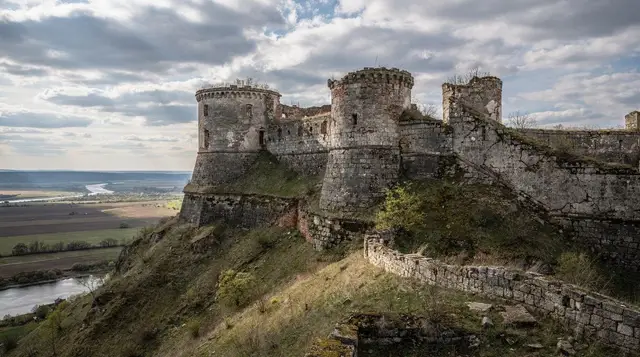
A 30-minute stop, not a destination in its own right
Počitelj sits on the east bank of the Neretva river, about 30 kilometres south of Mostar on the road toward Čapljina and the Adriatic coast. It’s a small fortified village built up the hillside in Ottoman times, with a cylindrical watchtower keeping watch over the valley, a 16th-century mosque, a handful of stone houses turned into galleries and cafés, and steep lanes connecting all of it. None of that takes long to see. Walk up, climb the tower, look at the view, walk back down: 30 to 45 minutes covers it comfortably, including photos.
That’s the honest framing for this page. Počitelj is not worth routing a whole day from Kotor around. It earns its place as a stop on the way between Mostar and Kravice Waterfalls, which is how almost everyone who isn’t staying in Mostar actually sees it — as one leg of a longer loop, whether self-driven or on an organised tour.
What’s actually at Počitelj
The village grew around the Kula (tower) built in the mid-15th century by the Bosnian magnate Stjepan Vukčić Kosača, later expanded under Ottoman rule into a proper fortified settlement with a garrison. The cylindrical watchtower that dominates every photo of the place — the Kula Šišman Ibrahim-paše — was built to watch the Neretva valley and the road below; you can climb it for a view over the river, the orchards, and the road toward Kravice.
Below the tower, the Hadži Alija Mosque (1563) has a distinctive stone dome and a small graveyard around it — one of the more intact examples of Ottoman-period religious architecture in the region, restored after war damage in the 1990s. The rest of the village is stone stairways, low houses with wooden shutters, and a scattering of stalls selling dried fig strings, pomegranates in season, and paintings by local artists — Počitelj has had an informal artists’ colony since the 1960s, and that tradition survived the war better than the buildings did.
There’s no long museum trail or interpretive centre to work through. It’s a walk, a tower, a mosque, a view, and a coffee stop if you want one. That’s the whole visit.
Fitting Počitelj into a Mostar and Kravice day trip
The practical question isn’t “should I go to Počitelj” — it’s “where does Počitelj fit in a day that’s already built around Mostar.” The answer, geographically, is: on the road south, between Mostar and Kravice Waterfalls. Most itineraries run one of two ways:
- Mostar in the morning, Počitelj as a midday stop, Kravice Waterfalls in the afternoon — this keeps the swim at Kravice for the hottest part of the day, when the water is most welcome, and treats Počitelj as a 30-minute break in the drive.
- Blagaj first, then Mostar, then Počitelj and Kravice — Blagaj, with its dervish house built into a cliff at the source of the Buna river, sits a short drive from Mostar in the opposite direction, so this version front-loads the morning with two stops before Mostar itself.
Either way, Počitelj is the short one. Give it the 30–45 minutes it needs and move on; don’t schedule an hour-plus block for it, because there isn’t that much to fill it with.
Self-drive from Kotor: route, border, and real driving time
The most direct route from Kotor to Mostar and on to Počitelj runs through Herceg Novi and across the Montenegro–Bosnia and Herzegovina border, then up through Trebinje toward Mostar — roughly 3h30 of driving from Kotor to Mostar under normal conditions, before you add Počitelj and Kravice Waterfalls further south. That border crossing is one of the ones with shorter waits, unlike the Croatian crossings at Debeli Brijeg, which back up for hours in July and August.
An alternative is the coastal route via Dubrovnik and the Neum corridor, which is longer and adds a second border crossing — Montenegro into Croatia, then Croatia into Bosnia and Herzegovina near Neum, then back into Croatia briefly before Mostar. In peak summer that route risks the same queues that build up at Debeli Brijeg, worsened by the EU’s EES border checks now in place on the Croatian side. The Trebinje route avoids that entirely and is the one most self-drivers should default to.
Once you’re through the border, Mostar to Počitelj is a straightforward 25–30 minute drive south on the main road, and Počitelj to Kravice Waterfalls is another 20–25 minutes. Add it up and a Kotor-based self-drive day covering Mostar, Počitelj and Kravice runs to 8–9 hours of driving alone, before any time spent actually at each stop. That’s a long day by any measure — realistic for a fit, willing driver leaving early, but not something to undersell.
| Route from Kotor | Border crossing | Approx. driving time to Mostar |
|---|---|---|
| Via Herceg Novi and Trebinje | Montenegro → Bosnia and Herzegovina | ~3h30 |
| Via Dubrovnik and Neum | Montenegro → Croatia → Bosnia → Croatia | 4h or more, worse in July–August |
A car is only worth renting for this if you’re comfortable with unfamiliar mountain roads and two international borders in one day. See the car rental guide for what that involves logistically, and the Dubrovnik transfer guide for how the coastal route compares on other trips.
Organised tours that include Počitelj
For most visitors based in Kotor, an organised tour is the more sensible option than self-driving this particular combination — someone else deals with the border, the narrow roads around Mostar, and the parking, and you get the day back for looking around rather than navigating.
a full-day Herzegovina tour that combines Blagaj, Počitelj and Kravice Waterfalls in one loop is the most direct match for this itinerary, built specifically around the three stops rather than treating any of them as an afterthought.
If you’d rather base the day around Mostar itself and add the waterfalls and Počitelj as a loop south of the city, a Mostar-based tour to Kravice Waterfalls, Blagaj and Počitelj, including the Kravice skywalk covers the same ground with a shorter transfer, useful if you’re overnighting in Mostar rather than doing the round trip from the coast in a single day.
Tours that start from further afield — Sarajevo, Imotski, or a general Herzegovina circuit — sometimes fold in Počitelj as a brief photo stop rather than a proper visit. If you’re joining one of those instead of a Mostar or Kravice-focused itinerary, a broader full-day Herzegovina tour departing Mostar is worth checking against the exact stop list before booking, since “Herzegovina tour” covers a wide range of combinations.
None of these depart from Kotor directly; they run from Mostar or Dubrovnik. Most Kotor-based visitors either self-drive to Mostar and join a local tour from there, or book a coast-to-Herzegovina day tour that collects from Kotor hotels — check the pickup point carefully before booking, since not every listing that mentions Montenegro actually collects in Kotor itself.
What it costs and how long to stay
Entering the village and walking its lanes is free. Climbing the watchtower, and in some seasons entering the mosque courtyard, involves a small entrance fee paid on-site — budget it as loose change rather than a planned expense, and expect to pay in Bosnian marks rather than euros. There’s no need to linger past 45 minutes unless you’re stopping for coffee or buying something from one of the small galleries; the village doesn’t have enough ground to cover to justify more time than that, and the road onward to Kravice Waterfalls or back to Mostar is waiting.
| Item | Approx. cost |
|---|---|
| Walking through the village | Free |
| Watchtower climb | Small fee, paid in Bosnian marks on-site |
| Self-drive day (Mostar + Počitelj + Kravice) | €45–75 per person: fuel, tolls, entrance fees, lunch |
| Organised day tour from Mostar or the coast | Higher, but includes transport, guide and border handling |
When to go
Late spring (May and June) and early autumn (September and October) are the better windows: warm enough to enjoy the walk and the view without the peak-summer heat radiating off the stone lanes. July and August bring genuinely uncomfortable midday temperatures in this part of Herzegovina, worse than on the Montenegrin coast because there’s no sea breeze this far inland — if you’re travelling then, aim to reach Počitelj either early in the morning or in the late afternoon on the way back from Kravice Waterfalls, not at midday. Winter is quiet and workable for the village itself, but combine it with checking road conditions over the mountain routes, since the wider trip involves driving through less-travelled terrain than the coastal road.
Practical notes for this leg of the trip
Bosnia and Herzegovina uses the convertible mark (KM/BAM), not the euro, even though Montenegro right across the border does use the euro. Carry some cash in marks for small purchases and entrance fees; euros are occasionally accepted informally in tourist spots but often at a poor rate, so it’s not something to rely on. Bosnia and Herzegovina is outside the EU and outside Schengen, same as Montenegro, so keep your passport on hand for the crossing in both directions — it’s a proper international border, not a formality.
Mobile data can drop out briefly in the mountains between the coast and Mostar depending on your provider; if you’re relying on maps for the drive, download an offline map of the route in advance. See the SIM card guide if you’re setting up connectivity before the trip, and the money and ATMs guide for how cash and cards work on the Montenegrin side of the border.
Given how much of this day is driving, it’s worth being honest with yourself about fatigue: a Kotor–Mostar–Počitelj–Kravice–Kotor loop in a single day is achievable but long, particularly if one person is doing all the driving on unfamiliar mountain roads. Splitting it with an overnight in Mostar, or handing the driving to an organised tour, are both reasonable ways to avoid ending the day exhausted at the wheel.
For the wider context of doing this as a cross-border day trip rather than a standalone booking, see the Mostar day trip guide and the two countries in one day guide, and check the border wait times from experience before picking a route and a departure time.
Frequently asked questions about visiting Počitelj
Is Počitelj worth a special trip from Kotor?
No. It’s a 30–45 minute stop, not a full destination. It only makes sense stacked onto a Mostar day trip, ideally with Kravice Waterfalls and Blagaj on the same route, because the drive from Kotor already takes 3h30–4h each way.
How long does it take to see Počitelj?
Most visitors need 30 to 45 minutes: a walk up through the stone lanes, a look at the Hadži Alija Mosque, and the climb up the cylindrical watchtower for the view over the Neretva valley. It’s a stop, not a half-day destination.
Can I visit Počitelj without a car, from Kotor?
Not easily on your own. There’s no direct public transport link from Kotor, and local buses between Mostar and Počitelj are infrequent. An organised day tour that already includes Mostar, Počitelj and Kravice Waterfalls, or a self-drive rental car, are the two realistic options.
What does it cost to visit Počitelj?
Walking through the village is free. Climbing the watchtower, and in some seasons entering the mosque courtyard, involves a small entrance fee, typically a few euros equivalent, paid in Bosnian convertible marks on-site. Budget the fee as pocket change, not a line item.
Do day tours from Kotor or Dubrovnik include Počitelj?
Some do, usually as a photo stop bundled with Mostar and Kravice Waterfalls or Blagaj. Tours based in Mostar itself, running as a loop to Kravice and Počitelj, tend to give the village more time than tours starting from the coast, which are already committed to a long driving day.
What currency do I need in Počitelj?
Bosnian convertible marks (KM/BAM), not euros. Montenegro uses the euro but Bosnia and Herzegovina does not, despite being right across the border. Small cash in marks covers the tower entrance fee and any drinks; euros are sometimes accepted informally at inflated rates, but don’t rely on it.
Is the watchtower climb suitable for kids or people with limited mobility?
The lanes up through the village are steep, cobbled and uneven, and the watchtower itself is reached by narrow stone stairs with no handrail for most of the climb. Manageable for most children with supervision; not realistic for wheelchair users or anyone unsteady on stairs.