Most people who come to the Bay of Kotor never get past the inner bay: Kotor, Perast, maybe Tivat. Herceg Novi sits at the opposite end, where the bay opens into the Adriatic proper, and it rewards the detour with something Kotor cannot offer — a genuinely different climate, a fortress town built up a hillside rather than flat inside city walls, and a stairway that locals will tell you, with a straight face, runs to nearly 1,000 steps from the main road down to the sea.
A different climate at the bay’s mouth
Kotor sits deep inside a ria — a drowned river valley, not a fjord, whatever the postcards say — hemmed in by steep limestone slopes that shade the town for much of the afternoon and trap cooler, damper air. Herceg Novi faces the open sea. The difference shows in the vegetation before it shows in the thermometer: palm trees, oleander, bougainvillea and, above all, mimosa, which blooms here from February, weeks before anywhere else on this stretch of coast. Locals describe the town as Montenegro’s warmest corner, and the claim holds up in winter more than in the height of summer, when the whole coast is hot regardless.
That microclimate is the reason Herceg Novi’s mimosa festival, held every February since 1969, is a genuine local institution rather than a tourist-board invention. If you are in the bay in late winter and wondering whether anything is open, this is where to come.
Kanli Kula and the old town on the slope
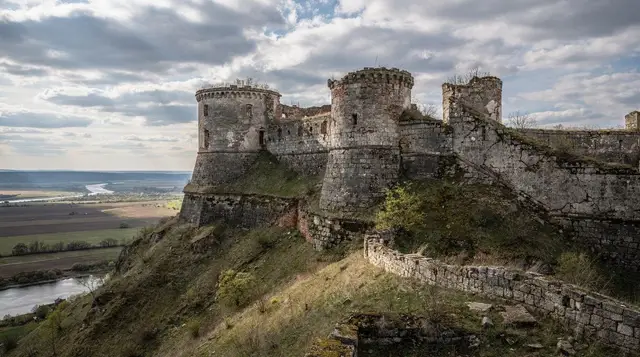
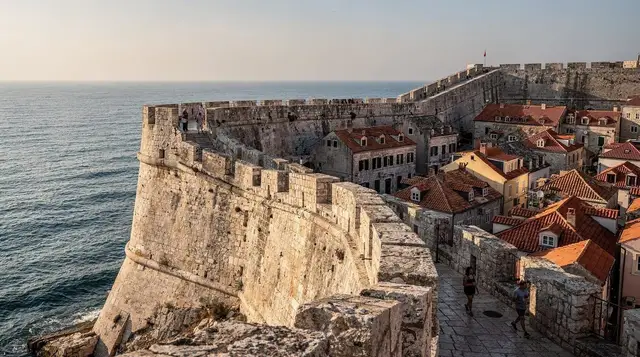
Where Kotor’s old town is flat and walled, Herceg Novi’s climbs a hillside in tiers. The fortress of Kanli Kula — the name means “bloody tower” in Turkish, a reminder that the Ottomans held the town for over a century before the Venetians took it — sits above the old core and is open to visitors for a modest entrance fee. Its thick stone terraces give an open view down over the rooftops to the harbour and, on a clear day, out past the bay mouth to the open Adriatic. In summer the fortress occasionally doubles as a concert and open-air cinema venue, a use that suits its scale better than a conventional museum would.
Below Kanli Kula, the old town is a compact tangle of stepped lanes, small squares and churches from several different eras of rule — Venetian, Ottoman, Austro-Hungarian — stacked close together in a way that Kotor’s more uniformly Venetian old town is not. A proper walk through it, fortress included, takes an hour or two rather than the 30–45 minutes needed to cross Kotor’s walls end to end. For a structured route through the lanes and churches, see the Herceg Novi old town walking guide.
The stairway: about 1,000 steps between the highway and the sea
The single most-repeated fact about Herceg Novi, and the one that surprises first-time visitors most, is the staircase. The main coastal highway runs along the upper part of town, well above sea level; the old town, harbour and seafront promenade sit far below. Connecting the two is a network of stepped streets and staircases that locals and guidebooks alike round off to “a thousand steps,” even though there is no single continuous flight — it is a stitched-together route of several staircases and stepped lanes rather than one monumental stairway.
Which way you tackle it matters. Arriving from Kotor by road, most visitors park or get dropped near the highway and descend toward the sea, which is the easier direction and takes perhaps 20–30 minutes at an unhurried pace with stops for photos. Doing it in reverse, starting from the seafront and climbing to the highway, is a proper workout, closer in effort to the climb up to Kotor’s old town and the San Giovanni fortress stairs, minus the entrance fee. Either way, wear proper shoes: the steps are stone, uneven in places, and can be slippery when wet.
Getting there from Kotor
Two realistic routes connect Kotor to Herceg Novi, and which one makes sense depends on time of day and season.
| Route | Distance/time | Cost | Notes |
|---|---|---|---|
| Coastal road via Risan and Kamenari | ~45 min | Fuel/taxi fare only | Follows the bay shoreline the whole way; scenic but can be slow behind trucks |
| Kamenari–Lepetane ferry crossing | Saves ~25 km / 30–40 min of driving | €5 per car, €2.50 per motorbike, pedestrians free | Runs every 15–20 min in summer; queues up to an hour at peak times, so it is a shortcut on paper more than a guarantee |
| Coastal bus (Kotor–Risan–Herceg Novi) | Similar to driving, plus waiting time | A few euros | No centralised online booking; check current timetables locally |
For drivers coming from further afield, the Kamenari–Lepetane ferry guide covers timing the crossing to avoid the worst of the queue. There is no need to rent a car specifically for this trip if you are already staying in Kotor — a taxi, organised tour or the coastal bus all work — but if you are planning to see Igalo, Savina and the Lustica peninsula in the same day, your own wheels make the day considerably less fiddly.
Mimosas, palms and the subtropical microclimate
Herceg Novi’s gardens are the clearest evidence of its warmer position. Villas along the old town’s edges and the promenade toward Igalo are planted with palms, citrus, oleander and bougainvillea that would struggle in Kotor’s shadier, cooler pocket of the bay. The Institute of Marine Biology’s botanical garden, tucked into the town, holds species collected from across the Mediterranean and beyond over more than a century, and is worth half an hour even for visitors who would not normally seek out a botanical garden.
The mimosa itself — a wattle originally from Australia, not a native Adriatic plant — has become so associated with the town that its February bloom triggers an annual festival with a flower-covered parade through the streets. Outside that specific window, spring here still arrives measurably earlier than in Kotor: by late March, when Kotor’s old town is still shaking off winter grey, Herceg Novi’s seafront is often already in full leaf.
Beaches, promenade and Igalo
Herceg Novi’s own swimming spots are modest rather than spectacular — mostly concrete platforms and small pebble coves along the town promenade rather than the sweeping sand of Velika Plaza further south. The better beach option nearby is the promenade stretching toward Igalo, a spa town immediately southwest of Herceg Novi known for mud and mineral treatments rather than sand quality. It makes a pleasant flat walk or cycle after the stairway climb, and a reasonable lunch stop away from the old-town crush.
For anyone weighing whether to stay in this end of the bay rather than in Kotor itself, the comparison in where to base yourself in the bay is written with Budva rather than Herceg Novi in mind, but the underlying trade-off — milder climate and quieter evenings versus proximity to the old-town sights — applies here too.
Blue Cave trips depart from here too
A common mix-up: the Blue Cave is not near Kotor. It sits on the Lustica peninsula, closer to Herceg Novi than to anywhere in the inner bay, which is why most boat trips to it launch from Herceg Novi, Igalo or Bijela rather than from Kotor’s harbour. If a same-day boat trip to the cave is on your list, basing the day around Herceg Novi rather than Kotor cuts out a lot of transfer time.
Morning departures tend to give calmer water and better light for photographing the cave’s glow, which fades once the afternoon sun angle shifts and boat traffic picks up. Operators running from this end of the coast include a snorkelling trip by speedboat snorkelling excursion to the Blue Cave departing Herceg Novi, and a similar swimming and snorkelling run leaving from Bijela, a short drive up the coast from Herceg Novi. Both are shorter and cheaper than chartering a private boat, at the cost of sharing the cave’s narrow entrance with other groups.
Visitors based near Mamula Island, the fortress-turned-hotel guarding the bay mouth, will find it sits directly on the route between Herceg Novi and the cave, and many boat trips pass close by even when it is not a scheduled stop.
Where to eat and what it costs
Prices here track the rest of the bay closely; Herceg Novi is not noticeably cheaper or pricier than Kotor, though the seafront restaurants directly on the old-town promenade charge a premium similar to Kotor’s walled old town, while streets one or two blocks back are markedly better value.
| Item | Typical price (summer) |
|---|---|
| Coffee | €1.20–2 |
| Local beer (Nikšićko) | €2.50–4 |
| Main course, non-touristy restaurant | €8–15 |
| Apartment, per night | €50–100 (€30–50 off season) |
| 3–4 star hotel, per night | €90–180 (€50–100 off season) |
The food itself follows the same Montenegrin coastal repertoire found across the bay — grilled fish and squid, prosciutto and cheese from the Njeguši hills inland, kajmak, and the local Vranac and Krstać wines — with the addition of a wine-and-cooking angle that some operators in Herceg Novi specifically lean into. A half-day wine tasting paired with a hands-on gnocchi cooking class in Herceg Novi is a reasonable way to spend a rainy or scorching-hot afternoon that isn’t suited to the stairway or a boat.
Practicalities: parking, buses, timing your visit
Parking works differently here than in Kotor. Because the old town sits well below the main highway, most visitors park near the top of the stairway network, close to the road, and walk down — which is also the easier direction, so it works out conveniently. Central spaces do fill up in the middle of summer days, particularly when cruise-linked coach tours pass through, so arriving before mid-morning or after the late-afternoon heat breaks gives an easier run at both parking and photographs without crowds on the steps.
Herceg Novi does see some of the same cruise-passenger traffic that fills Kotor’s old town between roughly 10:00 and 16:00 in season, since coach excursions sometimes combine both towns in a single day. It is markedly less crowded than Kotor at those hours, but not immune to it, so the same logic applies: earlier or later in the day is calmer.
For visitors touring the bay without a rental car, Herceg Novi fits naturally into a wider loop. The Bay of Kotor by boat itinerary covers a water-based route around the inner bay, while those wanting to see everything from Kotor to Herceg Novi without driving themselves should check common tourist scams around Kotor before agreeing a taxi fare for the return leg — meters exist by law here as elsewhere in Montenegro but are inconsistently used with visitors, so agree a price or book ahead rather than hail on the spot.
Combined with a morning in Kotor, a stop at Perast on the way round, and an afternoon in Herceg Novi, this end of the bay makes a full and varied day out — mountains and a walled old town at one end, a subtropical hillside town and open sea at the other, connected by a bay that looks entirely different depending on which side of it you are standing on.
Those staying instead in Tivat or flying via its airport will find Herceg Novi a natural add-on, closer to Tivat than to Kotor for anyone counting minutes rather than kilometres. Travellers coming from or heading toward Dubrovnik pass close by too, since the coastal road north from Herceg Novi leads directly to the Montenegro–Croatia border crossings.
One last note on nearby villages: the small settlement of Njivice and the monastery grounds of Savina, just outside the centre, are both easy walking or short-taxi additions if the stairway and fortress have left you wanting more of the town’s quieter corners rather than another set of steps. Savina in particular rewards a slow half hour, its shaded terrace and old cypresses offering a break in pace from the stepped streets below.