A Saturday at the Croatia border: what four hours at Debeli Brijeg taught me
We left the apartment in Dobrota at 9.40am on a Saturday in the middle of August, coffee still in hand, aiming for lunch in Dubrovnik old town. Google Maps said 1 hour 55 minutes. I’d driven this road before, off season, and it really had taken under two hours door to door. What I hadn’t accounted for was that Croatia joined the Schengen area at the end of 2022, which turned a simple stamp-and-wave crossing into a full passport check on the Croatian side, for every car, every time. On a Saturday in peak season, that single change is the difference between a pleasant coastal drive and an afternoon spent watching the same three cars in front of you inch forward.
Why Saturdays are worse than every other day
Saturday is turnover day for the villa and apartment rental market up and down this coast. Week-long bookings run Saturday to Saturday, so thousands of people are driving between Croatia and Montenegro at the same time, often heading the same direction as everyone else on the road. Add cruise passengers doing a Dubrovnik-Kotor combination day trip, add tour buses, add locals doing an ordinary supermarket run across the border, and you get a queue that starts forming before 8am and doesn’t really let up until well after dark.
The crossing we used, Debeli Brijeg on the Montenegrin side and Karasovići on the Croatian side, is the main coastal route and by far the busiest. It’s the one every map app defaults to because it’s the shortest line between Kotor and Dubrovnik. In July and August, on a Saturday, this is the post where I’d budget 2 to 4 hours, and I’ve heard credible reports of longer on the worst weekends. What makes it worse now than a few years ago is the EES system Croatia has been rolling out since 2025, which adds extra processing time per passport at exactly the border that already carries the most traffic on the peninsula.
What actually happened
We hit the back of the queue around 10.15am, maybe 3km before the border post itself, traffic barely moving, engine off more than it was on. My first mistake was not checking anything before leaving; I assumed a Saturday morning would be quieter than a Saturday afternoon, which turned out to be backwards; the queue was already building from early risers doing exactly what we were doing. By the time we reached the actual booth it was past 1pm. Two hours and forty-five minutes for a stretch of road that takes about six minutes to drive with no queue at all.
Two things stood out once we were actually at the checkpoint. First, the Montenegrin side moved fast; it’s the Croatian side, now full Schengen border control, that does the real checking, and every passport gets looked at properly, non-EU documents especially. Second, even the EU passport holders in the cars around us had their documents checked in full; Montenegro is outside the Schengen area, so nobody gets waved through on an EU ID card alone the way you might between two Schengen countries. Keep your passport in the door pocket or the glovebox, not buried in a suitcase in the boot; you will need to hand it over, and rummaging for it while the queue behind you sits idle earns exactly the looks you’d expect.
What I’d do differently
Time of day matters more than anything else. Crossing before 7am or after 9pm at Debeli Brijeg is a genuinely different experience, closer to 10 to 20 minutes than 2 to 4 hours. If lunch in Dubrovnik is the goal, an early breakfast and a 6.30am departure from Kotor gets you there with the whole day still ahead, and the drive back that evening, after 9pm, is just as painless. It costs you a lie-in, not a wasted afternoon.
The alternative crossing is worth knowing about. Vitaljina, further inland on a smaller road, carries a fraction of the traffic because it isn’t the default route on navigation apps and doesn’t serve the coastal resorts directly. It adds some driving time compared with the coast road, but trading twenty extra minutes on the road for two fewer hours in a stationary queue is not a difficult trade once you’ve sat through the alternative once.
Consider not driving at all. A guided day trip takes the border logistics off your plate entirely; operators know the current queue patterns and adjust timing and routing accordingly, and you’re not the one deciding whether to gamble on Debeli Brijeg or backtrack toward Vitaljina with a queue already building behind you. If Dubrovnik specifically is the aim, our Montenegro highlights day trip with a guide covers the Bay of Kotor side properly and leaves the cross-border planning to someone who does it daily.
If you’d rather stay on the Montenegrin side of the border altogether that day, a Kotor, Perast and Budva highlights tour covers a full day without going near a border post, and a Kotor e-tuktuk tour through Prčanj, Tivat and Trojica Hill is a good half-day fallback if the border news that morning sounds bad and you’d rather stay local.
Fuel and patience before you queue, not after. There’s little at the queue itself beyond a couple of roadside stalls; top up the tank and use the toilet in Herceg Novi or before, because once you’re committed to the line there’s no realistic way to leave it. Water and snacks in the car are not optional in August heat with the engine off for stretches at a time.
Was it worth it
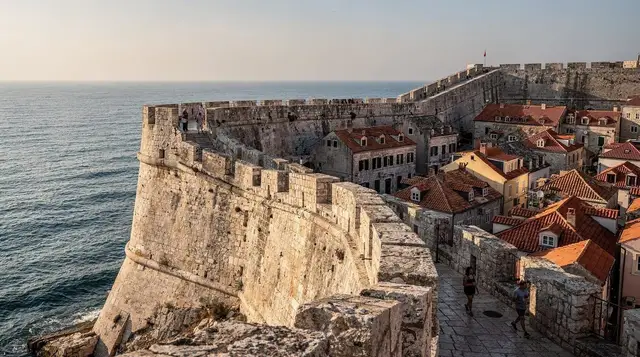
We did get to Dubrovnik, ate a very average and overpriced lunch near the old town walls, and drove back that evening after 9pm in under fifty minutes each way including the border. So the crossing itself, done at the right time, is nothing at all; it’s the timing decision that does all the work. Next time I want a day in Dubrovnik from Kotor, I’m leaving at 6am or not going by road on a Saturday in August at all.
For anyone planning the same trip, our Dubrovnik day trip from Kotor guide and the more general Dubrovnik transfer guide go into the logistics in more detail, and the July-August high season guide covers what else gets harder on the coast at this time of year, from parking in Kotor to bus reliability covered in our buses in Montenegro guide.
If a rental car isn’t already booked, our car rental Montenegro guide is worth reading before the border planning, not after; and if the coast queue looks bad on the day, the inland Montenegro-Croatia-Bosnia loop itinerary shows how the Vitaljina route fits into a longer route rather than a single day trip. For the Kamenari-Lepetane ferry across the bay itself, none of this applies; that’s a different, much shorter, much calmer queue, and not connected to the Croatian border at all.
Our cost of a day in Kotor post and the climbing 1,350 steps in August piece cover other ways an August day here can run long if you don’t plan the timing, and our Montenegro daily budget guide and best time to visit guide both make the same point from a different angle: late May, early June and September solve most of what August makes difficult, borders included.
Questions about the Croatia-Montenegro border crossing
How long is the wait at Debeli Brijeg on a Saturday in August?
Typically 2 to 4 hours, sometimes longer on the worst weekends. It’s the busiest coastal crossing between Montenegro and Croatia and carries villa-turnover traffic, cruise day-trippers and ordinary cross-border commuters all at once.
Why did the border get slower after 2022?
Croatia joined the Schengen area at the end of 2022. Montenegro is not in Schengen, so every vehicle now goes through a full passport check on the Croatian side rather than a quick stamp. The EES system rolled out from 2025 has added further processing time per passport.
Do EU citizens skip the checks since Montenegro isn’t in Schengen either?
No. Because Montenegro sits outside Schengen, there’s no shortcut for EU passport holders here the way there might be between two Schengen countries. Every passport gets checked properly on the Croatian side, EU or not.
Is there a quieter alternative to Debeli Brijeg?
Yes. The Vitaljina crossing, further inland, usually clears in 10 to 20 minutes even when the coastal post is backed up for hours. It adds some driving time but is worth it on a Saturday in high season.
What time should I cross to avoid the queue?
Before 7am or after 9pm at Debeli Brijeg. Outside those windows in July and August, and especially on a Saturday, assume a long wait and plan around it rather than hoping it clears.
Is there anything at the queue itself, food or toilets?
Very little reliable. Fuel up and use facilities in Herceg Novi or earlier, and carry water, particularly in August heat with the engine off for long stretches.
Does this affect the Kamenari-Lepetane ferry across the Bay of Kotor?
No, that’s an internal Montenegrin ferry crossing the bay itself and has nothing to do with the Croatian border. Its queues run to about an hour at peak and are a separate issue entirely.
tours.Road trip
Verified deep-linked GetYourGuide tours. Book through these links and we earn a small commission at no cost to you.
GetYourGuide does not provide a product photo for this activity — the image shows the meeting point, photographed by us.