Montenegro to Croatia to Bosnia: a 6-day loop from Kotor
Why loop three countries from Kotor
Kotor sits close enough to two other countries that a short road trip beats flying anywhere. Dubrovnik is two hours away outside peak season, Mostar is another country over from there, and the whole thing can be driven as a loop that returns to Kotor without doubling back on the same road twice. The catch is paperwork and timing, not distance. The total driving is under nine hours spread across six days, but three separate border crossings sit inside that total, plus a rental car that has to be legally allowed to leave Montenegro.
This version of the loop treats Trebinje as the calm middle rather than a pass-through town, because both Dubrovnik and Mostar fill with day-trip buses by mid-morning in summer, and a night somewhere quiet in between makes the whole week easier.
Before you leave: documents and the rental car
- Passport, not just ID card. Montenegro is outside the EU, Schengen and the EU customs union; Croatia is inside Schengen since 2023; Bosnia and Herzegovina is outside both. Every crossing is a full passport check, both ways.
- Green card insurance. A Montenegrin rental car needs a green card (international motor insurance certificate) that explicitly lists Croatia and Bosnia and Herzegovina. Some local rental agreements only cover Montenegro and the immediate region unless you ask; confirm this in writing before signing, not at the border. See our car rental in Montenegro guide for what to check.
- Vehicle registration (carte grise) and the rental company’s cross-border letter, if they issue one. Some Croatian and Bosnian border police ask for it, some don’t; carrying it costs nothing.
- Cash in both euros and Bosnian convertible marks (BAM). Bosnia and Herzegovina uses the convertible mark, not the euro; small guesthouses and konoba restaurants in Trebinje, Blagaj and Počitelj are often cash-only.
The three border crossings, at a glance
| Crossing | Where | Direction | Typical wait, July-August | Typical wait, off-peak |
|---|---|---|---|---|
| 1 | Debeli Brijeg / Karasovići | Montenegro → Croatia | 1-3 hours, worse on Saturdays | 10-20 minutes |
| 2 | Near Ivanica, south of Konavle | Croatia → Bosnia and Herzegovina | Usually under 20 minutes | Under 10 minutes |
| 3 (return) | Bosnia → Croatia → Montenegro, same points reversed | Return leg | 1-2 hours combined, worse on Saturdays | 15-30 minutes |
Crossing 1 is the one to respect. Croatia’s move into the EU’s Entry/Exit System has added processing time on that side since 2025, and a mid-July or August Saturday can mean two to five hours sitting in traffic before the barrier. Crossing an hour before or after peak departure times, or simply not crossing on a Saturday, does more for this trip than any other single decision. Bosnia’s border, by contrast, rarely backs up on this route.
Day 1: Kotor to Dubrovnik, via Herceg Novi
Leave Kotor as early as sensibly possible, ideally before 8am. The coast road runs past Perast and around the bay to Herceg Novi, about 45 minutes without stops. Herceg Novi’s old town is small enough to see in under an hour if a short break is welcome; otherwise continue straight to the border. If a Blue Cave boat trip appeals more than a full day of driving, this is the base for it rather than somewhere to fit in on a driving day: a half-day boat trip to the Blue Cave from Kotor is worth saving for a different trip if today is a travel day.
From Herceg Novi it’s a short run to Debeli Brijeg. Clear the border and continue into Croatia; the road to Dubrovnik skirts the coast and takes roughly 45 minutes to an hour beyond the crossing, traffic depending. Check in, and use the late afternoon for a first look at the Old Town from outside the walls — after 5pm the cruise crowds have mostly returned to their ships, which is the same rule that applies in Kotor’s own old town.
Day 2: Dubrovnik old town
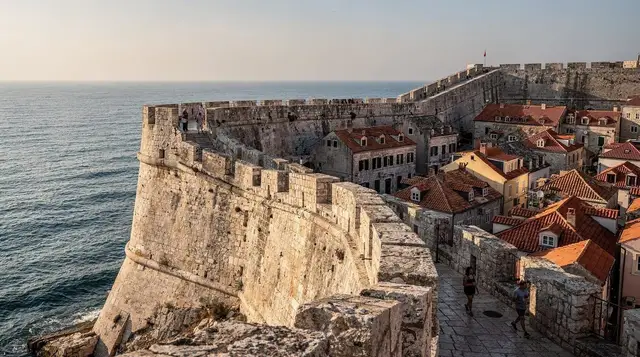
A full day inside the walls. Dubrovnik gets the same cruise-ship rhythm as Kotor, just at a larger scale: several ships can call at once, and the Stradun is at its most crowded roughly 10am to 4pm. An early walk along the walls before 9am, or after the day-trippers clear out from late afternoon, is a genuinely different experience from the middle of the day. The cable car up Mount Srđ gives a view over the walled town and the islands offshore, weather permitting; it queues badly at midday and is quieter first thing or at sunset.
If the afternoon is clear and a break from walking sounds better than another hour on cobblestones, a half-day sailing trip out to the Elaphiti Islands from Dubrovnik’s old harbour covers ground a car can’t reach and skips the crowd altogether.
Day 3: Cavtat, the Konavle Valley, and on to Trebinje
Cavtat is 20 minutes south of Dubrovnik and takes a fraction of its crowd, with its own harbourfront and a quieter pace. A couple of hours here, including renting a small boat for an hour or two along the Cavtat coastline, is a good antidote to the previous day’s density.
From Cavtat, the road climbs inland into the Konavle Valley: vineyards, stone villages and a slower rural landscape that most Dubrovnik visitors never see, since they fly in and out without a car. Stop for lunch at a family konoba if one is open — Konavle produces its own wine and olive oil, and roadside signs advertise both.
By mid-afternoon, continue toward the second border crossing, south of Konavle near Ivanica, into Bosnia and Herzegovina. This crossing is consistently the easiest of the three. Arrive in Trebinje by early evening. Trebinje is a genuine break in the trip: a walkable old town on the Trebišnjica river, plane-tree-shaded cafés, and none of the queues that define Dubrovnik and Mostar. Treat it as the trip’s rest stop, not a box to tick — an unhurried dinner here does more for the following two driving-heavy days than trying to push on to Mostar the same night.
Day 4: Trebinje to Mostar, via Počitelj
A slow morning in Trebinje is worth it before the day’s driving starts. From there, the route to Mostar passes two worthwhile stops. Počitelj, the fortified Ottoman-era hilltop village on the Neretva river, is small — walkable in 30-45 minutes — but its narrow lanes get uncomfortably busy with tour buses by late morning in summer. Arriving before 10am or after 5pm avoids most of that; on a Trebinje-to-Mostar itinerary, an early stop works better than a late one, since Mostar itself is only another 30 minutes on.
Check in to Mostar by early-to-mid afternoon, leaving time to walk the Old Town once the day’s coach groups have started to thin out.
Day 5: Mostar, Blagaj and Kravice, timed around the crowds
Mostar’s Old Bridge (Stari Most) is genuinely crowded by mid-morning in summer, with tour buses arriving from Dubrovnik, Split and Sarajevo on tight schedules. A walk to the bridge before 9am, while divers are still warming up rather than performing for a paying crowd, is a different place from the same spot at 1pm.
After that, Blagaj is a 25-30 minute drive: a Dervish tekke built into a cliff at the source of the Buna river, calm even in season since it doesn’t sit on the main coach circuit. From there, Kravice Waterfalls is another 45 minutes. Kravice is the other spot on this loop that gets seriously crowded at midday in summer — river-boat groups and swimmers pack the viewing areas and the beach by late morning.
Arriving in the early morning is the better option if the day allows it; failing that, aim for after 5pm, when the light is softer and the coach groups have moved on. Given the morning is already committed to the Old Bridge, a late-afternoon Kravice visit, then a return to Mostar for the evening, is the more realistic sequence for most travellers on this schedule.
Day 6: Mostar to Kotor, via Trebinje and the return crossings
The return leg reverses the outbound route: Mostar to Trebinje (about an hour), a pause here if there’s appetite for one more quiet coffee before re-entering Croatia, then the Bosnia-Croatia crossing near Ivanica, the drive back through the Konavle Valley and past Dubrovnik, and the Debeli Brijeg crossing back into Montenegro. Combined, the return border crossings can run 1-2 hours in peak summer, longer on a Saturday — the same advice as Day 1 applies in reverse: avoid a Saturday afternoon push if the dates are flexible, and leave earlier rather than later. From Debeli Brijeg it’s under an hour back to Kotor via Herceg Novi.
Distances and driving times
| Leg | Distance | Driving time (excluding borders) |
|---|---|---|
| Kotor → Herceg Novi | ~35 km | 45 min |
| Herceg Novi → Dubrovnik | ~35 km | 45 min - 1 hr |
| Dubrovnik → Cavtat | ~20 km | 20-25 min |
| Cavtat → Trebinje | ~45 km | 1 hr |
| Trebinje → Počitelj | ~50 km | 55 min |
| Počitelj → Mostar | ~30 km | 30 min |
| Mostar → Blagaj | ~12 km | 20-25 min |
| Mostar → Kravice Waterfalls | ~40 km | 45 min |
| Mostar → Trebinje (return) | ~95 km | 1 hr 15 min |
| Trebinje → Kotor (return) | ~95 km | 1 hr 30 min, plus borders |
Budget for six days
A mid-range budget of 80-130 EUR per person per day covers a private room or mid-range hotel, two restaurant meals, fuel share and entry fees, higher in Dubrovnik where accommodation and restaurant prices run well above Trebinje and Mostar. Trebinje and Mostar are noticeably cheaper than Dubrovnik and Cavtat for food and lodging, which is one more reason to spend a full night in each rather than rushing through.
Alternatives if the borders put you off
A car isn’t compulsory for parts of this route. Dubrovnik itself is reachable from Kotor by organised transfer without driving, and travellers who’d rather skip the wheel entirely can look at our Montenegro without a car guide for a version of the coast that doesn’t need a rental agreement or a green card. The Croatia-Bosnia leg genuinely does need a car, or an organised day trip to Mostar from Kotor that handles the border for you, at the cost of a fixed schedule rather than the flexible one above.
FAQ: the Kotor-Dubrovnik-Mostar border loop
How long does the Debeli Brijeg border crossing actually take?
It varies enormously by day and hour. Off-season or early morning, 10-20 minutes is normal. In July and August, especially on Saturdays when accommodation changeovers cluster traffic, waits of 2-5 hours have been reported. The EU’s Entry/Exit System, rolled out on the Croatian side from 2025, has added processing time on top of the previous baseline. Crossing before 8am or after 8pm, and avoiding Saturdays, are the two levers that matter most.
Does my Montenegro rental car allow driving into Croatia and Bosnia?
Not automatically. Ask the rental company directly and get it in writing: many Montenegrin rental agreements limit green card insurance coverage to Montenegro and immediate neighbours, or charge extra for Bosnia and Herzegovina specifically since it sits outside the EU. Confirm before signing, since a border officer finding a green card that doesn’t list Bosnia can turn the car around.
Is Trebinje worth a full night, or just a coffee stop?
A full night. Trebinje has its own walkable old town on the Trebišnjica river, a monastery complex on the hill above, and prices well below Dubrovnik or Mostar. It also breaks up the driving so that neither the Dubrovnik-to-Mostar leg nor the return leg has to be done in one long day.
When are the Old Bridge in Mostar and Kravice Waterfalls least crowded?
Both fill up from roughly mid-morning through mid-afternoon in summer, driven by day-trip coaches from Dubrovnik, Split and Sarajevo working to tight schedules. Before 9am or after 5pm is quieter at both. Since they’re a 45-minute drive apart, most travellers can only catch one of the two at its best time on the same day — pick whichever matters more and treat the other as a reasonable trade-off.
Do I need a visa for Bosnia and Herzegovina on this trip?
Citizens of the EU/EEA, UK, US, Canada and Australia can enter Bosnia and Herzegovina without a visa for short tourist stays, similarly to Montenegro’s own visa-free allowance. A valid passport is required at every crossing on this loop regardless of visa status; an ID card alone is not accepted at the Croatia-Bosnia or Bosnia-Croatia crossings.
Can this loop be done without crossing into Bosnia, if the border puts me off?
Yes — dropping Mostar, Blagaj, Počitelj, Kravice and Trebinje turns this into a shorter Montenegro-Croatia loop focused on Dubrovnik and Cavtat, doable in 3-4 days instead of 6. The Croatia-Bosnia crossing near Trebinje is the one to skip if the goal is fewer borders rather than fewer countries.
Which direction is better: Montenegro to Croatia to Bosnia, or the reverse?
Either works logistically. Starting in Montenegro and finishing in Montenegro, as laid out here, means the last day’s driving ends at home base rather than somewhere unfamiliar, which matters more than it sounds after five days of borders and mountain roads.
tours.6 days
Verified deep-linked GetYourGuide tours. Book through these links and we earn a small commission at no cost to you.
GetYourGuide does not provide a product photo for this activity — the image shows the meeting point, photographed by us.