Three days in Kotor: bay, old town and the road to Cetinje
Why three days means leaving the coast, not just walking more of it
Most short trips to Kotor never get more than a few kilometres from the water. Two days is enough for the Old Town and a boat out to Perast; it is not enough to see the country behind the bay. This itinerary uses the third day for the old road to Njeguši, Lovćen National Park and Cetinje — a genuinely different Montenegro of dry-stone villages, cured ham hung in stone smokehouses, and a former royal capital with none of the cruise-ship crowds.
Read this the other way round too: day 3 is a mountain-driving day, not a bus excursion. If hairpin roads make you nervous, the alternatives are laid out below, but don’t sign up for the drive expecting it to feel like the coastal corniche.
| Day | Focus | Car needed |
|---|---|---|
| 1 | Kotor Old Town and San Giovanni Fortress | No |
| 2 | Bay of Kotor by boat, Perast, Our Lady of the Rocks | No |
| 3 | Njeguši old road, Lovćen, Njegoš Mausoleum, Cetinje | Yes (or transfer) |
Day 1: Kotor Old Town and San Giovanni Fortress
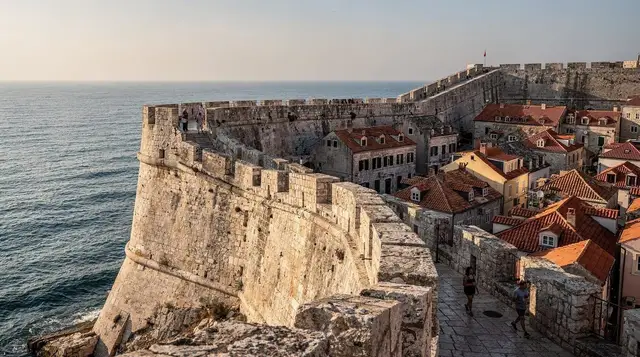
Start early, before the first cruise tenders land. The Old Town is walled by 4.5km of fortifications and crossed in 30 to 45 minutes if you don’t stop, which you won’t manage — narrow lanes, cats sunning themselves on doorsteps, and the Cathedral of Saint Tryphon, consecrated in 1166, with its two towers that no longer match after repeated earthquake damage. Enter through the Sea Gate on Trg od Oružja (the Square of Arms) and let the walls, not a map, decide your route for the first hour. Our Old Town walking guide covers a sensible loop if you want more structure.
By mid-morning the ship-day crowds arrive — see the box below — so use the calmer window to climb San Giovanni Fortress, roughly 1,350 steps above the rooftops. Budget 45 minutes to an hour and a half depending on fitness and how often you stop for the view, which improves with every switchback. Entry has run between 8 and 15 EUR depending on season and who is collecting it at the gate; bring cash and check current signage.
The stair closes in heavy rain, when the worn stone gets genuinely slippery. If you’d rather skip the fee and the crowds on the stair, the free alternative is the Ladder of Kotor, the old mule track that climbs from the back of town — longer, quieter, no ticket booth. Full detail in the San Giovanni Fortress climb guide and the Ladder of Kotor hiking guide.
Cruise-ship reality check. In 2025 Kotor logged around 505 cruise calls and more than 700,000 passengers over the April-to-October season, and a single large ship can put 2,000 to 4,000 people ashore at once. Between roughly 10am and 4pm the Old Town’s main streets are genuinely crowded; before 9:30am and after 5pm it empties out. Plan the fortress climb and the quiet corners for those windows — details in the cruise-ship days in Kotor guide and our day the cruise ships fill the old town piece.
Lunch or an evening drink on the Old Town’s waterfront terraces will run at the top of local prices — expect 8 to 15 EUR for a main at a non-touristy spot, more right on the square. For where locals actually eat, see where to eat in Kotor Old Town.
Day 2: the bay, Perast and Our Lady of the Rocks
Day 2 moves onto the water. Perast is 12km and about 20 minutes from Kotor by car or bus, a baroque village of sea captains’ houses with almost none of Kotor’s crowding. From its waterfront, boats run out to Our Lady of the Rocks, an artificial islet built up over centuries on rocks that fishermen and sailors deliberately piled and sank — not a natural feature, and worth knowing that before you go, since the church and small museum inside make more sense with the backstory. The shuttle boat from Perast costs a few euros return.
a two-hour Perast and Our Lady of the Rocks sunset boat trip covers both the crossing and a loop of the inner bay, which is the easiest way to do this leg without negotiating with boatmen on the quay. Our Perast without the crowds guide and the Our Lady of the Rocks visit guide go into opening hours and the museum’s contents.
If you have half a day free, the Blue Cave — a sea cave near Lustica, not at Kotor itself, best for photos in mid-morning light — is a common add-on from boats based in this part of the bay. A Blue Cave ticket-tour from Kotor bundles the cave with a swim stop; the Blue Cave boat trip guide explains what a fair itinerary looks like versus a rushed one. Remember when reading up on the bay that this is a ria — a flooded river valley — not a fjord, whatever the marketing sometimes calls it; the Kotor Bay boat tour guide has the full geography.
Round out the afternoon with Dobrota or Prčanj, villages of baroque merchant palaces a short drive or bus ride along the bay road, quieter than anything in central Kotor. Our Dobrota baroque palaces walk and Prčanj hidden gem guide cover both.
Day 3: the Njeguši road, Lovćen and Cetinje
This is the day that makes three days worth more than two, and it needs to be read as a mountain-driving day rather than a sightseeing add-on. The old road to Njeguši climbs out of the bay in roughly 25 hairpin bends, built by Austro-Hungarian engineers around 1880 to link Kotor with Cetinje before any coastal highway existed. It’s narrow — two cars pass carefully, a car and a bus sometimes don’t without one reversing — and every bend opens onto the bay falling away below.
Rent a small car if you’re driving it yourself, and leave Kotor before 9am: the light on the water is better from the upper bends, and you’re far less likely to meet oncoming tour buses on the tightest turns. Full route notes are in Njeguši old road: 25 hairpins and the car rental in Montenegro guide; parking in Kotor before you set off is covered in the parking in Kotor guide.
Stop in Njeguši itself. This small village on the plateau is where a large share of the country’s pršut (air-dried ham) and hard sheep’s cheese is actually made and smoked, sold at simple roadside stalls and small konobas rather than in the Old Town. It’s worth 45 minutes to an hour over a plate of pršut, cheese and bread with a glass of local wine before continuing. See the Njeguši village guide and the pršut of Njeguši guide, plus the longer read on the wind that dries the ham.
From Njeguši, continue into Lovćen National Park for the Njegoš Mausoleum, the resting place of Montenegro’s 19th-century prince-bishop and poet on the summit of Jezerski vrh. Getting to the mausoleum itself means 461 steps up through a tunnel carved into the mountain, 45 minutes to an hour round trip depending on how long you linger at the viewing platform.
The climb is worth it for one of the widest views in the country — the bay, the karst plateau, and Skadar Lake on a clear day — but the platform is exposed, and the park closes access when winds are strong enough to make the final steps unsafe. Check conditions before you drive up rather than after. The Njegoš Mausoleum visit guide and Lovćen National Park hiking guide have current access notes.
If you’d rather not self-drive the old road, two alternatives cover this leg without hairpins behind your own wheel. the Kotor cable car up towards Njeguši and Lovćen gets you onto the plateau without driving the switchbacks yourself, and a private driver-guide or transfer does the same with more flexibility on stops. For those who want the plateau on foot rather than from a car window, a guided hike to Pestingrad Peak above Njeguši is a genuinely different way to see the same landscape.
| Route to Lovćen | Time from Kotor | Needs |
|---|---|---|
| Self-drive, old Njeguši road | ~1h15 to the mausoleum | Small rental car, nerve for hairpins |
| Cable car + walk | Variable, less driving | Ticket, some walking |
| Private transfer / driver-guide | ~1h15, door to door | Booking, no driving of your own |
End the day in Cetinje, about an hour from Kotor via Njeguši and roughly 30 to 40 minutes on down from Lovćen. Montenegro’s former royal capital feels closer to a large village than a capital city — low 19th-century buildings that once housed foreign legations, the Cetinje Monastery with relics venerated across the Orthodox world, and cafés with none of the coastal mark-up. Two to three hours covers the centre comfortably before the drive back down to Kotor, itself about an hour. See the Cetinje day trip from Kotor guide and the Cetinje Monastery relics guide.
Practical notes for these three days
Money and prices. The euro is the currency, adopted unilaterally in 2002, though Montenegro is in neither the EU nor Schengen — your passport gets stamped at every land border, and days here don’t count against a Schengen 90/180 allowance. Expect a coffee for 1.20 to 2 EUR, a Nikšićko beer for 2.50 to 4 EUR, and an apartment for 50 to 100 EUR a night in summer, roughly half that off-season. The Montenegro daily budget guide breaks down a realistic three-day spend.
Driving and borders. If you’re picking up a rental car for day 3, sort it out a day ahead rather than the same morning — see the car rental in Montenegro guide. This itinerary doesn’t cross an international border, so the well-known queues at Debeli Brijeg toward Dubrovnik don’t apply here, but if you’re arriving from Croatia to start the trip, budget extra time in July and August.
Where to stay. Basing in central Kotor puts all three days within a short walk or drive of your accommodation; the where to stay in Kotor Bay guide compares Kotor town against Dobrota, Perast and Tivat for this kind of trip. Registration with police within 24 hours of arrival is required by law — hotels handle it automatically, but confirm it’s done if you’re renting a private apartment.
Timing the whole trip. Late May to mid-June and September offer the best balance of warm weather, swimmable sea and manageable crowds; July and August bring the highest prices and the fullest roads, including the old Njeguši climb. See the best time to visit Kotor guide and, if three days isn’t enough, the Kotor in four days itinerary adds a fourth day further along the coast or up to Durmitor.
Questions about three days in Kotor
Can you drive the Njeguši road in a rental car without mountain-road experience?
Most careful drivers manage it, but go slowly, use the horn on blind bends, and expect to reverse or pull into a passing bay if you meet a bus or another car on a hairpin. It is not a road to rush, and it is not one to drive after dark or in fog.
Is the Njegoš Mausoleum worth climbing 461 steps for?
The steps are the price of admission for one of the widest views in Montenegro, taking in the bay, the karst plateau and, on a clear day, Skadar Lake. Pace yourself; there is no shortcut and no lift.
What happens if Lovćen National Park closes for wind?
The mausoleum platform sits exposed at altitude and closes when gusts make the final steps unsafe. Check conditions in Kotor before driving up rather than finding a locked gate after the climb from Njeguši.
Do you need three full days, or can the bay and the hinterland be done faster?
Two days covers the Old Town and a boat trip to Perast at a rushed pace. The third day, into the mountains, is what separates a coastal stopover from actually seeing what is behind Kotor.
Is San Giovanni Fortress or the Njeguši road more physically demanding?
San Giovanni is the harder climb in the moment, roughly 1,350 steps in the heat. The Njeguši day is more demanding on concentration than on the body, between the driving and the 461 steps at the mausoleum.
Can this itinerary be done without a car, using buses or tours instead?
Days 1 and 2 need no car at all. For day 3, a private transfer, a driver-guide, or a cable car and hiking combination up to Lovćen replaces self-driving if you would rather not tackle the hairpins yourself.
What’s the best time to start the climb from Njeguši on day 3?
Leave Kotor before 9am. The old road is quieter before the day’s tour traffic builds, the light on the bay from the upper bends is better, and you avoid meeting oncoming buses on the tightest turns.
tours.3 days
Verified deep-linked GetYourGuide tours. Book through these links and we earn a small commission at no cost to you.
GetYourGuide does not provide a product photo for this activity — the image shows the meeting point, photographed by us.