Lovćen National Park: a hiking guide from Kotor
Is Lovćen National Park worth a day trip from Kotor?
Yes, if you separate the two experiences. Driving to the Njegoš Mausoleum and back takes half a day and rewards you with the best view of the Bay of Kotor. Walking one of the marked trails inside the park needs a full day and proper shoes, and most visitors only do the first.
The mountain that gave Montenegro its name
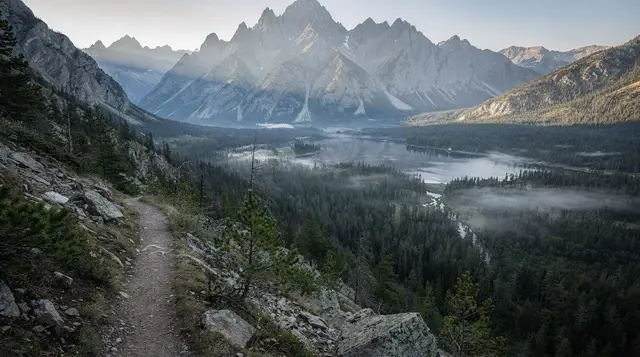
Crna Gora, the country’s own name for itself, translates as “black mountain” — and the mountain in question is Lovćen. Seen from Kotor’s old town, it is the dark, brooding ridge behind the shipyard hills, often capped in cloud even when the bay below is in full sun. Lovćen National Park covers roughly 62 square kilometres of limestone ridges, beech forest and karst pasture, rising to 1,749 metres at its highest point, Štirovnik. For most of Montenegro’s history it functioned as a natural fortress: the old capital of Cetinje sits in a hidden valley on its far side, protected from the coast by exactly this wall of rock.
That history is the reason almost everyone who drives up here has the same single destination in mind: the mausoleum of Petar II Petrović-Njegoš, the 19th-century prince-bishop and poet who is as close as Montenegro gets to a founding figure, buried on the second-highest peak, Jezerski vrh. What gets lost in that single-purpose trip is the park itself — a genuine hiking area with marked trails, a visitor centre, and viewpoints that most day-trippers never reach because they park, climb the mausoleum steps, take a photo of the bay, and drive straight back down.
This guide separates the two. If you have half a day and want the view, drive up, climb the steps, and come back — that is a legitimate and worthwhile trip. If you have a full day and want to actually walk in the park, the routes around Ivanova Korita deserve real time, and this guide covers both.
Getting there: the Njeguši road from Kotor
The classic approach from Kotor is the old road through Njeguši, a series of roughly 25 hairpin bends climbing straight up the mountainside above the bay. It begins just past Kotor’s town walls, near the serpentine viewpoint car park where most tour buses stop for photos, and switches back on itself repeatedly for the best part of 30 minutes before the gradient eases near the village.
| From Kotor | Distance/time | Notes |
|---|---|---|
| Njeguši village | ~20 km, 35–40 min | First stop for prosciutto and cheese |
| Lovćen National Park gate | ~25 km, 50 min | Fee booth, seasonal |
| Njegoš Mausoleum car park | ~30 km, 1 h 15 | Steps begin here |
| Ivanova Korita | ~35 km, 1 h 25 | Visitor centre, trailheads |
| Cetinje (continuing over the park) | ~45 km, 1 h 30–1 h 45 | Descends the far side |
The road itself is narrow, has no barrier in places, and is genuinely intimidating for a driver not used to mountain switchbacks — this is one of the routes worth thinking twice about if you are nervous behind the wheel or driving a large hire car. Locals and tour drivers take it confidently at speed; a first-time visitor in a small rental should expect to go slowly and pull in when a car appears coming the other way, since some sections are barely wide enough for two vehicles to pass. In poor visibility or after rain the road is best avoided; cloud regularly sits on the upper slopes even when Kotor below is clear and sunny, and the hairpins in fog are unpleasant.
If you would rather not drive it yourself, a private guide or a small-group tour handles the road, the timing, and usually a stop in Njeguši too — worth considering given how many visitors report white knuckles on this stretch.
a full-day tour covering Lovćen, Cetinje and Budva’s old townTwo ways to see Lovćen: drive-through vs proper hike
It is worth being honest about which trip you are actually planning, because the two require different amounts of time and different footwear.
The drive-through visit means: pay the park fee at the gate, drive to the mausoleum car park, climb the steps, look at the view, drive back down or continue over to Cetinje. This takes three to four hours round trip from Kotor including the mausoleum climb, and needs nothing more than comfortable shoes. It is what almost every organised day tour does, and it is a perfectly reasonable way to see Montenegro’s best panoramic view of the Bay of Kotor without committing a full day.
The proper hike means parking at or near Ivanova Korita, the meadow and visitor centre inside the park, and walking one of the marked trails — towards Štirovnik summit, along the ridge, or through the beech forest loops. This needs a full day from Kotor once driving time is factored in, proper walking shoes, water, and in poor weather a jacket, since the exposed ridge sections catch wind that the sheltered car park does not. Locals distinguish clearly between “we went to Lovćen” meaning the mausoleum, and “we hiked Lovćen” meaning the trails — worth adopting the same distinction when you are planning your own day.
The Njegoš Mausoleum and its 461 steps
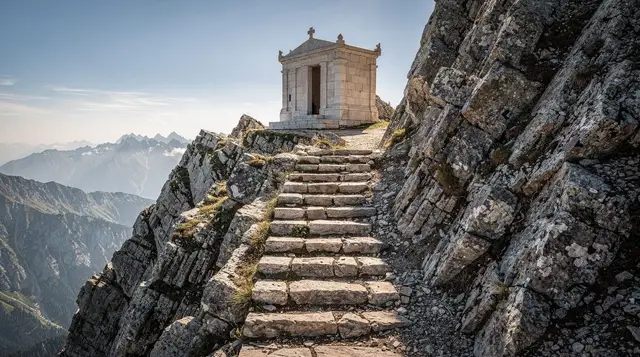
The mausoleum sits atop Jezerski vrh, reached from the car park through a tunnel cut into the mountain and then a long open staircase — 461 steps in total, flanked by granite figures carved by the Croatian sculptor Ivan Meštrović, who designed the whole monument in the early 1970s to replace an older, simpler chapel. The climb is steady rather than technical: broad steps, handrails on the steeper sections, but enough of a gain in altitude that most visitors stop at least once to catch their breath, particularly in summer heat.
At the top, a black granite mausoleum houses Njegoš’s tomb beneath a bronze eagle-topped canopy, and the terrace around it gives the payoff for the climb: on a clear day you can see the whole curve of the Bay of Kotor on one side and the barren interior plateau running towards Cetinje on the other — genuinely one of the best views in the country, and the reason this is the single most-photographed vantage point in the Kotor area guides recommend.
There is a small entrance charge to enter the mausoleum building itself, separate from the vehicle fee at the park gate; the amount has changed more than once in recent years, so budget a few euros per person rather than expecting a fixed figure. The site can close briefly in high wind or lightning, since the terrace is fully exposed at nearly 1,660 metres. Early morning, before coach tours arrive from Budva and Kotor’s cruise excursions, is noticeably quieter and gives the clearest light for photos; by late morning in July and August the car park fills and the steps get crowded.
Trails inside the park
Beyond the mausoleum, Lovćen has a genuine network of marked hiking routes, mostly starting from or passing through Ivanova Korita.
| Route | Distance (round trip) | Time | Difficulty |
|---|---|---|---|
| Ivanova Korita nature loop | 2–3 km | 45 min – 1 h | Easy, flat forest paths |
| Ivanova Korita to Jezerski vrh (mausoleum) | ~6 km | 2–2.5 h | Moderate, some ascent |
| Štirovnik summit trail | ~8–10 km | 3.5–4.5 h | Moderate to demanding, exposed ridge |
| Full ridge traverse | 12+ km | 5–6 h | Demanding, needs a clear day |
The Ivanova Korita loops are gentle beech-forest walking on well-maintained paths, suitable for families and casual walkers, and a good option if the goal is simply to say you walked in the park rather than just drove through it. The route up to Štirovnik, the park’s true highest point, is a proper mountain walk: open, windy, with loose rock in places near the summit, and it should not be attempted in poor visibility or without decent boots. None of these routes are technical climbing, but the exposure and lack of shade on the ridge sections catch out visitors who set off expecting a stroll.
Trail markings follow the standard Montenegrin red-and-white waymarks, but signage thins out on the longer ridge routes, and mobile signal is patchy once you are away from the mausoleum road. A paper map from the visitor centre at Ivanova Korita, or a downloaded offline map, is worth having before setting off on anything beyond the short loop.
a private guided hike through the park’s trailsIvanova Korita: the park’s actual centre
Most visitors never stop at Ivanova Korita, a wide upland meadow ringed by beech forest roughly ten minutes past the mausoleum turn-off, because the road signs point everyone towards the mausoleum first. It is worth the short detour: there is a visitor and information centre, a handful of restaurants serving grilled meat and local cheese, picnic areas, and — in winter — a small ski slope that operates when snow allows, a detail that surprises most people who only picture Lovćen as a summer viewpoint. This is also the sensible starting point if you are doing any of the longer trails above, since parking is easier and less crowded than at the mausoleum car park itself.
What to bring, when to go
For the drive-through visit, ordinary walking shoes and a jacket for the exposed terrace are enough. For anything on the marked trails, treat it as a mountain day: proper shoes with grip, a refillable water bottle since there is no reliable water source once you leave Ivanova Korita, a windproof layer even in summer, and sun protection — there is very little shade above the treeline.
Timing matters more here than at most stops near Kotor. Late May to mid-June and September give the clearest air and the most comfortable walking temperatures; the same window that works well across the region, as covered in the guide to the best time to visit Kotor and the bay. July and August bring heat haze that can flatten the famous view of the bay by mid-morning, plus the heaviest traffic on the Njeguši road from coach tours.
The mausoleum and the upper park road generally stay open through winter, but snow and ice close the higher trails and can make the drive itself hazardous without winter tyres — check conditions locally before setting off between November and April, and see the wider Montenegro by season guide for what else shuts down over winter.
Combining Lovćen with Njeguši and Cetinje
The road up from Kotor passes directly through Njeguši, the village that gives its name to the country’s best-known prosciutto and hard cheese, both cured in the cool mountain air at this altitude. Almost every driver stops here, either on the way up or the way down, and it is worth building fifteen or twenty minutes into the day for a tasting — the guide to Njeguši’s prosciutto and cheese covers where to buy it and what a fair price looks like, and pairs naturally with a glass of local Vranac from the wider Montenegrin wine guide.
Continuing past the mausoleum turn-off, the road descends the far side of the mountain into Cetinje, Montenegro’s old royal capital, a compact and unhurried town of 19th-century embassy buildings and the historic Cetinje Monastery. Combining Lovćen with Cetinje in a single day makes good sense logistically, since the road already goes that way, and the Cetinje day trip guide and monastery relics guide cover what to see once you arrive. Doing Lovćen, Njeguši and Cetinje together turns a half-day mausoleum visit into a fuller day trip without adding much driving.
a combined day covering Lovćen and Skadar Lake National ParkDriving yourself vs booking a tour
A rental car gives the most flexibility — you set your own pace on the mausoleum steps, decide whether to stop at Ivanova Korita, and can continue on to Cetinje or loop back. The car rental guide and parking in Kotor guide cover the practical side of that option, and Lovćen is one of the trips where the extra freedom is genuinely useful rather than just theoretical.
The case for a guided tour or private transfer is mostly about the road itself: a driver who knows the hairpins well removes the single most stressful part of the day, and a guide can also time the mausoleum visit to avoid the worst of the coach traffic. For anyone without a car — see the broader Montenegro without a car guide — a tour or private transfer is close to the only realistic way to reach the park, since there is no scheduled bus service up the mountain.
Travellers planning a longer national-parks trip sometimes pair Lovćen with the bigger mountains further north — Durmitor and the Black Lake near Žabljak are three to three and a half hours from Kotor and a different scale of hiking altogether, covered together in the national parks grand tour itinerary for anyone with more than a few days to spend on Montenegro’s mountains rather than its coast.
Practicalities at a glance
| Detail | |
|---|---|
| Drive time from Kotor | 1 h 15 to the mausoleum car park |
| Road | Old Njeguši road, ~25 hairpin bends, narrow |
| Mausoleum steps | 461, moderate climb, handrails |
| Park entrance fee | Per vehicle at the gate, seasonal; amount has varied year to year |
| Mausoleum entry fee | Small per-person charge, separate from vehicle fee |
| Best months | Late May–mid-June, September |
| Avoid | Fog, high wind on the ridge, November–April snow on upper trails |
| Public transport | None scheduled; car, tour or private transfer only |
Frequently asked questions about hiking Lovćen National Park
How long does it take to drive from Kotor to Lovćen National Park?
Around one hour and fifteen minutes to the mausoleum car park via the old Njeguši road, which climbs roughly 25 hairpin bends above the bay. Allow longer in July and August when caravans of cars and buses slow the ascent.
How many steps are there to the Njegoš Mausoleum?
The tunnel and staircase cut into Jezerski vrh run to 461 steps from the car park to the mausoleum terrace. It is a steady climb, not a scramble, but it is enough to leave most visitors out of breath at the top.
Can I visit Lovćen without a car?
Not easily. There is no scheduled public bus service into the park, so most people arrive by rental car, organised tour or private transfer. Hitchhiking the Njeguši road is possible in season but not reliable.
Is Lovćen National Park the same as the Njegoš Mausoleum?
No. The mausoleum is one monument inside a much larger national park of forested ridges and marked hiking trails. Many day visitors only ever see the mausoleum and the road up to it, then leave without setting foot on a trail.
What is the best time of year to hike in Lovćen?
Late May to mid-June and September give the clearest views and the coolest walking conditions. July and August bring haze that dulls the bay view by midday, and snow can close the summit road from November to April.
Do I need hiking experience for Lovćen’s trails?
The short waymarked loops near Ivanova Korita suit any reasonably fit walker. The ridge routes towards Štirovnik and Jezerski vrh are longer, exposed to wind, and better suited to hikers with some mountain experience and proper footwear.
Is there an entrance fee for Lovćen National Park?
Yes, a per-vehicle fee is collected at the park gate in season, and there is a separate small charge to climb into the mausoleum itself. Exact amounts have shifted from year to year, so treat any figure as an approximate range rather than a fixed price.
Mountain excursions on GetYourGuide
Verified deep-linked GetYourGuide tours. Book through these links and we earn a small commission at no cost to you.
GetYourGuide does not provide a product photo for this activity — the image shows the meeting point, photographed by us.