Rakija in Montenegro: what you're actually being offered
What is rakija and how strong is it?
Rakija is a home-distilled or commercial fruit brandy, usually made from grapes (lozovača) or plums (šljivovica). Commercial bottles run 35-45% ABV; homemade versions poured by a host or a small restaurant are routinely 40-50% or higher, with no label to check.
The shot that arrives before you ask
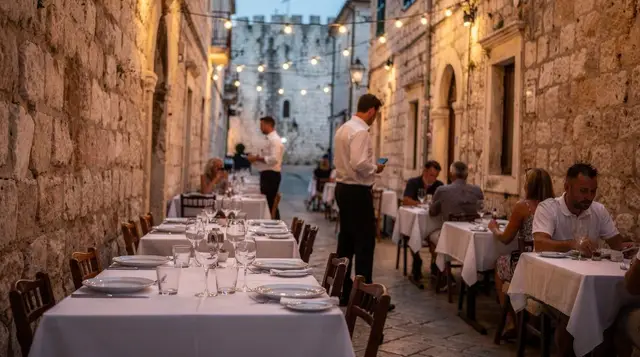
Sit down at a small family-run restaurant near Kotor old town or a guesthouse anywhere on the Montenegrin coast, and there is a fair chance a shot glass appears on the table before you have looked at the menu. That is rakija, and it is not a sales pitch. It is a welcome gesture that predates tourism here by centuries, and turning it down flat can read as impolite, though nobody will force the glass on you if you explain you do not drink spirits.
What you are being handed is a clear or pale fruit brandy, most often distilled from grapes or plums, and it is stronger than most visitors expect. This guide covers what it actually is, why the strength varies so much between one glass and the next, and how to taste it sensibly before spending money on a bottle to take home.
What rakija actually is
Rakija is the umbrella term used across the western Balkans for a distilled fruit spirit, and Montenegro has its own version of the two main types found from Croatia to Serbia.
Lozovača is grape-based. It is typically distilled from the skins, stems and pulp left over after grapes are pressed for wine (the pomace, called komina locally), though some producers distil whole grapes instead. It comes out clear or very pale, with a sharp, slightly floral edge that carries the grape through.
Šljivovica is plum-based, the same family of spirit known across the region under various spellings. It tends to be slightly rounder and sweeter on the nose than lozovača, though “sweeter” is relative when the alcohol content is this high.
Both are usually served neat, at room temperature or lightly chilled, in a small glass, and both are called rakija generically in conversation. If you want to know which one you are drinking, ask; a host or waiter will usually tell you without being asked twice.
Beyond the two staples, some producers around Njeguši and in the Lake Skadar wine region make herbal or honey-infused versions (medovača, with honey; travarica, infused with herbs), sold in smaller batches and often only locally. They are worth trying if you see one on a shelf, but they are the exception rather than the rule.
Why the strength varies so much
This is the part that catches visitors out. A bottle of commercial rakija sold in a shop is labelled, and Montenegrin producers typically bottle at 35-45% ABV, comparable to a standard whisky or vodka. You can check the label and know what you are getting.
Homemade rakija is a different matter. Made in small batches in a home still (kazan), often by a family for their own use and to offer guests, it is rarely diluted down to a fixed proof the way a commercial distillery does. The result is routinely 40-50% ABV, and stronger batches well above that are not unusual. There is no label, no regulation, and no consistency from one household or one batch to the next. The glass a restaurant owner pours from a plastic water bottle behind the counter could be notably stronger, or occasionally weaker, than the one poured at the guesthouse down the road.
| Type | Typical strength | Where you will find it |
|---|---|---|
| Commercial, labelled bottle | 35-45% ABV | Shops, supermarkets, gift shops in Kotor old town |
| Homemade, offered as welcome | 40-50%+ ABV | Guesthouses, small family restaurants, private homes |
| Homemade, bought roadside | 40-55%+ ABV | Stalls around Njeguši, farm stands inland |
The practical takeaway: treat any unlabelled glass as stronger than a standard spirit measure until proven otherwise, and drink it accordingly, in small sips rather than as a shot to knock back in one go, particularly if it is your first one of the day and you have driving planned on roads like the old Njeguši road later.
How to drink it without regretting it
Rakija is not a cocktail ingredient here, and nobody expects you to mix it. It is poured small, held in the hand for a moment and sipped. The first sip is mostly heat; the second is where the fruit shows up. If your first reaction is a wince, that is normal, and your host has seen it many times. Take a breath, let it settle, and try again before deciding whether you like it.
Pace matters more than technique. A glass offered at the start of a meal is meant to open the appetite and start the conversation, not to be finished in one go. Put it down between sips, drink water alongside it, and let the food arrive. The pršut and cheese plates that often come with it are there for a reason: salt and fat soften the spirit considerably.
If you are travelling with people who do not drink, nobody is left out. The ritual is about the gesture, and a toast with a glass of water or juice is understood in the same spirit. If you are the one driving that day, say so early and simply; hosts take that seriously. Anyone planning to rent a car in Montenegro should treat a welcome glass at lunch as a decision to make before ordering, not after, and anyone who prefers to taste freely is better off arranging a taxi in Kotor or a guided trip for the day.
Tasting before you buy
If you plan to bring a bottle home, taste it first, ideally more than one producer’s version, before committing. This matters more with rakija than with most spirits because there is no reliable label to fall back on when it is sold informally.
A few practical points:
- Ask what it is distilled from. Grape or plum changes the flavour substantially, and personal preference varies a lot between the two.
- Ask the strength if it is unlabelled. A producer selling directly, at a stall or farm, may know roughly what proof their batch came out at, even without a label; it is worth asking rather than assuming.
- A small sip first, not a full shot, especially if you are trying several in a row. Rakija tastings that move through four or five pours will add up quickly at 40%+ each.
- Eat something alongside it. Pršut, cheese or olives cut the intensity and are the traditional pairing anyway; see the Njeguši prosciutto and cheese guide for what usually comes on the plate.
- Buy in person where possible, rather than assuming a bottle bought duty-free or at a generic souvenir shop matches what you tasted at a family producer’s stand.
Where to try it
Around Kotor old town, several restaurants and wine bars pour rakija by the shot, typically 2-3 EUR, and it is worth asking if it is their own or a commercial bottle. The restaurants guide for Kotor old town lists places where a post-meal or pre-meal rakija is part of the normal order of things.
Njeguši, on the old road up towards Lovćen National Park, is the classic stop. Roadside stalls sell pršut, cheese and bottled rakija together, often from small local producers rather than national brands. It is a reasonable place to taste a few versions side by side before buying, though prices and quality vary stall to stall with no consistent grading, so trust your own tasting over any claim printed on a label.
Cetinje and the wine-producing area around Lake Skadar, covered in the Montenegrin wine guide, also produce rakija alongside Vranac and Krstać wines, and some wineries offer both on the same tasting visit.
Mostar, a common day trip from Kotor (see the Mostar day trip guide), has a couple of structured rakija tastings built for visitors rather than the informal welcome-shot version. If you want a guided, explained tasting rather than an unannounced glass at a restaurant table, this is where it is set up as an actual activity: a deluxe rakija tasting in Mostar or a combined wine and rakija workshop in Mostar that walks through the distilling process rather than just pouring shots.
Closer to Kotor itself, food-focused tours sometimes include a rakija stop as part of a broader tasting: a guided mussels and local food tour in Kotor or a wider Kotor and Budva guided tour that takes in food stops along the coast. Neither is a dedicated rakija tasting, so ask ahead if that is specifically what you want.
Building a rakija stop into your day
Rakija rarely deserves a day of its own. It fits best as one stop among several, and the Kotor base makes that easy. A morning on the old road toward Lovćen with a pause in Njeguši village already covers the classic tasting: the stalls, the plates of cured ham and cheese, the bottles lined up on a shelf. The story of why that ham tastes the way it does is told in the piece on the wind that dries Njeguši pršut, and it makes a good companion to the spirit that goes with it.
A second natural pairing is the water. Around the bay, a lunch built on seafood and oysters from Boka Bay can start with a small rakija, and many people find the sharp spirit works well with salty, briny food. It is a local habit rather than a rule, so follow your table’s lead.
Inland, the Skadar side of the country offers a slower version. A day around Lake Skadar can combine a boat on the water with a stop at a family wine producer, where rakija often sits next to the wine on the tasting table. The Crmnica wine tasting guide explains how those visits tend to work, and the same hosts who pour wine are usually happy to pour their own rakija if you ask.
If your plans take you to the old royal capital, the Cetinje food and cafés guide is a good place to find a quiet table where a glass is part of an unhurried lunch rather than a performance for visitors.
What to look for in a good glass
Without a label, you judge by senses. Look first: a good rakija is clear, or very pale if it has rested. Cloudiness or floating particles are a reason to politely pass. Smell next: you should find fruit, grape or plum, perhaps a floral or slightly sweet note. A harsh, solvent-like smell at the top of the glass usually signals a rough distillation, and the taste will follow.
On the palate, the better ones are warm rather than burning. The heat should fade and leave the fruit behind, not a bitter or chemical aftertaste. Do not be embarrassed to compare two glasses side by side; producers who are proud of their work enjoy the comparison, and it is the best way to learn your own preference without relying on anyone’s claims.
Remember that stronger does not mean better. A well-made lower-strength bottle is often easier to enjoy and easier to share, and for a gift it is usually the safer choice. Honey and herb versions are gentler for first-timers, which is why they are worth looking for if the neat spirit is not to your taste.
Money and small talk
Prices for a shot, a bottle or a producer’s stand are modest compared with most Western European bars, and the details are covered in the money and ATMs guide if you want to know how to pay at a roadside stall. Small producers may prefer cash, so carry a little with you when heading up to the villages. As for tipping after a round at a restaurant, the tipping etiquette guide explains the usual habits, and a free welcome glass does not change them.
Conversation is part of the pleasure. Ask your host which fruit it is, who made it, and whether it is for sale. Most people are glad to talk about it, and an honest question usually earns a better pour and a better story than a quick purchase ever does. If you are staying in Kotor for a few days, you will have time to repeat the exercise and compare.
Buying and taking it home
A standard bottle from a shop in Kotor old town or a producer’s stand near Njeguši runs a modest price for a 0.5 or 0.7 litre bottle, generally cheaper than an equivalent-proof spirit would cost in Western Europe, though exact prices vary by producer and are not fixed.
For flying home, rakija counts as a spirit over 24% ABV, so it travels in checked luggage only; airport security will confiscate anything above the standard 100ml liquids limit if you try to carry it on, unless it is bought airside after the security check. Duty-free allowances for bringing spirits into the EU or UK vary by destination and change periodically, so check your airline or destination country’s current allowance rather than assuming a fixed litre figure before you pack a heavy, breakable bottle.
Wrap the bottle well. Glass bottles of rakija bought at informal stalls are not always packaged for transit the way a shop-bought, boxed bottle is, and checked luggage is not gentle.
A note on the offer itself
Refusing a rakija shot outright at someone’s table, particularly in a private home or a small family guesthouse, can land awkwardly; it is offered as hospitality, not as an upsell. A polite way through it, if you would rather not drink or have already had enough, is to take the glass, touch it to your lips, and set it down, or to say plainly that you do not drink alcohol; either is understood and accepted without fuss. What does not tend to go down well is a flat refusal with no explanation at all. A small sip, said with a thank you, generally covers it.
Kotor food & drink tours on GetYourGuide
Verified deep-linked GetYourGuide tours. Book through these links and we earn a small commission at no cost to you.
GetYourGuide does not provide a product photo for this activity — the image shows the meeting point, photographed by us.