Kotor in winter: the rain, the quiet, and what shuts down
What nobody tells you about a Montenegrin winter
I moved into an apartment two streets back from the old town walls in November, and for the first ten days it rained. Not showers — rain that started before dawn and was still going after dark, the kind that turns the limestone underfoot slick and sends water sheeting off the mountainside straight into the bay. Kotor sits in a bowl of rock that traps moisture rolling in off the Adriatic, and from November through February it’s genuinely one of the wettest corners of Europe. Locals don’t remark on it. Visitors who arrive expecting a Mediterranean postcard usually do.
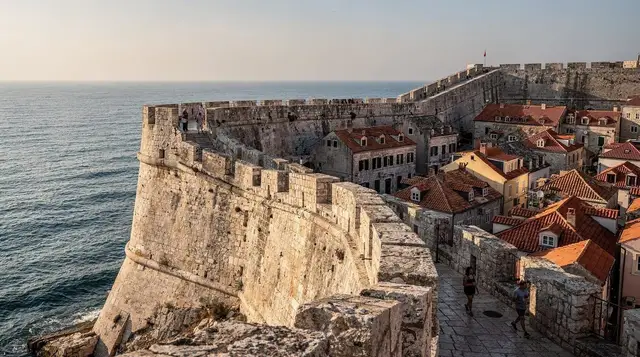
That’s the trade nobody spells out clearly enough before you book. Winter here isn’t a quieter version of summer with a cardigan on. It’s a different place. The old town empties out almost completely once the last shoulder-season tour groups leave in late October, and by December you can walk the full loop of the city walls at 4pm without passing more than a handful of people. Cafés that spilled twelve tables onto the square in August are down to two, pulled in under an awning. It’s a genuinely different rhythm, and I found I liked it more than I expected to — but only once I stopped waiting for the weather to apologise.
The rain, honestly
I kept a rough count that first winter: in a six-week stretch from mid-November to early January, I had maybe twelve fully dry days. The rest ranged from intermittent showers to days-long downpours that flooded the lower stretch of the promenade near the marina. The bay itself, remember, is a ria — a drowned river valley, not a fjord — and that geography is exactly why the water funnels the way it does; steep slopes on three sides concentrate whatever rolls in off the sea.
It’s not constant. There are stretches of genuinely beautiful, crisp, blue-sky days in between, particularly in late winter, and the light on the mountains after rain — snow dusting the upper slopes above Vrmac while the bay stays green below — is something summer never gives you. But you have to plan around the wet days rather than around them not happening. I stopped making firm plans for boat trips to Perast more than a day ahead, because the taxi boats to Our Lady of the Rocks simply don’t go out in a swell, and a forecast that looks fine on Monday can flip by Wednesday.
Up at Zabljak and through Durmitor National Park, it’s not rain you’re dealing with but snow, and a lot of it. Roads into the park close or become impassable without proper tyres from December, some viewpoints and trails are simply unreachable until spring, and the black lake I’d walked around in shorts in August was, when I drove up in January, half-frozen and rimmed with a metre of snow along the path. It’s beautiful in a completely different way — genuinely one of the more striking things I’ve seen in the country — but it’s a trip for people prepared for winter mountain conditions, not a casual add-on.
What actually closes
This is the part that catches people out more than the weather. A wide slice of the coast’s tourist infrastructure simply switches off between November and Easter, and it’s worth knowing exactly what before you build a winter itinerary.
| What | Summer | Winter (Nov–Mar) |
|---|---|---|
| Perast boat taxis to Our Lady of the Rocks | Frequent, all day | Reduced departures, weather-dependent |
| Coastal restaurants (Perast, Budva old town seafront) | Full opening | Many closed until Easter |
| Kotor old town restaurants | Full opening | Reduced but mostly open |
| San Giovanni Fortress | Open, paid entry | Often closed after heavy rain |
| Durmitor mountain roads | Fully open | Partially closed, snow-dependent |
I learned the restaurant closures the hard way, walking out to Perast on a bright January afternoon with a plan to eat lakeside — three of the waterfront places I remembered from summer had their shutters down, and I ended up driving back into Kotor for dinner. It’s not that the coast shuts entirely; Kotor’s old town keeps a reasonable number of kitchens running year-round, since enough residents and workers need somewhere to eat. It’s the smaller, more seasonal spots in Perast, Budva’s old harbour, and the villages that go quiet.
What it costs instead
The other half of the trade is money, and it’s not subtle. The same one-bedroom apartment that ran 50 to 100 EUR a night in August was 35 EUR when I rented in December — genuinely under half. Three and four star hotels in the bay follow the same pattern: rooms that list at 90 to 180 EUR in peak season commonly drop to 50 to 100 EUR once the cruise ships stop arriving in numbers. A full daily budget that might run 60 to 80 EUR a day in August can comfortably sit closer to 35 to 45 EUR in January, once you factor in cheaper rooms and the fact that fewer restaurants means less temptation to eat at the pricier old-town terraces.
If you’re weighing whether that trade is worth it, it helps to be honest about what you’re giving up: swimmable sea (there isn’t any, water stays cold well into May), long daylight, and the option of just deciding on a boat trip that morning. What you get back is an old town you can actually see without threading through cruise-ship crowds, streets where the resident cats outnumber the tourists again, and a version of Kotor that feels lived-in rather than performed.
A private boat is one of the few ways to see the bay reliably in winter without depending on a public schedule that may or may not be running that day — I booked a private boat tour of the bay with a local captain on one of the clear mid-December days specifically because it could be rescheduled around the weather rather than cancelled outright. For a land-based alternative when the water’s too rough, a guided day trip covering Kotor’s highlights still runs through winter and keeps you moving between covered sights rather than standing in the rain.
If you’re going to do it
Pick your window with intent. Early December and late February tend to have shorter, more manageable rain spells than the depths of January. Build in slack — don’t schedule a Perast boat trip and a Durmitor drive on consecutive days, because if the weather turns you’ll want the flexibility to swap them. Bring proper waterproofs, not a city coat; I underestimated this badly the first week and bought a real rain jacket from a shop off the main square within four days of arriving.
And go into it expecting a slower, smaller trip. There’s no full case for winter over the best time to visit Kotor or the late-spring or September windows if what you want is swimming, long terrace dinners, and boat trips on demand — those months, or the July–August peak itself despite the crowds, do that better.
But if what you want is to actually hear the old town — footsteps on stone, gulls, the occasional church bell, none of it competing with a few thousand cruise passengers — winter in Kotor gives you that in a way no other season can. I’d go back for December again before I’d go back for August.
If you want the practical side worked out in advance — where to base yourself, what stays open, how to move around without a rental car — the dedicated winter guide to the bay and the off-season itinerary cover that ground in more detail than a single essay can.
For the water, when it cooperates, a combined Kotor, Perast and Budva highlights trip is a reasonable way to see three towns in a day when daylight is short, and if the interior calls, a private tour up to Lovcen alongside Budva and Kotor gets you to the mountain viewpoints without driving the hairpins yourself.
Seasonal experiences on GetYourGuide
Verified deep-linked GetYourGuide tours. Book through these links and we earn a small commission at no cost to you.
GetYourGuide does not provide a product photo for this activity — the image shows the meeting point, photographed by us.