Winter in the Bay of Kotor: what actually stays open
Is the Bay of Kotor worth visiting in winter?
Yes for an empty Old Town and low prices, no for swimming or boat trips. Daytime temperatures stay mild (8-14°C) but rain is frequent, many restaurants and all boat operators close from November to March, and the surrounding peaks, especially Lovćen, often carry visible snow.
A different bay from November to March
The Bay of Kotor most visitors picture is the summer one: cruise ships in the roads, boats criss-crossing to Our Lady of the Rocks, café terraces packed under the walls of the Old Town. Winter is a different place. The water is the same striking colour on a clear day, the mountains are the same wall behind the town, but the town itself empties out, a large share of what serves tourists closes, and the weather turns genuinely wet rather than reliably warm. None of that makes winter a bad time to come — it makes it a specific kind of trip, and it is worth knowing which one before you book.
This guide covers what the season actually looks like on the ground: temperatures and rain, what stays open and what doesn’t, what the Old Town feels like without the crowds, why the mountains sometimes wear snow while the harbour stays green, and what a realistic two or three days here looks like in January rather than July.
Temperatures and rain, month by month
Kotor sits at the head of a ria — a drowned river valley, not a fjord — sheltered by mountains on three sides, which keeps winter here milder than the Montenegrin interior but not dry. Rain, not cold, is the defining feature.
| Month | Typical daytime high | Typical night low | Rain days (rough) |
|---|---|---|---|
| November | 14-17°C | 8-11°C | 12-15 |
| December | 11-13°C | 5-8°C | 12-14 |
| January | 9-12°C | 3-6°C | 11-13 |
| February | 10-13°C | 4-7°C | 10-12 |
| March | 13-16°C | 6-9°C | 10-12 |
These are approximate ranges, not a forecast — check conditions close to your trip. The pattern that matters more than any single number: several consecutive wet days are common, sometimes with genuinely heavy downpours and thunder, followed by a run of clear, cool, sunny days that are pleasant for walking. Pack for both in the same week.
Snow at sea level in Kotor itself is rare and, when it happens, usually gone within a day. That is not true higher up: Lovćen National Park and the ridge above Njeguši, both around 700-1,700 m, regularly carry snow from December into March, and the Njegoš Mausoleum access road can close after a heavy fall. The result is a view worth noticing from the Kotor waterfront on a clear winter morning: white peaks above a harbour where nobody is wearing a coat.
What closes, and what doesn’t
Kotor’s economy runs on a roughly seven-month season, and a large part of what tourists interact with shuts down outside it. Rough guide, not a guarantee for any specific business:
- Boat operators — nearly all of them. The Blue Cave speedboat trips, the catamaran cruises, the little water taxis to Our Lady of the Rocks: most stop running by early November and don’t restart until April. A few private skippers will go out for a private charter in calm weather if you ask around, but it is not something to plan around finding on the day.
- Seasonal restaurant terraces — largely closed. The waterfront places that exist mainly to catch passing cruise traffic shut for the winter; what survives are the restaurants with a local clientele, which tend to be a street or two back from the water. Where to eat in Kotor Old Town is worth checking for which places have year-round reputations rather than seasonal ones.
- Bike and scooter rental kiosks — mostly closed.
- Supermarkets, bakeries, pharmacies, the main square cafés — open as normal, because they serve residents, not just visitors.
- Museums and churches — open, usually on reduced winter hours. The Cathedral of Saint Tryphon and the Maritime Museum keep running; check current hours locally rather than assuming a summer timetable.
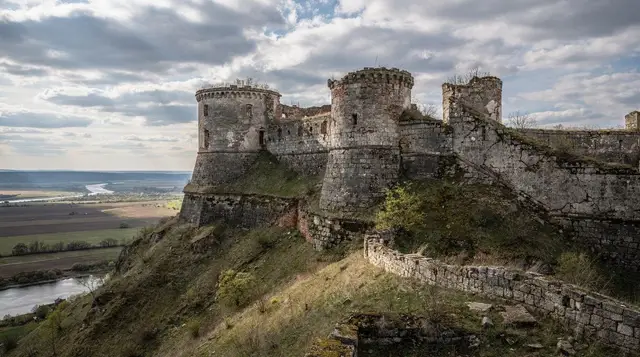
- San Giovanni Fortress — accessible, and outside the ticketed season it’s often free to climb, but there’s no booth and no staff to ask about conditions. See the section below.
The practical effect: winter Kotor rewards travellers who are happy with a smaller, quieter set of things to do, and it punishes anyone expecting the full summer roster of boat trips and terrace dinners.
The Old Town without the crowds
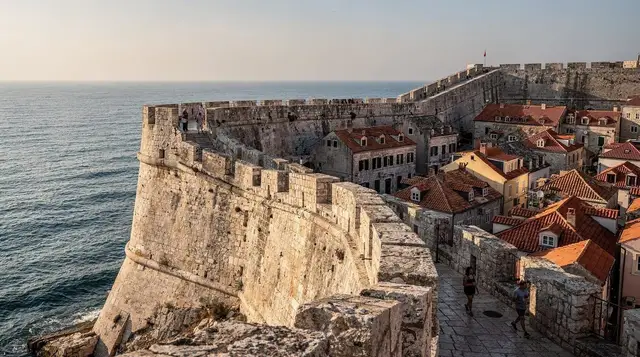
This is the real case for a winter visit. In July and August, cruise-ship traffic alone brings well over 700,000 passengers through the port across the season, with the worst of it concentrated between 10am and 4pm — see cruise ship days in Kotor for how that plays out. In winter, that traffic drops close to zero. The walk through the Old Town walls that takes 30-45 minutes when you’re weaving through tour groups takes the same 30-45 minutes in winter with nobody to weave around.
What that buys you: photographs of Trg od Oružja (the Square of Arms) with no crowd in them, a proper look at the Cathedral of Saint Tryphon’s mismatched twin towers — rebuilt unevenly after earthquake damage — without a queue at the door, and cats sitting undisturbed on doorsteps that would otherwise have fifty people stepping around them an hour later. It also means some genuinely useful winter-only local rhythms: a coffee at a square café next to Kotor residents doing their own morning errands, not other tourists.
The trade-off is atmosphere in the other direction — a mostly-closed Old Town after dark in January can feel genuinely empty rather than charmingly quiet, particularly on weeknights outside the Christmas and New Year window.
Climbing San Giovanni Fortress in winter
The climb to San Giovanni Fortress — roughly 1,350 steps and 45 minutes to an hour and a half depending on pace — runs the same route in winter as in summer, but two things change. First, outside the main season there is usually no ticket booth staffed, which in practice means the climb is free, though there’s also nobody to tell you about closures. Second, and more important: the steps are stone, worn smooth in places, and become genuinely slick after rain.
A wet January morning is a bad time to attempt this climb; a dry, cold, clear one is often better than the summer version, since you’re not doing it in 30°C heat with no shade. See San Giovanni Fortress climb guide for the full route detail, and use your own judgement on the day about surface conditions — there’s no one else’s judgement to rely on.
The alternative route, the old Ladder of Kotor mule path around the back of the fortress, is longer, ungated, and free year-round, but it’s also less maintained and a poor choice in wet or icy conditions. Save it for a dry spell.
Day trips that still work — and ones that don’t
Winter closes down water-based excursions almost entirely, which pushes the realistic day-trip list toward driving. A few notes specific to the season:
- Lovćen and Njeguši (about 1h 15 from Kotor via the old road’s roughly 25 hairpins) is the classic clear-day winter drive, precisely because it’s where the snow is. Check conditions before going — the hairpins are narrow and unnerving even in good weather, and a driver unused to mountain switchbacks should think twice about them wet, icy, or in fog.
- Cetinje, on the way to or from Lovćen, stays functional through winter since it’s a real town, not a resort — see Cetinje day trip from Kotor.
- Dubrovnik (2 hours in good conditions) is a reasonable winter day trip precisely because the border queues that plague July and August — sometimes 2-5 hours at Debeli Brijeg — collapse to a normal wait outside peak season.
- Perast and Our Lady of the Rocks are still accessible by road, and Perast itself is worth walking even with the boat to the island not running on a given day — some private boats will still go on request. See Perast without the crowds.
- Blue Cave, kayaking, and catamaran day trips are effectively off the table; these are summer-only businesses and closing dates vary by operator, but don’t plan a winter trip around them.
What a winter trip in Kotor actually looks like
Two or three days is a realistic length for a winter visit — see Kotor off-season for a built itinerary. A sensible shape:
- Day 1: walk the Old Town at an unhurried pace, visit the Cathedral of Saint Tryphon and the Maritime Museum, and if you want a guided angle on the history rather than working it out from a guidebook, a small-group option like a combined Museums of Kotor entry ticket covers several sites in one pass.
- Day 2: drive to Lovćen and Njeguši on a clear morning for the snow-and-sea view and a prosciutto-and-cheese lunch, weather permitting; fall back to Cetinje or Perast if the mountain road is closed.
- Day 3 (if you have it): a half-day guided walk that goes beyond the standard loop — something like a private archaeologist-led half-day tour of Kotor works better in winter than summer, since there’s room to actually stop and look at things without a crowd behind you.
If you’d rather have someone else handle logistics for a broader loop that also takes in Budva, a guided Kotor and Budva day tour runs year-round and gives a look at how differently Budva’s Old Town reads with its own summer crowd absent — though check ahead, since some coastal operators reduce winter frequency.
Eating and drinking when the terraces are gone
Winter food in the bay is a different pleasure from the summer one. With the waterfront tables folded away, meals move indoors: warm, low-ceilinged rooms, a plate of something hearty, and a table you rarely have to fight for. The cured ham and cheese of the uplands suit the season perfectly, and Njeguši prsut and cheese explains what to look for if you are heading up the mountain for lunch. For the story behind the ham and the cold wind that dries it, the blog piece on the prsut of Njeguši is a good read before you go.
Seafood is still part of the bay’s identity, and seafood and oysters in the Boka Bay is useful for knowing what the region is known for, though in winter you should simply ask at each restaurant what is on offer that day rather than expecting the full summer menu. A glass of local red goes well with the weather; Montenegrin wine, Vranac and Krstač is a quick primer, and rakija is the traditional answer to a cold evening.
Making the most of short, grey days
Wet weather is the main risk to a winter plan, so build in flexibility. Keep the indoor options in your pocket for the rainy half-days: the Maritime Museum is the obvious one, and the story of how the bay’s seafaring families shaped the town is easier to absorb in a quiet gallery than on a crowded summer street. The blog piece on the Boka captains of the eighteenth century gives useful background, and the 1979 earthquake reconstruction explains why parts of the old stone look the way they do.
If the sky clears, move fast: a dry morning is the moment for the fortress climb or for a walk along the shore towards Dobrota and its baroque palaces, covered in the Dobrota walk. Slower, flatter outings also work well in the cold, and Prčanj or Stoliv and the Vrmac villages repay an unhurried visit when nobody else is around.
Since the light fades early, plan your outdoor time for the middle of the day and keep evenings for a long dinner. For a broader view of how this season compares with the rest of the year, see Montenegro by season and the longer essay on Montenegro off-season; and if you are weighing whether summer might suit you better after all, the best time to visit Kotor lays out the other side of the argument.
Prices in winter
Accommodation is the biggest swing. An apartment running 60-100 EUR a night in August commonly drops to 30-50 EUR in January, and 3-4 star hotels that ask 90-180 EUR in summer often fall to 50-100 EUR. Restaurant prices at the places that stay open don’t discount much, since these are the year-round local spots, not tourist markups being relaxed — but there’s also far less choice, so budget for repeat visits to the same handful of restaurants rather than a different discovery every night.
Getting here and around in winter
Tivat Airport, 15-20 minutes from Kotor, runs mostly seasonal routes and its schedule thins out considerably over winter — check specific airline timetables rather than assuming summer frequency. Podgorica Airport, 1h 15-1h 30 away, runs year-round and is the more dependable winter option.
The Kamenari-Lepetane ferry keeps running through winter with less of a queue than its summer 15-20 minute rotation under pressure. If you’re driving, see car rental Montenegro and note that mountain roads like the Njeguši hairpins deserve extra caution wet or icy; parking in Kotor is easier in winter simply because there’s less competition for space near the walls.
Christmas, New Year, and the one busy pocket
Late December into the first days of January is the exception to an otherwise quiet season: lights go up around the Old Town squares, and there’s a gathering by the waterfront on New Year’s Eve. It’s still nothing like summer crowding, but it is enough that accommodation is worth booking ahead for this narrow window specifically — the rest of winter needs far less planning. If your dates are flexible, the two or three weeks either side of this window, in early December or mid-January, combine the quiet of true off-season with slightly better odds of clear weather for the Lovćen drive.
Seasonal experiences on GetYourGuide
Verified deep-linked GetYourGuide tours. Book through these links and we earn a small commission at no cost to you.
GetYourGuide does not provide a product photo for this activity — the image shows the meeting point, photographed by us.