Montenegro’s highest mountain wilderness
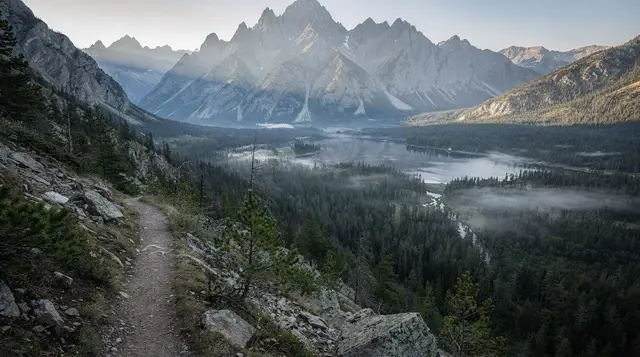
Durmitor is a different country from the coast, and not just geographically. Where the Bay of Kotor is warm stone, cypress and sea, Durmitor is exposed limestone peaks, pine forest and glacial lakes at altitude — a UNESCO-listed national park built around a massif of 48 summits over 2,000m, the highest of which, Bobotov Kuk, tops out at 2,523m. Scattered through the park are 18 glacial lakes, known locally as “gorske oči” — mountain eyes — most of them small, cold, and reached only on foot.
This page covers the park as a whole: what it is, how to get there from Kotor, when to go, and how to plan a visit that isn’t a wasted day in the car. For the two features most visitors come specifically to see, there are dedicated pages: Black Lake and hiking around Žabljak and the Tara Canyon, Europe’s deepest gorge, which cuts along the park’s northern edge. If you’re weighing up whether Durmitor fits your itinerary at all, how many days you need in the Kotor Bay area is worth reading first.
Getting there from Kotor
There’s one sensible route by car: south through Nikšić and Danilovgrad, then north on the mountain road toward Žabljak, the small town that serves as the park’s main base. It’s roughly 130km and takes about three hours in normal conditions, longer if you stop, and longer still in poor weather or after dark.
| From Kotor to | Distance | Typical drive time |
|---|---|---|
| Nikšić | ~90km | 1h 45m |
| Žabljak (Durmitor base) | ~130km | 3h |
| Black Lake car park | ~132km | 3h 05m |
| Tara Canyon (Đurđevića Tara Bridge) | ~115km | 2h 40m |
There’s no direct bus service linking Kotor to Žabljak, and connecting via Podgorica adds time rather than saving it. That leaves three realistic options: self-drive, hire a private driver for the day, or join an organised tour that bundles transport with the sightseeing. For a first visit, especially if you’re only giving Durmitor one day, the organised route removes the stress of unfamiliar mountain roads and means someone else is watching the fuel gauge and the weather.
The [Durmitor and Tara Canyon day tour from the coast] covers the drive, Black Lake, and a canyon viewpoint in a single organised day — useful if you want to see the headline sights without renting a car or planning the route yourself.
If you’d rather be behind the wheel, see the car rental guide before booking — insurance terms and cross-border allowances vary between local and international agencies, and it’s worth knowing which before you sign.
What’s actually inside the park
Durmitor’s 48-peaks-and-18-lakes headline undersells how varied the terrain is once you’re inside it. Alongside the well-known Black Lake there are smaller, quieter glacial lakes reached by longer trails — Zminje Lake, Riblje Lake, Zabojsko Lake among them — each a short hike further from the car parks and correspondingly emptier. The park’s forests are old-growth in places, home to brown bears, wolves, and chamois, though sightings of any of them are rare and not something to plan a visit around.
The geology is the real draw for anyone who isn’t purely there for the views: Durmitor sits on karst limestone riddled with sinkholes, gorges and caves, carved further by glaciers during the last ice age. That combination — glacial lakes sitting directly on top of karst plateau — is unusual in Europe and part of why UNESCO listed the park in 1980.
Hiking options range from an hour’s easy loop around Black Lake to multi-day routes toward Bobotov Kuk and beyond, and trail difficulty varies sharply with how far you go from the main access points. If a proper mountain hike is the point of the visit rather than a bonus, the [private guided hike to Bobotov Kuk] is a sensible way to attempt the park’s highest peak with someone who knows the route and can read the weather — this is not terrain to improvise on with a phone map and no local knowledge.
For a lower-effort way to cover ground, the [e-bike rental in Žabljak] opens up more of the park’s road network than most visitors manage on foot in a day, and it’s a reasonable option for anyone who wants distance without a full hiking day.
Durmitor vs the rest of the north
Durmitor is the headline destination in this part of Montenegro, but it isn’t the only one, and grouping a visit with nearby sights makes the long drive from Kotor pay off better. The Tara Canyon and the Đurđevića Tara Bridge sit just to the north and are often combined with a Durmitor day. Further east, Kolašin and Biogradska Gora National Park offer a similar but gentler alpine landscape with old-growth forest around a lower, warmer lake — worth knowing about if Durmitor’s altitude or scale feels like too much for the time you have.
Heading back toward Kotor, a stop at Morača Monastery breaks up the return drive with 13th-century frescoes in a genuinely striking canyon setting, and it barely adds to the route.
| Comparing the northern parks | Durmitor | Biogradska Gora |
|---|---|---|
| Highest point | 2,523m (Bobotov Kuk) | ~2,100m |
| Glacial lakes | 18 | 1 (Biogradsko Lake) |
| Character | High alpine, exposed | Dense old-growth forest |
| Drive from Kotor | ~3h | ~3h 30m |
| Best for | Serious hiking, big views | Easy walking, shade, forest |
Best time to visit
| Season | Conditions | Verdict |
|---|---|---|
| June–September | Warm days, open trails, roads clear | Best window, book accommodation ahead |
| May & October | Cooler, some trails/facilities limited | Workable for lower-altitude routes |
| November–April | Snow likely, mountain roads can close | Not recommended without local advice |
Summer is unambiguously the season to visit. Trails are open, days are long, and the drive from Kotor is straightforward. Outside June to September, conditions become unpredictable fast — a clear day in Kotor tells you nothing about what the mountain road looks like an hour north of Nikšić. If you’re travelling in the shoulder months, check road and trail conditions on the day rather than trusting a forecast from the coast; see the Montenegro by season guide for how this compares with the rest of the country, and the winter in Kotor Bay guide if you’re travelling in the off-season generally.
Practicalities
Fuel up before leaving the coast or in Nikšić — options thin out on the mountain road, and running low with no station in sight is not a risk worth taking on an unfamiliar route. Mobile signal is inconsistent once you’re off the main roads inside the park, so download offline maps rather than relying on live navigation throughout.
Layers matter more here than almost anywhere else covered on this site. Even in August, mornings at altitude are cool, and weather can turn with little warning — cloud rolling in over a ridge can drop the temperature and visibility within minutes. Proper shoes are worth it for anything beyond the paved viewpoint at Black Lake; the onward trails are uneven rock and root, not gravel path.
There’s no realistic way to see Durmitor without a car or an organised tour — see Montenegro without a car for how this fits (or doesn’t) into a car-free itinerary, and the wider national parks grand tour if you want to see Durmitor alongside Montenegro’s other protected areas rather than as a single detour.
Canyon activities nearby
The Tara Canyon, on the park’s edge, adds a second reason to make the long drive worthwhile: it’s Europe’s deepest gorge and hosts some of the country’s better rafting and canoeing. A gentler way to experience it than white-water rafting is the [canoe trip on the Tara with a picnic stop], which covers a stretch of the canyon at an easy pace rather than the faster commercial rafting sections further downstream.
If canyon adventure sports are more your interest than mountain hiking, the canyoning guide and zipline over the Tara Bridge cover the more adrenaline-focused options, and mountain biking in Durmitor is worth a look if you’d rather cover the park on two wheels than on foot.
Is it worth the trip from Kotor?
That depends on how you use the day. A rushed there-and-back — three hours up, a couple of hours at Black Lake, three hours back — leaves you seeing very little of what makes Durmitor worth the reputation, and by the time you’re back in Kotor you’ll have spent more of the day driving than looking at anything. An overnight in Žabljak changes the equation completely: you arrive with an afternoon to spare, get an early start on a proper hike the next morning while the light and the trails are quiet, and drive back at a normal pace rather than racing the clock.
If a single day from the coast is genuinely all you have, an organised tour is the better use of it — someone else drives, the stops are planned around the time available, and you’re not the one deciding whether the weather on a mountain road two hours from anywhere looks safe to continue through. For everyone else, treat Durmitor as a proper excursion in its own right rather than a coastal day trip that happens to go inland, and budget the time accordingly.
Frequently asked questions about visiting Durmitor National Park
How far is Durmitor National Park from Kotor?
About 130km and roughly three hours by car, taking the inland road through Nikšić rather than the coast. There’s no direct bus from Kotor, so most visitors either self-drive, hire a driver, or join an organised day tour that includes transport.
Can you visit Durmitor as a day trip from Kotor?
You can, but it’s a long day for a short visit. Six hours of driving for perhaps four hours in the park is a poor ratio, and it rules out any real hiking beyond the short, well-trodden paths near the main access points. If a day trip is all your schedule allows, an organised tour that handles the driving is more relaxing than doing it yourself.
Is the road from Kotor to Durmitor difficult to drive?
The route via Nikšić is a proper mountain road with sustained climbing and descending, but it’s wider and less nerve-testing than the old road to Njeguši. Drivers unused to mountain driving should still budget extra time, avoid arriving after dark in poor weather, and check conditions before setting off between late autumn and spring.
When do the mountain roads into Durmitor close?
Snow can close sections of the higher roads from November through April, with the exact dates varying year to year depending on the winter. If you’re travelling outside June to September, check current road conditions before committing to the trip, and have a backup plan.
Is Durmitor doable without a car?
It’s difficult on your own. Public transport between Kotor and the Durmitor area is limited and involves changes, and there’s no practical way to reach the trailheads and viewpoints without a vehicle once you arrive. An organised tour or a hired car is the realistic option for a one- or two-day visit.
What should I pack for a visit to Durmitor?
Layers, even in summer — the park sits at altitude and mornings and evenings are cool regardless of the season. Proper walking shoes for anything beyond the paved viewpoints, a refillable water bottle, and a jacket for sudden weather changes, which are common in mountain terrain.
Does Durmitor National Park have an entrance fee?
Some specific sites and facilities within the park charge a small fee, and these change from year to year, so treat any figure you’re quoted online as approximate rather than fixed. Budget a modest amount per person and confirm current pricing locally rather than relying on last season’s numbers.