Two coves behind the walls
Mogren is not one beach but two, cut into the cliffs immediately north of Budva old town and joined by a short rock tunnel carved through the headland. Locals and guidebooks both call the pair “Mogren I” and “Mogren II,” though nobody checks which one you’re standing on. What matters for anyone staying inside Budva’s walls is distance: the first cove is roughly five minutes on foot from the old town gate, up a set of concrete steps that climb past a small park. No bus, taxi, or rental car is required, which is not something you can say about most of the beaches on this stretch of coast.
If you are based in Kotor rather than Budva, Mogren is still a manageable half-day trip: about 30 minutes by car along the coast road, or 45 to 60 minutes on the coastal bus that runs between Kotor, Tivat, and Budva. It is not a swap for Kotor’s own coastline — there is no equivalent cove inside walking distance of Kotor’s old town — but it is one of the more straightforward day trips if you want sand and rock rather than the museums and remparts you have already covered. See best beaches near Kotor for how it stacks up against the alternatives.
What the two coves are actually like
Mogren I, the cove closest to Budva, is the wider of the two: a curve of coarse sand mixed with pebble, backed by pine trees that give real shade by mid-morning — rare on this coast, where most beaches offer none until you pay for an umbrella. It gets busy fastest because it’s the first thing anyone reaches after the climb from town, so a spot near the shade goes early in July and August.
Mogren II is smaller, more pebble than sand, and marginally quieter simply because it requires walking through the tunnel to reach it. The water here is a shade clearer, partly because there’s less beach traffic stirring up sediment. Neither cove is large — this is not a beach where you can find open space by walking further along the shore, the way you can at Jaz Beach or Velika Plaza further south.
Both coves share the same rock walls rising on either side, which is the main selling point: swimming here feels enclosed and sheltered compared with the open sweep of sand beaches elsewhere on the Budva Riviera. It also means afternoon shade arrives earlier than you’d expect, since the western cliff blocks the sun from around 4pm in high summer.
| Mogren I | Mogren II | |
|---|---|---|
| Distance from old town | ~5 min walk | ~7–10 min walk |
| Surface | Sand and pebble mix | Mostly pebble |
| Shade | Pine trees, decent by mid-morning | Limited, mostly cliff shadow late afternoon |
| Crowd level, August | Busy by 10am | Busy by 11am |
| Best for | Families, first-timers | Quieter swim, snorkelling |
Getting there on foot
From the old town’s northern gate, follow the coastal path (sometimes signed, sometimes not — just keep the sea on your right) past the Avala Resort grounds. The steps up to Mogren I are unavoidable and have no shade of their own, so this short climb is the least pleasant part of the visit in the midday heat. Do it before 9am if you can, both for the temperature and to beat the crowd walking the same route an hour later.
There is no cost to walk the path or use either beach. What you pay for is a sunbed and umbrella, if you want one — expect roughly €10–15 for a pair for the day in high season, less in June or September. Bring your own towel and you can lie on the sand or the rocks for free, which is what most Montenegrin families do rather than rent.
Toilets and a couple of small drinks kiosks sit near Mogren I. There’s no full restaurant on either cove; for a proper meal you’re better off walking back into Budva old town, where prices are higher on the seafront but there’s far more choice. See where to eat for the equivalent guidance if you’re comparing prices with Kotor.
Comparing it with the rest of the Budva Riviera
Mogren’s appeal is proximity, not size or facilities. If you have a car or don’t mind a short taxi ride, Becici and Rafailovici offer longer sand beaches with more built-up promenades and a wider choice of beach bars — better for a full day, worse if you want to avoid walking or driving anywhere. Jaz Beach, a few kilometres the other direction, is bigger still and known for beach parties in peak season, which is either a draw or a reason to avoid it depending on what you’re after.
For something quieter and further, Sveti Nikola Island requires a short boat crossing but rewards the effort with more open space and clearer water than anything reachable on foot from Budva. Milocer, between Budva and Sveti Stefan, is smaller and calmer than Mogren but has no walkable access from the old town — you’ll need transport.
None of these beat Mogren on convenience. If your priority is minimising travel time from a Budva old town hotel or apartment, Mogren wins by default. If your priority is space, shade, or facilities, it’s near the bottom of the list. For a fuller comparison of surface types across the coast, see pebble vs sand beaches in Montenegro, and for which beaches charge for entry, free vs paid beaches.
Seeing it from the water instead
Mogren’s coves look different from a boat than they do from the steps above them — the rock arches and the tunnel mouth are easier to appreciate from the water, and several boat tours that run along the Budva Riviera pass close enough to point them out even if you don’t swim there directly.
A half-day boat tour along the Budva Riviera typically threads past Mogren, Sveti Nikola Island, and the Sveti Stefan headland, giving you the coastline’s shape in a way the walk from town doesn’t. For a shorter option that starts in Kotor itself, a boat tour to Budva covers the transfer and the coastal views in one trip, useful if you’d rather not deal with the coast road traffic in August.
If you want the boat to yourself rather than sharing with a group, a private boat tour around Budva lets you set the pace and stop for a swim off the boat near Mogren or Sveti Nikola rather than sticking to a group itinerary. And for combining the coves with the old town itself in one outing from further along the coast, a Budva Riviera tour with an old town walk pairs the coastline with time inside Budva’s walls.
None of these tours are necessary to visit Mogren — the walk from town covers it for free — but they’re worth considering if you’re staying in Kotor and want the beach plus the boat view of the coast in a single day, rather than two separate trips.
Practical notes for a no-car visit
If you’re staying in Budva old town without a vehicle, Mogren is genuinely the path of least resistance for a swim. Pack light: a towel, water, sun cream, and cash for a sunbed if you want one — cards aren’t reliably accepted at the beach kiosks. Sandals help on the pebble sections of Mogren II and on the steps, which get hot and can be slippery when wet.
Sea urchins are present on the rockier parts of both coves, more so at Mogren II. Water shoes are cheap in Budva’s shops and worth the few euros if you plan to walk on the rocks rather than stick to sand.
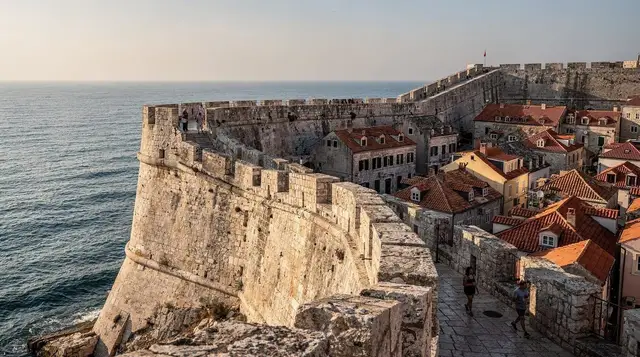
For visitors coming from Kotor for the day, pair Mogren with a walk through Budva old town rather than treating it as a standalone destination — the old town’s ramparts and citadel are a 20–30 minute add-on and make the drive or bus ride feel more worthwhile than a beach visit alone. If you’re planning several beach days along this coast rather than just one, the Kotor Bay by boat itinerary and the things to do: beaches and swimming category page both help with sequencing.
How a swim at Mogren fits into a Budva day
The easiest way to use Mogren is as the bookend of a day in town rather than the whole day. Swim early, while the water is calm and the steps are still cool, then head back through the gate for coffee and a slow walk through the lanes. The Budva old town highlights guide lists what is worth stopping for once you are dry, and what to do in Budva when it rains is the page to keep open if the weather turns and the beach plan collapses.
In the evening the same route works in reverse. The coves empty out as the cliff shade spreads, the light on the water softens, and the walk back is easier on the legs. If you plan to stay for dinner and drinks afterwards, the Budva restaurants guide and the Budva nightlife guide cover the options a few minutes from the path you have just walked.
Who Mogren suits, and who should go elsewhere
Mogren rewards people who value the setting over the facilities. The enclosed coves, the rock tunnel, and the pines make it feel more like a hidden bathing spot than a resort strip, and that is exactly what draws visitors who find the long, open beaches a little characterless. Couples and solo travellers tend to like it for the same reason: it is easy to spend an unhurried hour here with a book and a swim, with nothing to organise.
Families with small children can use it too, but should go in knowing what to expect: steps on the approach, pebbles that are uncomfortable on bare feet, and limited space to spread out. If you are travelling with children, the Kotor with kids family guide gives a wider sense of what suits younger visitors on this coast, and Becici beach guide describes a longer, easier stretch of shore if Mogren feels too tight.
Anyone who wants a full beach-club day, with loungers in rows, music, and a restaurant a few steps away, will be happier elsewhere. The same goes for visitors who dislike climbing steps in the heat or who need level, step-free access to the water. In those cases, compare the options in Mogren Beach guide with the Jaz Beach guide and the Rafailovici beach guide before you decide.
Pairing Mogren with other plans
Mogren sits comfortably inside a wider Budva Riviera itinerary. A swim here followed by a look at Sveti Stefan from the viewpoint makes a natural pairing, and the Sveti Stefan viewpoint guide explains where to stand for the best view of the islet. For a comparison of the two best-known stops on this stretch of coast, read Budva vs Sveti Stefan.
If you would rather arrive by sea than on foot, the Budva to Sveti Stefan boat trip follows the same coastline and gives a different angle on the cliffs you would otherwise only see from the steps. Visitors who are choosing a base for a longer stay can weigh the trade-offs in Kotor vs Budva: where to base yourself, and those building a longer plan can slot a beach morning into the Kotor in 3 days itinerary.
Mogren Beach: frequently asked questions
Is Mogren Beach free to enter?
Yes. There’s no entry fee for either cove. You only pay if you rent a sunbed and umbrella, which runs roughly €10–15 for the pair in high season and less outside July–August.
How far is Mogren Beach from Kotor?
About 30 minutes by car along the coastal road, or 45–60 minutes on the coastal bus via Tivat. It’s a reasonable half-day trip from Kotor but not walkable — the walking-distance claim applies only from Budva old town.
Can I walk to Mogren Beach from Budva old town?
Yes, and this is the main reason to visit. The first cove is about five minutes on foot from the old town’s northern gate, via a short flight of steps with no shade. The second cove is another two to three minutes through a rock tunnel.
Which cove is better, Mogren I or Mogren II?
Mogren I has more sand, more shade from pine trees, and gets busier faster because it’s the first one reached from town. Mogren II is smaller, mostly pebble, and slightly quieter since it requires the extra walk through the tunnel.
Is Mogren Beach sandy or pebbly?
Mogren I is a mix of coarse sand and pebble. Mogren II is mostly pebble. Neither is fine sand — water shoes make both more comfortable.
Are there restaurants at Mogren Beach?
There are small drinks kiosks near Mogren I but no full restaurant on either cove. For a proper meal, walk back into Budva old town, where the seafront terraces charge more but offer far more choice.
When is Mogren Beach least crowded?
Before 9am or after 5pm in July and August. Late May, early June, and September see noticeably smaller crowds throughout the day, with sea temperatures still comfortable for swimming.
Are sea urchins a problem at Mogren?
Yes, on the rockier sections, more so at Mogren II than Mogren I. Water shoes, sold cheaply in Budva’s shops, are worth carrying if you plan to walk on the rocks rather than stay on sand.