Nikšić is Montenegro’s second-largest city, and almost nobody who visits the coast builds a trip around it. That is the honest starting point. There is no old town to wander, no beach, no UNESCO site.
What there is: a working brewery that supplies most of the country’s beer, a ruined 19th-century fortress on a hill above the rooftops, a wide grid of streets that feel more Balkan-industrial than Adriatic, and a position on the map that makes it a near-unavoidable stop if you are driving from the Bay of Kotor to Ostrog Monastery or Durmitor National Park. This page treats it that way: as a useful, unglamorous waypoint, not a headline destination.
Why most people only see Nikšić through a car window
Coastal Montenegro sells itself on the sea — Kotor’s ramparts, Perast’s islands, Budva’s beaches. Nikšić sits inland, at roughly 650 metres above sea level, on the karst plateau that separates the Adriatic coast from the mountains around Žabljak. It grew as an industrial and garrison town under Austro-Hungarian and later Yugoslav rule, and that history shows: wide Habsburg-era streets, a steelworks that once employed a large share of the town, and a general absence of the tourist infrastructure you find in Cetinje or Perast.
None of that makes it unpleasant. It makes it ordinary — a real Montenegrin working town of around 55,000 people, the kind of place where a coffee costs less than on the coast and nobody is trying to sell you a boat trip. For a traveller coming from Kotor’s cruise-ship crowds, an hour here can be a useful reset. Just don’t arrive expecting a second Kotor. There isn’t one.
The brewery that gives Montenegro its beer
The one thing most Montenegrins associate with Nikšić, unprompted, is Nikšićko pivo — the country’s dominant lager, brewed here since 1896 at the Trebjesa brewery on the edge of town, named after the spring that still supplies its water. It is the beer on tap in nearly every café and konoba from Kotor to Ulcinj, and the brewery itself, with its landmark chimney, is one of the few genuinely photogenic pieces of industrial architecture in the country.
There is no standing public tour booked through this site — the brewery does not run a consistent tourist-facing programme the way, say, a winery in Crmnica does — so treat it as a look-from-outside stop unless you contact the brewery directly in advance. The Trebjesa spring and park around it are open and free to walk, and the chimney and brewery buildings are visible from the road and from Trebjesa hill. If you want a guided, structured day built around Montenegrin food and drink rather than industrial history, that is better found on the coast or around Njeguši, not here.
Bedem fortress: photogenic ruins, not a polished monument
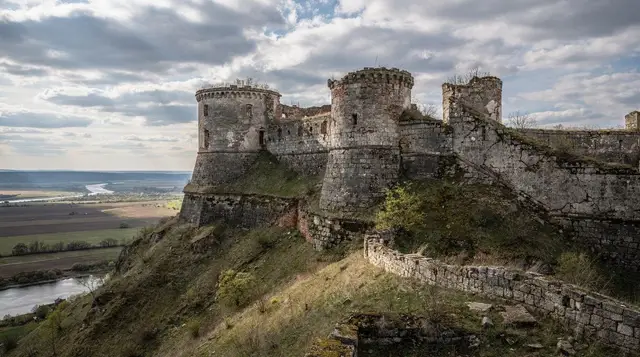
Above the town, on a rocky outcrop, sit the ruins of Bedem fortress — sometimes signposted simply as “Tvrđava” — built in stages from the late 19th century onward and now largely roofless walls, arches and a handful of structures you can walk through freely. There is no ticket booth, no opening hours, no restoration to Kotor’s San Giovanni standard. That is both the appeal and the limitation: you get an unmanaged, slightly overgrown ruin with wide views over the Nikšić basin and, on a clear day, towards the mountains ringing Durmitor, without a queue or an entrance fee.
The climb from town is short compared with Kotor’s roughly 1,350 steps to San Giovanni — more like 15 to 25 minutes on a rough path, not a maintained staircase — but footing is uneven in places, so trainers rather than sandals are worth the effort. There is minimal signage in English, no lighting, and no barrier at the edges, so this is not a place for young children to run around unsupervised, nor a sensible stop right after or during rain, when the rock underfoot gets slick.
Getting to Nikšić, and why you’re probably already headed somewhere else
Nikšić sits roughly at the midpoint of the inland route between the coast and the northern mountains, which is exactly why it functions as a fuel-and-coffee stop rather than a planned overnight for most itineraries built around Kotor.
| From | Distance / time | Road |
|---|---|---|
| Kotor | ~90 km, 1h45–2h | Via Cetinje and Danilovgrad, or via the Sozina tunnel and Podgorica |
| Ostrog Monastery | ~30 km, 30–40 min | Direct road, well signposted |
| Podgorica | ~50 km, 50 min–1h | Main road via Danilovgrad |
| Žabljak / Durmitor | ~70 km, 1h30–2h | Climbs steadily into the mountains; slower in winter |
| Danilovgrad | ~20 km, 20–25 min | Flat, easy road |
| Cetinje | ~55 km, 1h | Via the old road through farmland, not the Njeguši hairpins |
There is no direct coastal fast road: reaching Nikšić from Kotor means either the older route past Cetinje and Danilovgrad, or dropping through the Sozina tunnel towards Podgorica and doubling back west. Neither route is dramatic or difficult by Montenegrin standards — nothing like the Njeguši hairpins above Kotor — but check car rental terms before relying on a hire car for this kind of cross-country drive, since some cheaper policies restrict mileage or exclude certain mountain roads.
There is no railway station serving tourists usefully here, and public bus connections from the coast run through Podgorica rather than direct, so this is realistically a stop for people with a car, whether self-driven or as part of an organised day trip.
What else is in town, briefly
Beyond the brewery and the fortress, Nikšić’s centre is worth a slow walk rather than a checklist. The Saborni hram Svetog Vasilija Ostroškog — the town’s large Orthodox cathedral, consecrated in the 2010s — is one of the biggest Orthodox churches in the Balkans by floor area, built in a deliberately monumental Byzantine-Romanesque style; it is free to enter and worth the five minutes even if church architecture isn’t usually your thing, simply for the scale.
Trebjesa Park, the green space around the brewery spring, has walking paths and is a reasonable spot for a packed lunch. The town’s main pedestrian street, Njegoševa, has cafés and bakeries at prices noticeably below the coast — expect €1–1.50 for a coffee rather than the €2 you’d pay on a Kotor waterfront terrace.
There isn’t much more to add without inflating a genuinely modest stop. If you have children in the car and need somewhere to let them run for twenty minutes, Trebjesa Park does the job better than the fortress ruins do.
Using Nikšić as a base for Ostrog and Durmitor
Where Nikšić earns its place on an itinerary is as a staging point. Ostrog Monastery, Montenegro’s most-visited pilgrimage site, is a half-hour drive away, and Nikšić’s petrol stations, supermarkets and cafés are genuinely more useful before or after that visit than anything at Ostrog itself, where facilities are limited by the monastery’s setting cut into a cliff face. A day that runs Kotor to Ostrog and back is long; splitting it with a night or a long lunch stop in Nikšić takes real pressure off the driving.
a guided day trip to Ostrog Monastery handles the driving and the site logistics if you’d rather not navigate the mountain access road yourself, particularly useful in shoulder season when weather on the approach can turn quickly.
The same logic applies heading north: Nikšić is the last sizeable town before the road climbs into Durmitor’s high country around Žabljak and the Black Lake. Fill the tank here — options thin out fast once you’re past Šavnik — and stock up on water and snacks if you’re heading on to Tara Canyon for rafting or a viewpoint stop.
If your route instead swings through the capital, a walking tour of Podgorica or, for a different angle on the same city, a tour focused on Podgorica’s socialist-era architecture pairs naturally with a Nikšić stop, since the two towns share a similar Yugoslav-era industrial character and sit under an hour apart. Travellers building a broader loop sometimes fold in a private tour of Lovćen National Park on the same multi-day swing, using Nikšić purely as the midway refuelling point between the mountain and the plateau.
Practical details: parking, food, timing
Parking in central Nikšić is straightforward compared with Kotor — street parking is metered in the centre but rarely full, and there’s no equivalent of the old-town congestion that makes coastal parking a genuine headache in July and August. A car is a genuine advantage here rather than a liability.
Food is unpretentious and cheap by coastal standards: expect €7–12 for a main course at an ordinary restaurant, closer to Podgorica prices than Kotor’s tourist-terrace rates. Grilled meat (ćevapi, pljeskavica) is more prominent on menus here than the seafood that dominates coastal Boka menus — this is inland Montenegro’s culinary register, closer to Nikšić’s Balkan hinterland than to the Adriatic. If you want the coastal specialities — grilled fish, prosciutto and cheese from Njeguši — eat before or after this stop, not here.
Timing-wise, there’s little reason to linger past a morning or early-afternoon stop. Nikšić has no meaningful nightlife draw for a visiting traveller, and hotel options, while cheap, don’t compete with staying in Kotor, Cetinje or Žabljak if an overnight is what you’re after. Use it as a scheduled pause on the day’s driving, not an overnight anchor, unless your route genuinely requires an early start the next morning towards Durmitor.
Nikšić — frequently asked questions
Is Nikšić worth a special trip from Kotor?
Not on its own. The drive is close to two hours each way, and the sights — a brewery you can only view from outside, a free but rough fortress ruin, and a large modern cathedral — add up to two or three hours of genuine interest. It earns its place as a stop on a longer route to Ostrog or Durmitor, not as a standalone day trip from the coast.
Can you tour the Nikšićko pivo brewery?
There is no consistent public tour programme aimed at visiting travellers, unlike some European breweries. You can walk the grounds and photograph the chimney and buildings from outside, and the Trebjesa spring park beside it is open and free. Anyone wanting an organised visit should contact the brewery directly in advance rather than expect a walk-up tour.
How long does the Bedem fortress climb take?
Roughly 15 to 25 minutes up an unmaintained path from the edge of town, considerably shorter than Kotor’s climb to San Giovanni. There’s no ticket, no fixed opening hours and no lighting or barriers, so avoid it in the rain or after dark.
Is Nikšić a good base for visiting Ostrog Monastery?
Yes, more practically than emotionally. It sits about 30 to 40 minutes from Ostrog by car and has far better facilities — fuel, supermarkets, cafés, pharmacies — than the monastery site itself, which is limited by its cliffside setting. Many drivers use Nikšić as the last proper town stop before or after visiting Ostrog.
Does Nikšić work as a stop en route to Durmitor?
Yes. It’s the last sizeable town before the road climbs towards Žabljak and the Black Lake, and services become sparse past Šavnik. Filling up on fuel, water and snacks in Nikšić before continuing north is a sensible habit, not just a suggestion.
What’s the best way to get from Kotor to Nikšić?
By car, either via Cetinje and Danilovgrad on the older inland road, or via the Sozina tunnel towards Podgorica before cutting west — both take roughly 1h45 to 2h. There’s no direct fast road and no useful direct public transport link from the coast; buses generally route through Podgorica.
Is Nikšić expensive compared with the coast?
No — it’s noticeably cheaper. Coffee runs €1–1.50 against €1.50–2.50 on Kotor’s coastal terraces, and a restaurant main course is typically €7–12 rather than the coastal €10–18 range, particularly in high season.
Is there anything for children to do in Nikšić?
Limited, but Trebjesa Park offers open green space to run around in, which is more useful for a short break with kids than the uneven, unfenced fortress ruins. Treat it as a leg-stretching stop on a longer drive rather than a destination with dedicated family attractions.