A fortress town nobody rebuilt
Most visitors who say they’ve “seen Bar’s old town” have actually only seen the modern port and the marina. Stari Bar is a different place entirely: a fortified hilltop settlement about 4km inland and several hundred metres uphill from modern Bar, abandoned as a living town and left, deliberately or not, as a ruin. If you’re coming from Kotor, it’s worth being clear about what you’re actually going to see before you commit an afternoon to it.
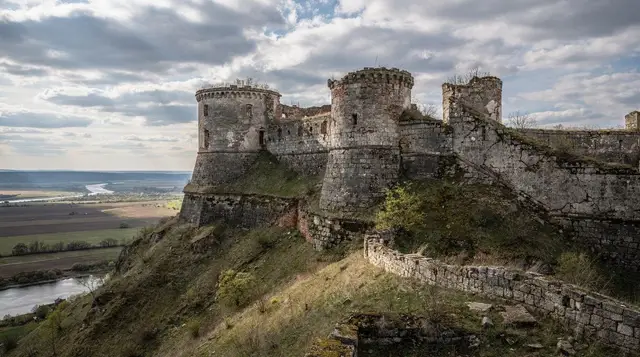
This is not Kotor’s old town with different stonework. Kotor is inhabited — people live behind those walls, run cafés and guesthouses out of them, hang washing from the windows above the alleys. Stari Bar has none of that. Walk through its main gate and you’re in a genuine ghost town: roofless stone shells, collapsed arches, a scatter of buildings stabilised just enough to stay upright, and very little else. There’s no souvenir shop inside the walls, no restaurant terrace, no resident population. That’s the honest pitch for going: if you want to see what an abandoned Montenegrin town actually looks like, rather than a restored tourist set, this is it.
The town’s decline had already started before 1979 — trade routes shifted, the population drifted down the hill toward the coast and the modern port — but the earthquake of that year did the structural damage that made rebuilding uneconomic. Where Kotor’s old town was repaired stone by stone after the same earthquake, Stari Bar simply wasn’t. A short walk covers the whole story: houses with no roofs, a clock tower still standing, the shell of a cathedral, and the remains of a bazaar quarter that once served a town of several thousand people.
Getting there from Kotor
There’s no direct fast road; you’re following the coastal route south past Budva and Petrovac toward Bar, then turning inland and uphill for the last stretch. Allow around 1 hour to 1 hour 15 minutes of driving from Kotor to reach modern Bar, then a further 10-15 minutes on a narrower road up to Stari Bar’s car park near the main gate. As a rough anchor: Bar sits roughly halfway along the route to Ulcinj, which is about 2 hours from Kotor.
There’s no dedicated tourist bus running this route on a fixed schedule, and while the coastal bus network connects Kotor, Budva and Bar reasonably well, getting from central Bar up to Stari Bar by public transport is inconvenient — most visitors either drive, join a tour, or take a local taxi for the last leg. If you don’t want to self-drive the whole way, several boat and shore-excursion tours based out of Bar’s marina fold a Stari Bar stop into a wider day that also covers Lake Skadar.
a combined boat trip on Lake Skadar with wine tasting that also stops at Stari Bar, which is a practical way to see both in one outing if you’re not driving yourself and want the logistics handled.
Walking the ruins: what to actually expect
Budget 1 to 2 hours on site. There’s no single marked loop; instead, paths branch off a rough main route that climbs from the entrance gate through the lower town toward the citadel at the top. The stone underfoot is uneven and occasionally loose, and there’s essentially no shade anywhere inside the walls — worth repeating, because on a July or August afternoon this makes the visit genuinely uncomfortable rather than just warm.
What survives is scattered rather than concentrated: the shell of the Cathedral of St George near the entrance, the remains of a Turkish bath, a still-standing clock tower, fragments of the old bazaar where the town’s market once stood, and — one of the better-preserved features — a stone aqueduct built during the Ottoman period, raised on arches at the edge of the site. It’s a short detour from the main path and one of the more photogenic single structures left standing. Higher up, the citadel walls offer a view back down over the plain toward the sea and, on a clear day, toward Lake Skadar inland in the other direction.
There is basic on-site signage but nothing approaching a full interpretive trail, so a lot of what you’re looking at won’t explain itself. If you want the history rather than just the photographs, a guided walk is genuinely useful here in a way it often isn’t in more self-explanatory old towns.
a guided walking tour through Stari Bar’s ruins that covers the town’s history from its medieval origins to the 1979 earthquake is the more informative way to do this if the bare stones alone won’t hold your interest for two hours.
Entrance, timing and practicalities
A modest entrance fee is charged at the main gate in season, payable in cash euros; outside peak months the ticket booth isn’t always staffed and the gate may simply stand open. Whatever the exact figure on the day, it’s small enough that it shouldn’t affect whether you go.
There’s a car park near the entrance, generally with enough space outside of peak summer weekends. Wear proper shoes — trainers rather than sandals — since the ground is loose stone and gravel in places, and there’s a genuine trip hazard around some of the less-stabilised ruins. Bring water; there’s nothing to buy inside the walls, and the nearest café options are back down near the entrance or in modern Bar itself.
| Detail | What to expect |
|---|---|
| Distance from Kotor | About 1h-1h15 drive to Bar, plus 10-15 min up to the site |
| Time on site | 1-2 hours on foot |
| Entrance fee | Modest, cash euros, charged in season |
| Shade | Almost none — avoid midsummer afternoons |
| Facilities inside | None — no shops, cafés or toilets within the walls |
| Best paired with | Modern Bar, Lake Skadar, or Ulcinj old town |
Stari Bar versus Kotor old town
Because the names invite comparison, it’s worth being direct about the difference, since expecting a second Kotor here is the single most common source of disappointment.
| Stari Bar | Kotor old town | |
|---|---|---|
| Status | Abandoned ghost town | Inhabited UNESCO old town |
| Population inside walls | None | Several hundred residents |
| Shops, cafés, restaurants | None inside the walls | Dozens |
| Condition | Roofless ruins, some stabilised | Fully restored and lived in |
| Typical visit length | 1-2 hours | 30-45 min to walk, longer to linger |
| Crowds | Light, even in summer | Heavy, especially on cruise days |
| Why go | To see genuine ruins and history | To see a living Adriatic old town |
If you only have time for one, and it’s your first trip to the Bay of Kotor, Kotor’s old town comes first. Stari Bar is a strong add-on for a second or third day, particularly if you’re already heading down the coast toward Bar or Virpazar for Lake Skadar.
Combining Stari Bar with the rest of the south coast
Stari Bar rarely justifies a dedicated round trip from Kotor on its own — the driving time is too long relative to the one-to-two-hour visit. It works better folded into a wider day covering the south coast: modern Bar’s marina and its famous old olive tree, a Lake Skadar boat trip from Virpazar or Bar itself, and possibly a further stop in Ulcinj if you’re prepared for a longer day on the road.
a day tour pairing Stari Bar with Skadar Lake viewpoints and local food tastings covers exactly that combination without you having to plan the stops yourself.
For lunch, modern Bar down the hill has more options than anything near the ruins — seafood along the marina, or simpler grilled fare inland. The old olive tree in Bar is a five-minute stop worth adding on the way back down, and it costs nothing beyond the short walk.
If you’d rather be on the water than in a car for the return leg, Bar’s marina also rents boats directly.
a self-drive boat rental from Bar’s marina is an option if you want to explore the coastline south toward Ulcinj at your own pace after finishing at the ruins.
Practical planning notes
There’s no need to book anything in advance to visit Stari Bar independently — turn up, park, pay the entrance fee, and walk. Where a tour earns its cost is in transport (if you’re not renting a car) and in the guiding itself, since the ruins carry limited on-site explanation. Budget for car rental if you’re planning several South Coast stops in one trip, since public buses cover the coastal towns reasonably but not the inland climb to the ruins themselves.
For daily costs on this kind of trip, figure on the lower end of the country’s typical range: a coffee or snack in Bar, the modest Stari Bar entrance fee, fuel or a tour cost, and lunch. Full detail on typical Montenegrin prices is in the daily budget guide.
Anyone curious about the earthquake itself and what it did to towns across the coast, not just here, will find more context in our piece on the 1979 reconstruction, which explains why Kotor was rebuilt and Stari Bar largely wasn’t — a decision as much economic as structural.
Frequently asked questions about visiting Stari Bar
Is Stari Bar the same as Bar old town?
No, and this trips people up. Modern Bar is a working coastal town with a port, a marina and an old olive tree said to be over 2,000 years old. Stari Bar (literally Old Bar) is a separate, abandoned fortified settlement about 4km inland and uphill from it. They’re two different stops, not one.
Why was Stari Bar abandoned?
The town was already in decline through the 20th century, but the 1979 Montenegro earthquake left much of it structurally unsafe and finished the job. Unlike Kotor’s old town, which was repaired and remains inhabited, Stari Bar was largely left as a ruin — a handful of buildings have been stabilised for visitors, but nobody lives inside the walls today.
How long does it take to walk around Stari Bar?
Most visitors need 1 to 2 hours to walk the site properly, following the marked paths past the aqueduct, the clock tower, the cathedral ruins and the old bazaar area. There’s no single loop route, so expect some backtracking on uneven stone.
Is there an entrance fee?
Yes, a modest fee is charged at the entrance gate in season, payable in euros; outside peak season the ticket booth isn’t always staffed. It’s a small enough sum that it shouldn’t factor into your planning either way.
Can you drive to Stari Bar or do you need a tour?
You can drive there independently — there’s a car park near the entrance gate — so a guided tour isn’t necessary if you’re comfortable navigating on your own. A local guide adds value mainly by explaining what you’re looking at, since the ruins themselves carry no on-site information panels beyond basic signage.
Is Stari Bar suitable for young kids or limited mobility?
Not especially. The ground is uneven cobble and rubble, there’s no shade, and some sections involve steps or loose stone. Older children who can walk independently for an hour or two will be fine; strollers and wheelchairs will struggle badly.
What’s the Ottoman aqueduct people mention?
A stone aqueduct built during the Ottoman period still stands on raised arches at the edge of the site and is one of the more photogenic and intact structures left. It’s a short walk from the main entrance and worth the small detour.
Can Stari Bar be combined with Lake Skadar in one day from Kotor?
Yes, and it’s a sensible pairing since Bar sits roughly between Kotor and the southern edge of Lake Skadar. Several boat tours from Bar’s marina combine a Skadar Lake cruise with a Stari Bar stop, which saves you organising the logistics separately.