The south coast’s odd one out
Ulcinj doesn’t look, sound or feel like the rest of the Montenegrin coast. Drive two hours south from Kotor past Bar and Sutomore and the Venetian bell towers and Catholic churches of the Boka give way to minarets, a majority ethnic-Albanian population, and a town whose old quarter sits on a rocky promontory built up under four centuries of Ottoman rule rather than Venetian. It’s the same country and the same euro currency, but a genuinely different atmosphere — closer in feel to northern Albania, which starts less than an hour further south, than to Kotor or Budva.
That makes Ulcinj worth the detour for the contrast alone, but it also has practical value: it’s the base for two of the south coast’s best beaches, Velika Plaža and Ada Bojana, both covered in their own guides, and it’s the last realistic stop before the Albanian border if you’re continuing towards Shkodër.
Who Ulcinj suits, and who it doesn’t
Ulcinj rewards a particular kind of traveller. If you’re happiest ticking off postcard views and photogenic harbours, the Boka will feel more immediately satisfying, and the long drive south may seem like a lot of road for what you get. If you’re curious about how the coast’s history actually layered up, and you like places where daily life carries on regardless of visitors, Ulcinj is the stop that makes the rest of the trip make more sense. Families with children who want a long, gentle, sandy beach tend to like it too, because the shallow water at Velika Plaža is a different proposition from the pebbly shores around Kotor; the pebble vs sand beaches guide explains the difference in more detail.
It also helps to be honest about the trade-off. Choosing Ulcinj means spending a good part of a day in the car, and that time comes out of what you could have spent around the bay. If your base is Kotor and you only have a few days, weigh it against closer options such as Perast or Budva, and decide whether the contrast is worth the road. The how many days in Kotor and the bay guide can help you judge how much slack your plan really has.
Getting there from Kotor
The only sensible route from Kotor is the coastal road through Budva, Petrovac, Bar and Sutomore. Reckon on two hours in normal traffic, more in July and August when the single carriageway through Budva and Petrovac backs up in the afternoon. There’s no toll motorway shortcut for this leg — the Sozina tunnel toll road takes you towards Podgorica, not down the coast.
Public buses run the same route from Kotor’s bus station, with a change or a through service via Bar depending on the day; journey time is similar to driving, sometimes longer with stops. There’s no train service to Ulcinj that’s practical for a day visit. If you’re not driving, budget the same two hours each way and check current timetables before committing to a single-day round trip — buses on this route are not frequent enough to improvise a late return.
Parking in the old town itself is very limited — it’s a walled, largely pedestrian promontory — so plan to leave the car in the newer town below and walk up.
If you haven’t driven in Montenegro before, the car rental guide covers what to check at pickup, and the buses in Montenegro guide is the place to look if you’d rather leave the driving to someone else. A sensible plan for a drive is to leave early, so that you reach the south before the afternoon heat and before the coastal road fills up, and to treat the stretch through Budva as the part most likely to slow you down. Stopping on the way, at Petrovac for a coffee by the sea or at Sutomore for a swim, turns a long transfer into something more relaxed, as long as you don’t let those stops eat the time you wanted in Ulcinj itself.
The old town on the promontory
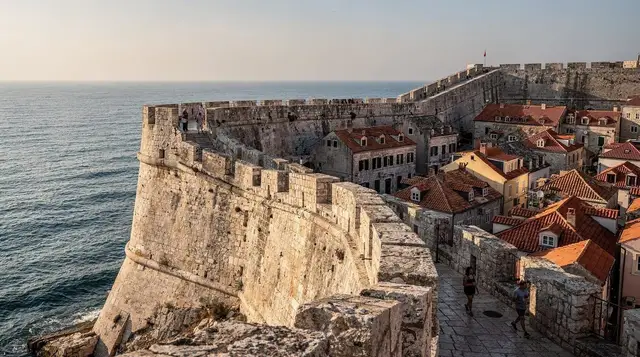
Ulcinj’s old town, known locally as Kalaja, sits on a rock above the sea and predates the Ottomans by a long way — there was a settlement here in antiquity, and the walls have been rebuilt and extended by successive rulers including the Venetians before the Ottoman period that shaped what you see today. The result is compact and steep: narrow stone lanes, a scatter of mosques (several converted from earlier churches and back again over the centuries), old cannon positions, and views out over the Adriatic that stretch towards Albania on a clear day.
It’s a 30–45 minute walk to cover the old town properly, longer if you stop for photographs or a coffee at one of the small terraces inside the walls. Unlike Kotor’s old town, Ulcinj’s isn’t overrun with cruise-day crowds — there’s no cruise port here — so even in August it’s calmer than the Boka in the middle of the day. Wear something that covers shoulders and knees if you plan to look inside a working mosque, and keep noise down near prayer times, which is standard courtesy rather than a strict rule.
Below the old town, Mala Plaža (Small Beach) is a modest town beach handy for a quick swim without driving out to Velika Plaža, though it’s unremarkable compared with what’s a short drive away.
How to walk the old town
The simplest approach is to go up on foot from the newer town, take the lanes slowly, and let the slope decide your route. Start early or late in the day: the stone holds the heat, there is little shade on the open stretches, and the light on the walls and the sea is at its best when the sun is low. Comfortable shoes with grip matter more than anything else, because the paving is old, uneven and polished smooth in places. Keep your camera ready at the wall edges, where the view opens across the water, and give yourself time to simply sit at one of the small terraces and watch the town go about its day.
For the full walking route, the places worth pausing at and the history behind them, use the Ulcinj old town guide alongside this page. It goes into more depth than a destination overview can, and it makes a good companion if you want to understand what you’re looking at rather than just photograph it.
The sunset question
Ulcinj is known locally for its evenings, and with good reason: the promontory faces the open sea, so the end of the day is easy to enjoy from the walls or from a seat below them. If you’re staying the night, plan your dinner so that you’re up in the old town as the light changes, then walk back down once it’s dark. If you’re only visiting for the day, this is the one argument for stretching the trip into an overnight stay rather than racing back north along the coast road in the dark.
Velika Plaža and Ada Bojana, in brief
These two get full guides of their own, but the shape of it: Velika Plaža (“Great Beach”) is a nearly 12 km stretch of sand running southeast from Ulcinj towards the Bojana river, wide, gently sloping and popular with kitesurfers and windsurfers thanks to consistent afternoon wind — see the windsurfing guide if that’s the draw. Ada Bojana is a river-delta sandspit further along, historically a naturist and fishing settlement built on wooden stilts, now a mix of beach bars and restaurants at the mouth of the Bojana where it meets the sea and, across the water, Albania.
Neither is walkable from the old town — you’ll want a car, taxi, or one of the beach shuttles that run in season. For the full detail on getting to each, opening times of beach bars, and what the sand and water are actually like, use the Velika Plaža guide and the Ada Bojana guide rather than treating this page as the last word on either.
Choosing between the two beaches
The decision is mostly about what kind of day you want. Velika Plaža suits long, open, low-effort beach time, with room to spread out and a constant sense of space, and it is the natural pick for anyone who wants to swim, walk the shoreline or try the wind sports. Ada Bojana is more of a place to wander and eat: the stilted buildings, the river mouth and the border view make it interesting even if you never open a towel. If you can only manage one, pick the one that matches your mood, and read the sand beaches comparison and the free vs paid beaches guide before you go, so that you know what to expect from loungers and beach bars.
On the water
Given how much of Ulcinj’s appeal is coastal and riverine rather than architectural, a boat trip is arguably a better use of a short visit than more walking. Short speed boat tours out of Ulcinj cover stretches of coastline that are awkward to see from the road, and boat trips up the Bojana river towards Ada Bojana, such as the Amazonas-style river tour through the Bojana delta, show a side of the area — reed banks, fishing platforms, birdlife — that the beaches alone don’t.
If you’d rather fish than swim, a half-day fishing and boat cruise out of Ulcinj is a low-key way to spend a few hours on the water without needing your own gear.
A boat day also solves a practical problem. Because the beaches and the delta are spread out and awkward without transport, being taken along the water means you don’t have to organise a taxi or worry about where to leave the car. Go in the morning if you can, when the sea tends to be calmer and the light is softer, and bring sun protection and a hat, since there is little shelter once you’re out. If you’re travelling with children or anyone who gets seasick, choose a calm day and a shorter outing rather than the longest option on offer.
Crossing into Albania from here
Ulcinj is the last significant Montenegrin town before Albania, and it’s a genuinely quieter border than the Croatian crossings up at Kotor. The Sukobin crossing lies a short drive southeast of town and leads on towards Shkodër, which sits at the head of Lake Skadar on the Albanian side.
Compared with the queues of two to five hours reported at Debeli Brijeg on the Croatian border in peak summer, this crossing is normally a matter of minutes, not hours — one more reason Ulcinj works well as a stepping-off point rather than a dead end. See the day trip to Albania guide and the two countries in one day guide if you’re weighing whether to add Shkodër to a Montenegro loop.
Bring your passport regardless of nationality — this is a hard EU-adjacent border, not an internal Schengen crossing, and Montenegro’s own 90/180-day visa-free allowance for EU, UK, US, Canadian and Australian passport holders is separate from whatever days you spend on the Albanian side.
What Ulcinj costs
| Item | Typical price |
|---|---|
| Coffee | €1–2 |
| Beer (local) | €2.50–4 |
| Main course, non-touristy restaurant | €7–13 |
| Sunbed and umbrella, Velika Plaža | €5–15/day |
| Private apartment, summer | €35–70/night |
| Hotel, 3–4 star, summer | €70–140/night |
Across the board, Ulcinj runs a little cheaper than Kotor or Budva, and noticeably cheaper than the old town seafront restaurants in Kotor. The exception is peak-season Ada Bojana beach bars, which price closer to Budva than to the rest of Ulcinj.
Food
Expect a mix of Montenegrin coastal cooking and Albanian and Balkan Muslim influences: grilled fish and calamari as everywhere on the coast, but also lamb, spit-roast meats, byrek-style pastries and stronger use of spice than you’ll find further north. Fresh produce and seafood at the town market are worth a look even if you’re not cooking, and small family-run grills away from the old town’s seafront tend to be both better value and better food than the tourist-facing terraces inside the walls.
Where to eat well
The best approach is to look at who is sitting in the restaurant. Places filled with local families, especially away from the seafront, usually offer the freshest fish and the most generous portions. Ask what came in that day rather than ordering by the menu, and be ready to share a few plates, because the portions often suit a table better than a single diner. For the wider coastal picture, the seafood and oysters guide shows how the same ingredients are treated in the bay, and the contrast with Ulcinj’s spicier, grill-led cooking is part of the fun. Pair it with a glass of local wine or a small glass of rakija if you’re not driving.
Where to stay
Most visitors choose between a room in the newer town, close to the shops, the market and the buses, and something nearer the beach, which makes sense if sand and sea are the whole point. Staying in or near the old town is atmospheric but means dealing with steps, limited parking and a bit of noise in high season. Booking ahead is wise in July and August, and the July and August high season guide gives a sense of how busy the coast gets then. If you’re deciding where to base yourself for the whole trip, the where to stay in Kotor Bay guide and the Kotor vs Budva guide cover the northern end of the coast.
When to go
Summer is for swimming, but the shoulder months are when the town feels most itself. Late spring and early autumn bring warm days without the crowds, and the old town is a pleasure to walk when the heat has eased. The Montenegro by season guide and the best time to visit guide help you pick a month, and if you’d rather avoid the crowds altogether, the off-season blog post shows what the coast looks like once the summer rush is over.
Practical notes
- Dress and conduct: nothing formal is required, but modest clothing near mosques and in the old town during Friday prayers is basic courtesy, not a legal requirement.
- Ramadan: if travelling during Ramadan, some daytime food service in the old town may be reduced; evenings pick up after sunset.
- Money: euro, same as the rest of Montenegro. Cards are widely accepted in town, less so at small beach bars on Velika Plaža and Ada Bojana — carry some cash.
- Sun: the south coast is hotter and more exposed than Kotor’s bay; Velika Plaža and Ada Bojana have very little natural shade.
- Time needed: one night lets you see the old town properly and get a half-day on Velika Plaža or Ada Bojana without rushing either. Day-trippers should pick one beach, not both.
Where Ulcinj fits in a wider trip
If you’re building a longer coastal itinerary rather than a single detour, Ulcinj slots naturally at the southern end of a route that also takes in Bar and Stari Bar — see the Stari Bar ruins guide for that stop, a ruined hilltop town abandoned after an earthquake and worth combining with Ulcinj rather than visiting separately given how close they sit. History fans doing both towns in one day can also look at a guided walk through Bar’s old town history to make sense of the layered Illyrian, Venetian and Ottoman remains before continuing south.
For trip planning across the whole south coast rather than Ulcinj alone, the beach and mountains week itinerary and the general things to do: beaches hub both help place Ulcinj against Montenegro’s other beach towns, and the daily budget guide is useful if you’re costing out a multi-stop trip that includes a cheaper South Coast leg like this one.
If a romantic outing is more the goal than sightseeing, a short boat trip with a photo session for two along the Ulcinj coastline is a straightforward way to spend an evening without a long itinerary attached.