A port town, not a resort
Bar does not try to look like Budva or Kotor, and it should not be judged as if it were trying. This is Montenegro’s principal commercial and passenger port, the country’s main sea gateway to Italy, and the southern terminus of a railway line built for symbolism as much as transport. The seafront is dominated by cranes, container stacks and the Montenegro Lines ferry terminal rather than a walled old town, and the town centre is functional Yugoslav-era planning rather than baroque stonework. That is the honest starting point: come to Bar for what it does, not for how it looks.
What it does is worth the detour. Bar is where you catch the overnight boat to Bari, where the scenic railway from Belgrade runs out of track, and where one of Europe’s oldest surviving olive trees still produces fruit in a residential neighbourhood a short walk from the bus station. None of that requires more than half a day, and none of it should be confused with Stari Bar, the separate ruined hill town that most visitors actually mean when they say they are “going to see old Bar.”
The ferry to Italy: Montenegro’s only sea link to the EU
Montenegro Lines runs the passenger and vehicle ferry between Bar and Bari, on Italy’s Adriatic coast, making this the only regular sea connection between Montenegro and the European Union. The crossing is an overnight sailing, typically taking around nine hours, with cabins and reclining seats available; travelling by ferry rather than flying is popular with people bringing a car into or out of the country, since Montenegro is outside the EU and outside Schengen, and every land border crossing means a passport check.
Sailings run more frequently in the warmer months, roughly April to October, and thin out over winter, so check the current timetable before building a trip around a specific date. The ferry terminal sits right on the harbour, an easy walk or short taxi ride from the town centre, and boarding for an evening departure typically opens a few hours ahead. If your Montenegro trip ends in Italy rather than by air, this is the practical way to do it without backtracking through Croatia.
| Route | Typical duration | Frequency |
|---|---|---|
| Bar – Bari (Italy) | Around 9 hours, overnight | Several times a week in season, fewer in winter |
| Kotor to Bar by road | Around 1h15–1h30 | Self-drive or bus along the coast |
The end of the line: the Belgrade–Bar railway
Bar’s railway station is the southern terminus of the Belgrade–Bar line, a route built through some of the most difficult terrain in the Balkans and completed in the 1970s. The line’s reputation rests on its engineering rather than its speed: it crosses the Mala Rijeka viaduct, one of the highest railway viaducts anywhere in the world at close to 200 metres above the valley floor, and threads through well over a hundred tunnels as it climbs from the coastal plain around Podgorica into the mountains of the interior.
You do not need to ride the whole line to appreciate it. A return trip from Podgorica towards Kolašin or Bijelo Polje and back gives a few hours of tunnel-and-viaduct scenery without committing to the full route north into Serbia, which takes most of a day and sometimes runs on old rolling stock with no guaranteed air conditioning in summer. Buy tickets at the station rather than online, since there is no reliable centralised booking system, and expect a slower, more improvised experience than Western European rail travel.
The Stara Maslina: an olive tree older than the town’s churches
Tucked into the Mirovica neighbourhood, a short walk inland from the marina, the Stara Maslina is one of the oldest olive trees in Europe, with estimates of its age ranging from around 2,000 years to considerably more. Precise dating of ancient olive trees is genuinely difficult, since their trunks hollow out over centuries and standard ring-counting does not work, so treat any single figure you read as an informed estimate rather than a certified fact. What is not in dispute is that the tree is still alive, still produces olives, and has been protected and fenced as a small visitor site with modest entry ticketing.
It is an odd, quiet thing to find surrounded by apartment blocks rather than in a grove, and it takes ten minutes to see properly. Combine it with a walk down to the marina and the town’s small museum, and you have covered the core of what makes central Bar distinctive, separate from the port and the ferry terminal.
Stari Bar is a different visit, up the hill
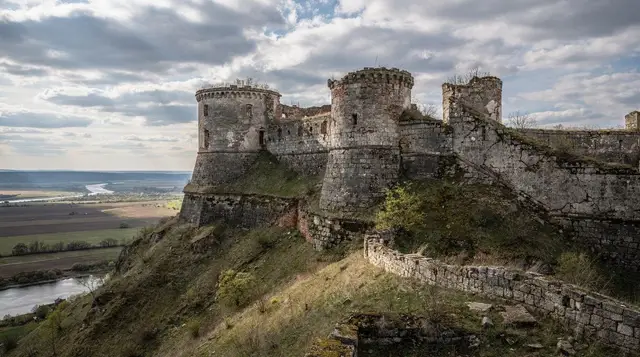
It is worth repeating, because the names invite confusion: the ruined hilltop town most travel photos label “Bar” is actually Stari Bar (Old Bar), roughly 4 km inland and up a hill from the coastal town described on this page. Stari Bar was the settlement until an 1878 siege during the wars of Montenegrin independence left it burned and largely abandoned; its stone walls, cisterns, mosque ruins and aqueduct arch are what people mean when they show you a picture of “old Bar’s ruins.” That visit has its own guide, its own opening hours and its own entry fee, and deserves a separate trip up the hill rather than being folded into a stop at the modern port.
The marina, the modern town and nearby beaches
Porto Bar’s marina is the town’s most pleasant corner: a working harbour with berths for private yachts and charter boats, a promenade, and a scattering of cafés that are considerably cheaper than the equivalent seafront tables in Kotor’s old town or Budva. This is also where most of the boat excursions listed below depart from, including trips out to Lake Skadar and along the coast towards Ulcinj.
Bar’s own beaches, close to the centre, are modest pebble and shingle stretches that locals use more than tourists do. For a proper beach day, most visitors continue a short distance to Sutomore, which has one of the longer sandy beaches on this stretch of coast, or further south to Ulcinj and Ada Bojana, where the sand and the water temperature both improve. Čanj, a small pebble bay between Bar and Sutomore, is a quieter alternative if you want a swim without driving all the way to Ulcinj.
Getting to Bar from Kotor
There is no motorway between Kotor and Bar, so the drive follows the coast road through Budva, Petrovac and Sutomore, a route that is scenic but slow in July and August, when traffic backs up through every resort town it passes. Budget around 1h15 to 1h30 outside peak season, and more if you are travelling on a summer weekend or an afternoon.
Public buses run the same corridor with reasonable frequency, connecting Kotor, Budva, Tivat and Herceg Novi along the coast, though there is no centralised online booking system, so plan to buy tickets at the station or from the driver. For a single day trip focused on the ferry terminal, the railway station and the Stara Maslina, a rental car or a private transfer gives you more control over timing, particularly if you are trying to connect with a specific sailing or train departure.
| From | Approx. time | Notes |
|---|---|---|
| Kotor | 1h15–1h30 | Coast road via Budva and Petrovac; slower in high summer |
| Podgorica (TGD airport) | Under 1 hour | Most direct approach if flying into Montenegro |
| Ulcinj | 30–40 minutes | Coast road south |
| Virpazar / Lake Skadar | Around 30–40 minutes | Inland route towards the lake |
If you are arriving by air rather than overland, Podgorica airport is the closer option to Bar than Tivat, and a rental car picked up there is often more practical than relying on the coastal bus network for a single day.
What a day in Bar costs
Prices in Bar run somewhat below the tourist-heavy stretches of Kotor’s old town and central Budva, since fewer visitors are paying premium waterfront rates here. A coffee at a marina café runs roughly the same €1.20–2 as elsewhere on the coast, a local beer €2.50–4, and a main course at a non-touristy restaurant €8–15. Factor in a modest entry fee for the Stara Maslina and you can cover the core sights on a genuinely low budget, well within the daily budget ranges that apply across the rest of the country.
If you are catching an evening ferry, plan dinner near the marina rather than the terminal itself, where options are limited and aimed squarely at captive travellers waiting to board.
Boat trips and day tours from Bar
Bar’s marina is the launch point for a cluster of excursions that use the town as a base rather than a destination in its own right, which fits how most visitors actually experience the place. Renting a boat directly from the marina is one option if you want to set your own route along this stretch of coast; a self-drive boat rental from Porto Bar’s marina lets you explore the nearby coves and headlands at your own pace rather than on a fixed schedule.
For Lake Skadar, a short drive or transfer inland from Bar reaches Virpazar, the usual boat-trip departure point, and several tours combine the land transfer with time on the water; a combined land and boat tour to Lake Skadar from Bar covers that connection in one booking, useful if you would rather not organise the transfer and boat separately. The lake’s shallow, reed-lined waters and its carp and eel fishing tradition are covered in more depth on the Lake Skadar boat tour guide.
The Stara Maslina itself features in at least one organised outing: an old olive tree and olive oil tasting excursion to Bar departing from Ulcinj pairs a visit to the tree with a tasting of the region’s olive oil, which is a reasonable way to see it if you are already based further south rather than in Bar itself. The surrounding Crmnica hills, between Bar and Lake Skadar, also produce much of the wine covered in the Crmnica wine-tasting guide, and can be combined with an olive-oil stop on the same day.
Planning a half-day from Kotor
The simplest way to use Bar is to treat it as a short, focused outing from your base on the bay. Leave early, so that the coast road through Budva and Petrovac is still quiet, and decide before you set off which of the three sights matters most to you. If the olive tree is the point, go straight to Mirovica and then wander down to the marina for a coffee. If the railway is the point, start at the station and leave the rest for afterwards. If you are only here to see the ferry terminal, a short stop at the harbour is enough.
Anyone without a car should read the guide to Montenegro without a car and the overview of buses in Montenegro before committing to the trip, because the return leg is the part that catches people out. Check the last departure back towards the bay before you relax over lunch. If you would rather skip the logistics entirely, our one-day Kotor guide shows what a day without the long drive looks like, and it makes a useful comparison when deciding whether Bar deserves your time.
The olive tree and the marina as a pair
There is a separate walkthrough that links the two sights, and it is worth reading before you go: the Bar old olive tree and marina guide lays out the short route between them in more detail than this page can. The reasoning is simple. The tree is quick to see, the marina is where you will want to sit down afterwards, and the two sit close enough together that you do not need transport between them. Together they make a gentle, unhurried stretch of the day, a useful counterweight to the more strenuous climb at Stari Bar if you plan to do both.
When the weather turns
Bar is easier to enjoy in settled weather, since the marina, the harbour walk and the olive tree are all outdoors. On a grey day the railway station and the ferry terminal are the natural fallback, and the town’s small museum, already mentioned above, gives you somewhere to shelter. If the sea is too rough for a boat excursion, the inland options around Lake Skadar are usually the better choice, and the Lake Skadar boat tour guide explains how that day works. In the cooler months the pace of the whole coast changes, and the winter in Kotor Bay guide gives a sense of what to expect from the south coast out of season.
Where to swim after Bar
Because the beaches in the centre are not the draw, plan the swim as a second stop. Čanj beach is the gentlest option on the way back north, while Velika Plaža near Ulcinj suits anyone who wants room to spread out. Those who like wind and water sport can read about windsurfing in Ulcinj, and the Ulcinj old town guide covers the historic quarter if you decide to continue south rather than turn back to Kotor. For a broader view of how the options compare, the best beaches near Kotor page puts the whole coast in one place.
Bar in the wider south coast
Most visitors treat Bar as one stop on a longer loop rather than a standalone destination, pairing it with Ulcinj, Sutomore or an inland detour to Lake Skadar and the Crmnica wine country. That fits both the geography and the pace of the place: there is enough here for a morning or an afternoon, not a full day unless you are also using it as a transport hub for the ferry to Bari or the railway north. If you are building a longer South Coast loop into a wider Kotor itinerary, Bar slots in naturally as a half-day stop between the Budva Riviera and Ulcinj, with the port, the Stara Maslina and the marina as the three things actually worth stopping the car for.