Kotor in two days: old town, fortress, then the bay by boat
Two days is a workable amount of time for Kotor if you accept you won’t also see Budva, Cetinje or the mountains — those belong in a longer trip like our three-day Kotor itinerary or seven-day Kotor plan. What two days does fit comfortably is the old town, the climb to San Giovanni, and a half-day on the water to Perast, plus a second half-day that has nothing to do with any of that: the yacht marina at Porto Montenegro in Tivat.
That last part is deliberate. Day one is stone, steps and 800-year-old churches. Day two starts the same way — a wooden boat, a fisherman’s chapel on an islet — and then swaps completely into superyachts, designer terraces and bar bills that would buy a week of meals in the old town. It’s worth doing on purpose rather than by accident, because the price gap catches people out if they’ve budgeted only for Kotor prices.
Day 1: old town first, then the climb to San Giovanni
Morning: the old town before the ships arrive
Kotor’s cruise ships bring 2,000 to 4,000 passengers each into the old town, and with roughly 505 calls and over 700,000 cruise passengers through the bay in 2025, most days between April and October have at least one ship in port. The crowd crush in the old town is reliably worst between 10am and 4pm. Start before 9.30am and you’ll walk streets that are genuinely quiet.
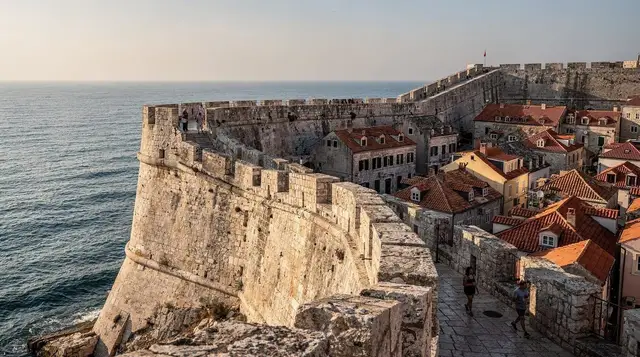
Enter through the Sea Gate and work through Trg od Oružja (the Square of Arms) toward the Cathedral of Saint Tryphon, consecrated in 1166 — look at the two bell towers and you’ll notice they don’t match; earthquakes, most recently in 1979, forced repeated rebuilding and the asymmetry stuck.
The full walled circuit, about 4.5 kilometres including the ramparts, takes 30 to 45 minutes end to end if you don’t stop, but budget two to three hours to actually look at things, follow our old town walking guide, duck into the Maritime Museum, and get lost in the side streets, which is most of the point. The River Gate and Gurdić Gate are quieter exits than the Sea Gate if you want to dodge the tour groups funnelling through the main entrance.
Have a coffee somewhere off the main square — a espresso runs 1.20 to 2 EUR — and pace yourself, because the fortress climb comes next and it’s the harder half of the day.
| Old town stop | Time needed |
|---|---|
| Sea Gate to cathedral | 15 min |
| Cathedral of Saint Tryphon | 20–30 min |
| Full rampart-adjacent loop | 45–60 min |
| Maritime Museum | 30–45 min |
Midday: lunch, then the fortress
Eat before you climb, not after. A plate at a non-touristy restaurant a few streets back from the waterfront runs 8 to 15 EUR; the same dish on a harbourfront terrace inside the walls costs more for a worse view of a wall. Bring water — there’s nowhere to refill once you’re on the San Giovanni fortress trail.
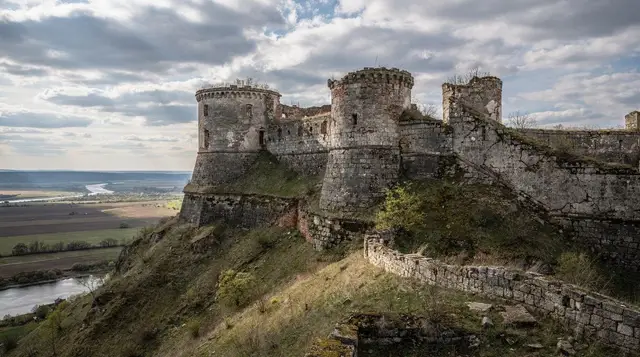
The climb is roughly 1,350 steps to the fortress at 260 metres above the old town, and most people take 45 minutes to an hour and a half depending on fitness and how often they stop for the view, which gets better with every switchback. Entry has fluctuated between roughly 8 and 15 EUR in recent years, paid partway up — there’s no fixed number worth quoting as gospel, just expect to pay something in that range in season. Go in the late afternoon rather than midday if the heat is bad; the path has almost no shade. Heavy rain closes the route or makes the stone steps genuinely dangerous, so check conditions if the forecast looks rough.
If you’d rather skip the entry fee and don’t mind a longer, rougher walk, the old mule track known as the Ladder of Kotor climbs the same slope from further round and comes out free, described in our Ladder of Kotor hiking guide — it takes considerably longer and isn’t a direct substitute if your time is tight.
Back down, dinner in the old town or in nearby Dobrota is the easy option. For something specifically local, look for lamb ispod sača, Njeguši prosciutto and cheese, or fish straight off the boats that morning — our guide to where to eat in Kotor old town has specifics.
Day 2: the bay by boat, then a different world in Tivat
Morning: Perast and Our Lady of the Rocks
Book a boat that leaves early — before 10am if you can manage it — because Perast and the water around Our Lady of the Rocks fill up with day-tripper boats later in the morning, and the light on the islet is better anyway before the haze sets in. A speedboat run through the bay to Perast covers the water in a couple of hours with time on the islet itself; if you’d rather focus purely on the church and its legend without the tube-riding detour, a two-hour boat trip out to Our Lady of the Rocks does the same stop more directly.
Perast itself is worth the extra half hour on foot — a strip of baroque stone townhouses built by sea captains, with almost none of Kotor’s shops or crowd. Our Perast without the crowds guide covers the quiet corners and the best time slots if you want to linger rather than just tick the boat stop.
Our Lady of the Rocks itself isn’t a natural island — it was built up over centuries by local sailors dropping stone and, according to legend, sinking old ships on the site, until there was enough rock to build a chapel on. The short return crossing by rowboat from Perast’s waterfront costs a few euros and is the only way to actually stand on it; see our visit guide for what the return boat trip involves if you’re doing it independently rather than as part of a longer tour.
For a longer look at the bay by water generally, including which operators run which routes, our Kotor Bay boat tour guide and Perast islands boat tour guide both go into more detail than fits here.
Afternoon: Tivat and the Porto Montenegro marina
From Perast or Kotor, Tivat is about 20 minutes by road — a short taxi or transfer, no boat needed for this leg. Porto Montenegro is the reason to come: a purpose-built marina lined with superyachts, glass-fronted apartment blocks and restaurant terraces that could be dropped into Monaco without anyone noticing. It has essentially nothing in common with the stone alleys you were walking 24 hours earlier, and that contrast is the actual point of putting these two destinations in the same itinerary.
Walk the marina promenade for free — it costs nothing to look at the boats and the very expensive real estate. Sitting down for a drink or a meal is where the budget gap from day one becomes obvious: a coffee or beer on a Porto Montenegro terrace runs well above old town prices, and a full meal at one of the marina restaurants can be double what you’d pay for an equivalent plate back in Kotor’s back streets the night before.
It’s a fair place for one overpriced drink to soak up the view; it’s not the place to eat every meal of the trip. Our Tivat and Porto Montenegro guide has specifics on what’s actually there beyond the marina itself, including the older town centre a few minutes’ walk inland where prices reset to normal.
If yachts rather than yacht-watching interest you, charter options exist directly at the marina — a self-drive boat or yacht rental at Tivat is bookable for a few hours on the water without needing a licenced skipper aboard, and gets you a different angle on the same bay you crossed that morning. For a later finish to the day, a sunset boat trip back past Perast and Our Lady of the Rocks is a separate evening option worth knowing about if you’d rather see the islet lit up at dusk than in the morning.
Getting back to Kotor for the night is another short hop by road, or the Kamenari–Lepetane ferry if your route and accommodation make that the shorter way round — see our ferry guide for the fare and queue realities in summer.
Two days, two very different price tags
| Day 1 (Kotor old town + San Giovanni) | Day 2 (Perast boat + Porto Montenegro) | |
|---|---|---|
| Coffee | 1.20–2 EUR | 3–5 EUR at the marina |
| Lunch | 8–15 EUR off the main square | 15–25 EUR+ on a marina terrace |
| Main paid activity | Fortress entry, roughly 8–15 EUR | Boat trip, price varies by operator and length |
| Overall feel | Medieval, dense, walkable | Modern, spread out, built for spending |
Don’t average these two days into one mental budget number — they’re genuinely different experiences and different price brackets, and the marina afternoon can quietly double what you spent the day before if you’re not paying attention. For a fuller breakdown across a longer stay, see our Montenegro daily budget guide or the budget planning tool.
Practical notes for this two-day plan
Parking in Kotor is tight and paid in season near the walls; if you do have a car, use the marina car park or Škaljari rather than circling for a spot — details in our Kotor parking guide. No car is genuinely needed for this itinerary, since everything either happens on foot, by boat, or by a short taxi/transfer to Tivat.
Wear proper shoes for the San Giovanni climb — the steps are old, uneven stone and get slippery when wet. Bring a hat and water; there’s no shade and no vendor selling either partway up. For the boat day, a light jacket is worth having even in summer, since it’s noticeably cooler on open water than on the old town’s stone streets.
If you’re deciding whether Kotor or nearby Budva makes the better base for a trip built around days like these, our Kotor vs Budva guide lays out the trade-offs. And if two days turns out to be too short once you’re here, the jump to a three-day itinerary is the natural next step rather than trying to squeeze Budva or Cetinje into an already full second day.
FAQ: planning two days between Kotor’s old town and the bay
Is two days enough for Kotor and the bay?
It’s enough to see the old town, climb San Giovanni, and get out on the water to Perast — the three things most people come for. It is not enough for Budva, Cetinje or Lovćen as well; those need a third day or a separate trip.
Do I need a car for this itinerary?
No. The old town is on foot, boats to Perast leave from Kotor’s waterfront or Perast itself, and Tivat is a short taxi, bus or transfer from Kotor. A car adds parking hassle in both towns for no real benefit over two days.
What if it rains on the boat day?
Boats to Perast generally still run in light rain, but choppy conditions or wind cancel them, and San Giovanni closes or becomes unsafe in heavy rain. Have a backup: swap the order, or use the day for Kotor’s covered sights and cafés instead.
How much does the San Giovanni fortress climb cost?
Entry has run somewhere between 8 and 15 EUR depending on the season and year, paid at a gate partway up. There’s no way to skip the fee and reach the upper fortress in season.
Is Porto Montenegro worth the trip from Kotor?
As a contrast to the old town, yes — walk it once for the yachts and the atmosphere. As a place to eat or drink, it’s the most expensive stretch of coast in the bay; budget accordingly or just window-shop and eat back in Kotor or Tivat’s older streets.
Can I visit Our Lady of the Rocks without a boat tour?
No. It’s an artificial islet reached only by boat — either a short return trip on the tourist boat from Perast’s waterfront, or as a stop on a longer speedboat tour of the bay.
Where should I stay for this two-day plan?
Kotor old town or nearby Dobrota/Škaljari for both nights keeps logistics simple — the boat leaves from Kotor’s waterfront and Tivat is a short hop back. Basing in Tivat instead works too, but then day one’s fortress climb starts with a transfer.
tours.2 days
Verified deep-linked GetYourGuide tours. Book through these links and we earn a small commission at no cost to you.
GetYourGuide does not provide a product photo for this activity — the image shows the meeting point, photographed by us.