A cooler, cheaper base for the north
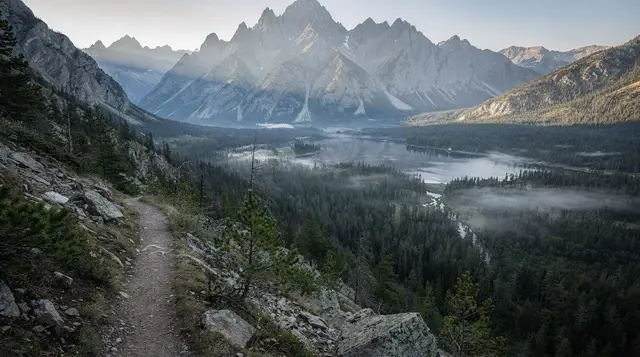
Kotor and the coast sit at sea level; Kolašin sits at close to 950m, on the Bjelašica massif in Montenegro’s northern interior. It is a working mountain town rather than a resort built for tourists, which is exactly why it costs less than Žabljak: fewer purpose-built hotels chasing peak-week prices, a smaller tourist footprint, and a local economy that does not depend entirely on one short ski season. For travellers piecing together a loop through Durmitor National Park, the Tara Canyon and Biogradska Gora, Kolašin is a sensible place to sleep, eat and restock rather than a headline attraction in its own right.
That distinction matters. Kolašin does not have a landmark to queue for. What it has is a functioning small town at altitude, a short walk from a national park, with a ski lift a few kilometres up the road and enough guesthouses and konoba restaurants to make a one- or two-night stop comfortable without coastal prices.
Getting to Kolašin from Kotor
There is no quick way to do this. Budget around 2 hours 30 minutes to 3 hours by car, running via Podgorica through the Sozina Tunnel (€2.50 toll for a car) and then north on the road that follows the Morača river gorge. The Morača canyon stretch is scenic but narrow in places, with tunnels and blind bends; it is a manageable drive, not a difficult one, but it is not a road to do in the dark for the first time.
Along the way, the Morača Monastery sits just off the main road and is worth the ten-minute stop if you are driving yourself — a working 13th-century monastery with frescoes, and one of the few genuine points of interest between Podgorica and Kolašin.
There is no direct bus from Kotor. Public transport means a bus or shared transfer to Podgorica first, then a connecting service north; timetables are not centralised online, so it is worth confirming departure times locally rather than assuming a fixed schedule. Most visitors either drive themselves, book a private transfer, or join a guided day tour that includes Kolašin and Biogradska Gora as a package, which sidesteps the connection problem entirely.
Biogradska Gora, on the doorstep
The main reason Kolašin works as a base rather than just a stopover is Biogradska Gora National Park, roughly 11km and 15-20 minutes away. It is one of the last three primeval forests left in Europe, protected since the 19th century, built around the glacial Biogradsko Lake. It is worth planning as a separate half-day out from Kolašin rather than folding it into a driving day — the guide to hiking Biogradska Gora covers routes and timing in more detail than makes sense to repeat here.
Kolašin 1450: a smaller, cheaper ski hill
Montenegro has two real ski areas: Savin Kuk above Žabljak, and Kolašin 1450 on the slopes of Bjelašica, a short drive from the town centre. Kolašin 1450 is the smaller of the two — a modern chairlift, a manageable number of runs, and a profile that suits beginners and intermediate skiers better than experts looking for long descents. What it lacks in scale it makes up for in price: lift passes and slope-side lodging both tend to run cheaper than the equivalent at Žabljak, especially outside the Christmas and New Year fortnight when Montenegrin skiers from Podgorica fill both hills.
| Kolašin 1450 | Žabljak / Savin Kuk | |
|---|---|---|
| Scale | Smaller, fewer runs | Larger, more terrain |
| Suited to | Beginners, intermediates | Wider range, including advanced |
| Peak-week pricing | Generally lower | Generally higher |
| Distance from Kotor | ~2h30-3h | ~3h-3h30 |
| Off-piste facilities | Limited | More established |
Outside the December-to-March window, the lift infrastructure is largely dormant and the town reverts to its summer rhythm — this is a genuinely bi-seasonal place, not a resort with a long shoulder season either side.
Summer in Kolašin: hiking and canyon country
From June to September, Kolašin functions as a hiking base rather than a ski town. Bjelašica’s trails, the paths through Biogradska Gora, and the broader network across the national parks of the north are all within reach without the long coastal drive that a Kotor-based visitor would otherwise need to make twice. The full run-down of routes belongs in the Durmitor National Park guide and the Black Lake hiking guide, both written around Žabljak as the trailhead, but Kolašin puts you within a similar driving radius of the same terrain at a lower nightly rate.
The Tara Canyon, often cited as the deepest river canyon in Europe, is reachable from Kolašin in well under two hours, opening up rafting and canoeing on the Tara river itself as a day trip rather than requiring a Žabljak base. The Tara Canyon rafting guide covers the logistics of a rafting day; for a gentler introduction, a guided canoe trip with a riverside picnic covers similar ground at a slower pace.
a half-day canoe trip on the Tara river with a riverside picnic stopFor visitors who want Durmitor’s headline sights — the Black Lake, the Đurđevića Tara Bridge, the high peaks — without changing base twice, a guided day tour from Kolašin covers the ground in a single loop:
a day tour combining Durmitor’s Black Lake and the Tara Canyon viewpointsThose with a rental car and a full day free can also cover Kolašin’s own back yard on two wheels, with e-bike routes running out from the Bjelašica ridge toward Durmitor’s edge:
an e-bike rental for exploring Durmitor National Park’s tracks and viewpointsWhat Kolašin costs, compared with the coast and Žabljak
Kolašin’s prices sit closer to Podgorica’s than to Kotor’s or Budva’s, and generally undercut Žabljak too, since Žabljak’s economy leans harder on ski-season margins. Expect a coffee for €1-2, a beer for €2-3, and a plate of grilled trout or ćevapi at a local restaurant for €7-13. Guesthouse rooms in town typically run €25-45 a night outside the ski season, rising in the December-to-February weeks and again briefly for summer hiking peaks in July and August, though nowhere near coastal high-season levels.
| Item | Typical price |
|---|---|
| Coffee | €1-2 |
| Local beer | €2-3 |
| Restaurant main (trout, ćevapi, grilled meat) | €7-13 |
| Guesthouse room, off-peak | €25-45/night |
| Guesthouse room, ski season | €45-70/night |
| Kolašin 1450 day lift pass | Cheaper than Savin Kuk equivalent |
Full country-wide comparisons and a day-by-day budget breakdown are in the Montenegro daily budget guide.
Food: mountain cooking, not seafood
This is where the menu changes completely from the coast. Kolašin sits in Montenegro’s dairy and pork country, closer in spirit to the plates you would find around Njeguši than anything on a Kotor waterfront terrace: smoked meats, kajmak, cheese from mountain farms, and grilled trout from the rivers rather than sea bass. Wild mushrooms and forest produce show up on menus in season. It is heartier, cheaper food than the coastal restaurants aimed at cruise-day visitors, and portions tend to run larger.
Using Kolašin as a base for a wider northern loop
Kolašin’s real value is logistical: it sits within manageable driving distance of Biogradska Gora, the Tara Canyon, Đurđevića Tara Bridge and — with a longer day — the Black Lake and Durmitor’s high country around Žabljak. Travellers assembling a north Montenegro leg rather than a single day trip from Kotor should look at the national parks grand tour itinerary, which strings these together rather than trying to force them into one exhausting day from the coast.
Podgorica, on the return route toward Kotor, is worth a stop rather than a straight pass-through if time allows — the guide to seeing Podgorica in a day covers what fits into a few hours, and a short guided walk covers the compact centre without needing a plan of your own:
a guided walking tour through Podgorica’s old and new town centresThose weighing Durmitor’s peaks against the wetlands of the south should read the Lake Skadar versus Durmitor comparison before committing a full day to either.
Getting around without a car
Kolašin’s town centre is small enough to walk in full in under 20 minutes, but everything that makes it worth the drive — Biogradska Gora, the ski lift, the Tara Canyon — sits outside town and is far easier with your own transport. Public buses connect Kolašin to Podgorica reasonably reliably; onward links to Mojkovac and Žabljak are thinner and worth confirming locally rather than assuming. The practicalities of touring the north without hiring a car, including where self-drive genuinely beats public transport and where a guided day tour is the more efficient fix, are covered in the Montenegro without a car guide.
How to shape a one- or two-night stay
With one night, treat Kolašin as a sleeping stop on a longer loop: arrive in the afternoon, walk the town, eat something hearty, and spend the next morning at Biogradska Gora before moving on. With two nights, the second day gives you room to choose between the forest, a longer walk on the Bjelašica side, or a drive toward the canyon country. Splitting the days this way keeps the driving light, which matters because the roads in the north are slower than the map suggests.
If you are coming straight from the coast, resist the urge to add more stops than the daylight allows. The route from Kotor is already a long morning, and the better plan is to arrive with energy left for the town rather than to rush through it. Travellers who prefer to compare bases can read where to base yourself between Kotor and Budva to see how the coast and the mountains differ in rhythm before deciding how many nights to give each.
What the town feels like
Kolašin is quiet in the evening outside the ski weeks. Cafés fill with locals, the main street is easy to walk, and nothing is staged for visitors. That calm is part of the appeal for anyone arriving from the busier Kotor Old Town, where the crowds in high season can feel relentless. The mountain air is noticeably cooler than on the coast, so pack a layer even in summer; the what to pack guide helps with the contrast between sea-level heat and a night at altitude.
Pairing Kolašin with other stops
Kolašin fits naturally into a longer circuit that also takes in Žabljak, the Black Lake and the Đurđevića Tara Bridge. Those who would rather not drive the whole loop themselves can combine a guided mountain day with their stay, such as a guided mountain tour through Biogradska Gora and the Bjelašica range, which hands the navigation and the mountain roads to someone who knows them.
For a gentler contrast with the coast, a later stop on the way back at Lake Skadar or in Cetinje rounds out the trip with water and old-capital history after several days of forest and rock. If you want a fuller picture of the seasons before booking, Montenegro by season sets out what changes from month to month across the country.
Practical habits for the north
Keep fuel and cash in mind before leaving the larger towns, confirm opening times locally, and allow extra time for mountain driving rather than trusting a single estimate. If you plan to hire a vehicle for the loop, the car rental guide covers the choices worth making before you collect the keys. Weather in the mountains can change quickly, so start walks early and keep a flexible plan for the day.
Kolašin FAQ: skiing, cost and travel from Kotor
Is Kolašin worth visiting instead of Žabljak?
Kolašin sits at roughly 950m in northern Montenegro and works as a cheaper, less crowded alternative to Žabljak for reaching Durmitor, Biogradska Gora National Park and the Tara Canyon. It has its own small ski area, Kolašin 1450, and a summer hiking season, though the Durmitor high peaks and Black Lake are still a separate onward drive.
How do you get from Kotor to Kolašin?
The most direct route runs via Podgorica and the Morača canyon, around 2 hours 30 minutes to 3 hours depending on traffic and roadworks. There is no direct bus from Kotor, so most visitors either drive, hire a transfer, or change buses in Podgorica.
Is Kolašin good for skiing?
Yes, on a modest scale. The nearby Kolašin 1450 ski centre on Bjelašica has a chairlift and a handful of runs suited to beginners and intermediates, and lift tickets and lodging both run noticeably cheaper than Žabljak’s Savin Kuk in peak weeks.
How far is Biogradska Gora from Kolašin?
About 11km, roughly 15-20 minutes by car. It is one of Europe’s last remaining primeval forests, built around the glacial Biogradsko Lake, and is usually visited as a half-day trip rather than a full day.
Is Kolašin expensive?
Not by Montenegrin coastal standards. Guesthouse rooms and simple restaurant meals in Kolašin generally undercut equivalent options in Žabljak and the coast, particularly outside the main ski weeks of late December to February.
Can you visit Kolašin without a car?
It is possible but limited. Buses connect Kolašin to Podgorica reasonably often, and onward services reach Mojkovac and Žabljak less predictably, so day trips to Biogradska Gora, the Tara Canyon or Durmitor are much easier with a rental car or a guided tour.
What’s the best time of year to visit Kolašin?
December to March for skiing, or June to September for hiking, mushroom season and clear access to Biogradska Gora. April, May, October and November see a lot of the seasonal infrastructure closed between the two seasons.