Rafting the Tara Canyon from Kotor
Is Tara Canyon rafting suitable for beginners, and when is the best time to go?
Yes, the classic stretch is graded Class II to III and run with a guide steering each raft, so no prior experience is required. Late May to late June is the best window, when snowmelt keeps the river running high and fast; by August the flow drops and rapids soften into flatter paddling.
How deep is the Tara Canyon, really?
The number gets thrown around a lot, so it’s worth being precise. The Tara Canyon cuts more than 1,300 metres deep at its most dramatic points, carved by the Tara river through the limestone of northern Montenegro on its way to the Drina. That makes it the deepest canyon in Europe, and on most rankings the second deepest in the world after the Grand Canyon in Arizona. It sits inside the UNESCO-listed Durmitor National Park biosphere reserve, which is the same protected area that holds Black Lake and the Djurdjevica Tara Bridge.
None of that scale is obvious from a road. The canyon reveals itself properly from the river, looking up at walls of bare rock and pine forest that close in and then open out again as the Tara twists north. That’s the case for rafting it rather than just photographing it from the bridge — a photo stop shows you a fraction of a much longer feature.
Getting from Kotor to the put-in
This is the detail that catches people out: the rafting doesn’t start anywhere near Kotor. The put-in points cluster around Scepan Polje, a village hard against the Bosnian border, well north of Zabljak itself. From Kotor, reckon on roughly the same three-and-a-half to four hours it takes to reach Zabljak, whether you go via Niksic or loop through Cetinje and Podgorica — sometimes a touch longer, since the rafting bases sit further along the gorge than the town.
Almost nobody self-drives to the river and rafts independently. The practical approach is booking a tour that includes transfer from Kotor, which turns a demanding drive into a day you can sleep through part of. A one-day rafting trip with pickup from Kotor handles the whole round trip, transfer included, so the only decision left is which stretch of river and how long you want to spend on it.
If you’d rather drive yourself and stay over, pairing rafting with a night in Kolasin or Zabljak turns a rushed single day into something with breathing room — see the Durmitor National Park guide for the wider area and the car rental guide for what driving these roads actually involves.
When to go: spring flow versus late-summer trickle
Water level changes the Tara Canyon more than almost any other single factor. Snowmelt off Durmitor keeps the river high and fast from late April into June, which is when the rapids on the classic stretch are at their strongest and the ride is genuinely exciting. By late July and especially August, the flow has dropped noticeably; rapids that were Class III in May soften into gentler paddling with long flat sections, still scenic but a quieter experience.
A few operators keep running trips into September on the deepest sections of the gorge, where the water holds up longer, but don’t expect the same current you’d get in early June. If the rafting is the main reason for the detour rather than a bolt-on to a Durmitor trip, build your Montenegro dates around late May to late June rather than the other way round.
The four ways to raft it
Operators sell the same river in different lengths. The distances below are typical for the classic Scepan Polje to Radovan Luka stretch; exact start and end points vary by operator and water level.
| Trip | Time on the water | Approximate distance | Rapids | Overnight |
|---|---|---|---|---|
| Short introduction | about 2 hours | roughly 9 km | Class I–II | No |
| Half-day classic run | 3–4 hours | roughly 18 km | Class II–III | No |
| Full-day run | 5–6 hours including transfers | roughly 24 km | Class II–III, occasional Class IV in high water | No |
| Two-day expedition | 2 days | 40 km or more, into the gorge’s remoter section | Class II–IV depending on flow | Yes, riverside bivouac |
For a first trip, the half-day or full-day run covers the canyon’s best sections without committing a whole extra day to travel and camp setup. A rafting run through the deepest part of the canyon is the one to look for if seeing the gorge at its most dramatic matters more than ticking off distance. The full-day rafting tour is the middle ground most people end up choosing — long enough to feel like a proper expedition, short enough to be back in Kotor by evening.
The two-day option is worth it mainly for the bivouac and the stretch of gorge the day trips skip, not for noticeably harder water — level and season affect difficulty more than which package you buy.
What a guided run on the classic stretch is actually like
Every raft on the commercial stretch is steered by a licensed guide who sits at the back giving instructions — paddle forward, back, stop, get down. You’re not expected to read the river yourself. Between rapids there are long calm pools where the guide slows down, points out the canyon walls, and sometimes lets people swim alongside the raft in a life jacket, water temperature permitting (it’s cold even in August, since it’s snowmelt-fed for much of the season).
The rapids themselves come in a steady sequence rather than one continuous whitewater run: a burst of paddling and spray, then a flat stretch to recover, then the next set. In high water a couple of named rapids nudge toward Class IV; guides adjust their line for nervous groups and, on request, will walk anyone who wants to skip a specific rapid around the bank rather than through it.
Lunch on the full-day trips is usually a riverside stop with grilled food, sometimes trout, before the final descent back to the take-out point where the transfer bus is waiting.
Difficulty, fitness and who should skip it
This is not a hike, and it’s not a spectator activity — everyone in the raft paddles, at least during the rapids. But it doesn’t require athletic fitness either: guides steer, the raft does most of the work in flat sections, and the technique is simple enough to pick up in the safety briefing before you launch.
Minimum ages vary by operator and trip: expect around eight to ten years old for the short and half-day runs, higher for the full-day and two-day trips where longer stretches of sustained paddling are involved. Pregnant women, people with unmanaged heart conditions, and non-swimmers are generally excluded, and operators can refuse anyone who turns up intoxicated — not a hypothetical rule, given how much rakija tends to circulate on Montenegrin day trips.
Anyone with a genuine fear of cold water or enclosed spaces should think twice about the two-day option, where there’s no quick exit once you’re deep in the gorge. The half-day and full-day runs both have take-out points reachable by road if someone needs to stop early.
Prices, what’s included and what to bring
Expect a wetsuit, helmet, life jacket and paddle to be included in any package, along with a guide per raft and transfer to and from the put-in. Full-day trips typically add a riverside lunch; two-day trips include camping equipment and both meals. Prices vary by operator, season and whether transfer from Kotor is bundled in — treat any figure you see as a starting point to confirm at booking rather than a fixed rate, since fuel costs and water-level-driven trip length both move it around.
Bring a swimsuit to wear under the wetsuit, a change of dry clothes for the ride home, a towel, and shoes that can get wet — sandals with a back strap or old trainers, not flip-flops. Sun cream and a hat matter even on the water; the canyon walls block wind more than sun. Leave valuables at your accommodation or in a dry bag if the operator provides one — phones and cameras don’t survive an unplanned swim.
Combining rafting with Durmitor and the Tara Bridge
Because the drive from Kotor eats most of a day either way, it makes sense to stack activities once you’re up there rather than making the trip twice. A combined day tour covering Black Lake and the Tara Canyon pairs a morning walk around the lake with an afternoon on the river, though it’s a long single day — leaving Kotor before dawn and getting back after dark.
If your schedule allows it, staying one night in Zabljak or Kolasin turns the same combination into two relaxed half-days instead of one exhausting one: see the Black Lake and Zabljak hiking guide for the walk, and the Durmitor National Park guide for lodging and the wider park. The Djurdjevica Tara Bridge itself, with its own zipline across the gorge, sits on the same road and takes little more than a photo stop and a coffee to fit in on the way through.
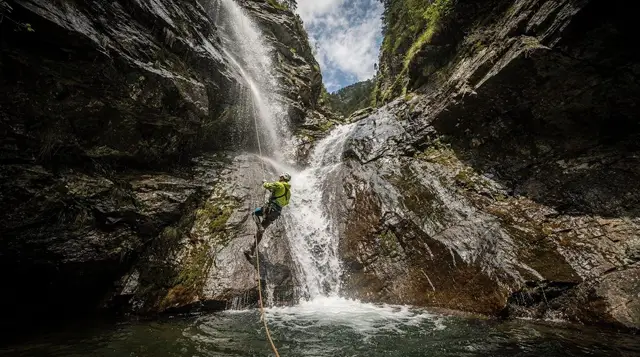
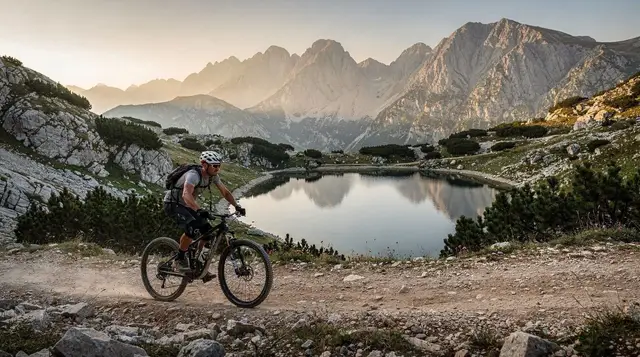
Other operators run canyoning trips and mountain biking around Durmitor as further add-ons for anyone treating this as an adventure-sports day rather than a single rafting excursion — worth checking if you’re building a longer loop through the national parks rather than a single day trip from the coast. The wider spread of adventure activities around the country is on the adventure sports category page.
FAQ: rafting the Tara Canyon
Do I need rafting experience to raft the Tara Canyon?
No. The standard commercial stretch is Class II to III and every raft is steered by a qualified guide who gives instructions as you go. Anyone in reasonable fitness who can swim is accepted, usually from around age eight to ten on the shorter runs, higher on the two-day expedition.
How deep is the Tara Canyon compared with other famous canyons?
It reaches more than 1,300 metres deep at its most dramatic points, which makes it the deepest canyon in Europe and, by most measurements, the second deepest in the world after the Grand Canyon in the United States.
How far is the Tara Canyon from Kotor, and how do you get there?
The rafting put-in points sit close to Scepan Polje, near the Bosnian border, roughly the same three-and-a-half to four hours from Kotor as reaching Zabljak, on the road through Niksic or via Cetinje and Podgorica. Most visitors book a tour with transfer included rather than self-driving to the river.
What is included in a Tara Canyon rafting trip?
A standard package includes transfer from Kotor or a nearby pickup point, a wetsuit, helmet, life jacket and paddle, a qualified guide steering the raft, and usually a riverside lunch on the full-day trips. Bring a swimsuit, a towel and shoes you don’t mind getting wet.
Which months have the best water levels for rafting?
Late April through June, when snowmelt from Durmitor keeps the river high and the rapids at their strongest. By late July and August the water drops noticeably and the ride becomes gentler and slower; some operators still run trips into September on the deeper stretches.
Can you combine Tara Canyon rafting with Durmitor National Park in one day from Kotor?
Yes, several day tours pair a morning at Black Lake or the Djurdjevica Tara Bridge with an afternoon rafting session, though it makes for a long day given the three-plus-hour drive each way. Staying a night in Zabljak lets you spread the two activities more comfortably.
Is the two-day rafting expedition worth it over the standard day trip?
It’s worth it mainly for the riverside bivouac and the stretch of gorge the day trips don’t reach, not for harder rapids — water levels usually determine difficulty more than which package you book. If your time in Montenegro is limited, the half-day or full-day run covers the canyon’s highlights.
Are there rapids to be nervous about, or is it mostly calm paddling?
The classic run has a steady sequence of Class II and III rapids with calmer pools between them, so it never turns into sustained whitewater. In high water a couple of sections can nudge toward Class IV; guides adjust the line and can walk nervous paddlers around the harder drops on request.
Adventure & outdoor activities on GetYourGuide
Verified deep-linked GetYourGuide tours. Book through these links and we earn a small commission at no cost to you.
GetYourGuide does not provide a product photo for this activity — the image shows the meeting point, photographed by us.