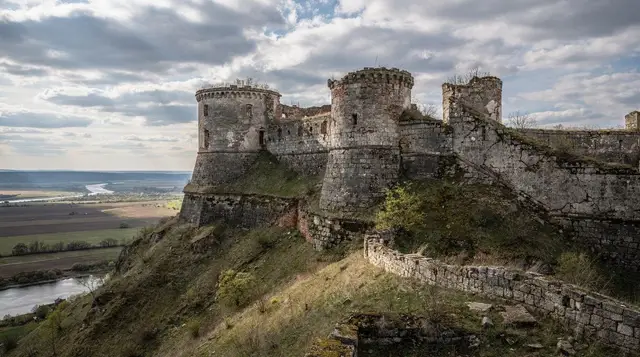
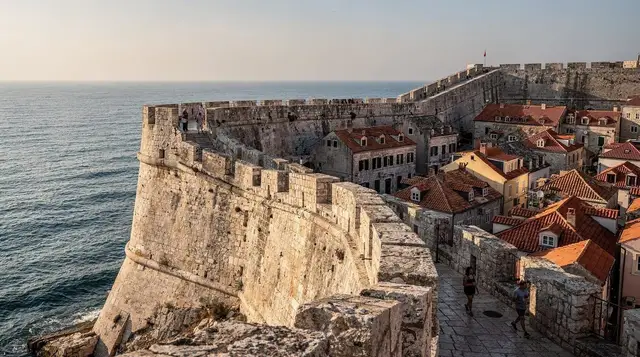
Montenegro vs Croatia: comparing the coast
Is Montenegro cheaper than Croatia's Dalmatian coast?
Generally yes. A comparable meal, room or rental car runs noticeably less around Kotor and Budva than around Dubrovnik or Split, though the gap has narrowed since Croatia joined the euro in 2023. Montenegro's tourist infrastructure is thinner and its coastline steeper, dropping straight from mountain to sea.
Same sea, different price tag
Montenegro and Croatia share a border, a coastline and, since 2002, the same currency, but they don’t share a price list. A short summer break based in Kotor will usually cost less than an equivalent week around Dubrovnik for a comparable room, a comparable meal and a comparable rental car — though the gap has closed somewhat since Croatia adopted the euro in 2023 and its coastal prices kept climbing. The two countries are close enough geographically that a lot of visitors don’t choose one over the other; they do both, crossing a land border that takes anywhere from fifteen minutes to five hours depending on the date on the calendar.
This page compares the two as travel destinations, not as abstract economies: what a night, a meal and a day on the water actually cost, how developed the tourist infrastructure is on each side, what the coastline itself looks and feels like, and what crossing the border involves if you want to see both in one trip.
Prices side by side
These are ballpark ranges for the coastal zones tourists actually visit — Kotor, Budva and Tivat on the Montenegrin side, Dubrovnik and Split on the Croatian side — in high season (July-August). Expect 20-40% lower prices on both coasts outside June-September.
| Item | Montenegro (Kotor/Budva area) | Croatia (Dubrovnik/Split area) |
|---|---|---|
| Coffee, café terrace | 1.20-2 EUR | 2.50-4 EUR |
| Local beer, 0.5L | 2.50-4 EUR | 4-6 EUR |
| Main course, non-touristy restaurant | 8-15 EUR | 15-25 EUR |
| Main course, old-town waterfront | 18-30 EUR | 25-40 EUR |
| Apartment, high season, per night | 50-100 EUR | 90-160 EUR |
| Hotel, 3-4 star, high season | 90-180 EUR | 140-250 EUR |
| Rental car, economy, per day | Similar on both sides — 35-55 EUR | Similar on both sides — 35-55 EUR |
| Petrol, per litre | Slightly lower | Slightly higher |
The pattern holds across most categories: eating and sleeping cost noticeably less in Montenegro, while transport costs converge because fuel, car hire and ferry pricing are set closer to EU-wide levels on both sides. A rental car picked up in Tivat and dropped in Dubrovnik, or vice versa, usually carries a one-way fee regardless of which country you start in.
Where the price gap narrows most is at the very top end — five-star hotels in Porto Montenegro or Sveti Stefan’s private villas price in line with anything in Dubrovnik’s old town. The savings are concentrated in the mid-range and budget categories, which is most of what most travellers actually book.
The coastline itself: mountains into the sea
The geography is the more fundamental difference, and it shapes everything else. The Bay of Kotor is a ria — a submerged river valley, not a fjord — where limestone peaks over 1,000 metres rise almost directly out of the water. Standing in Kotor’s Old Town or on the climb to San Giovanni Fortress, the sea and the mountain are in the same frame, close enough that the effect reads as dramatic rather than merely pretty. Perast, a few kilometres up the bay, sits on a narrow shelf between the water and the slope with barely room for a single street.
Croatia’s Dalmatian coast is built differently: a long, mostly lower-lying shoreline scattered with more than a thousand islands, many of them inhabited, connected by ferries that make island-hopping the default way to see the coast. It’s a more horizontal landscape — you look out at islands rather than up at mountains. Neither is better; they’re different kinds of coastline, and which one you prefer is a matter of taste. Travellers who want to combine a mountain hike with a swim in the same afternoon tend to gravitate to Montenegro’s steep terrain; travellers who want to spend a week moving between islands by boat tend to prefer Croatia’s more spread-out geography.
The one Montenegrin location that gets compared to Croatia most directly is Sveti Stefan, the islet resort near Budva — worth knowing before you go that the island itself has been closed to non-guests since 2021, so it’s a viewpoint stop from the road or the neighbouring beach, not somewhere you walk into.
Crowds and infrastructure
Croatia’s tourism industry is older, larger and more built out. Dubrovnik’s old town, Split’s Diocletian’s Palace and the ferry network connecting the islands are geared for high volume, with more hotel beds, more restaurant capacity and more organised excursions per kilometre of coastline than Montenegro has. That scale cuts both ways: more capacity means less scrambling to find a table or a room, but it also means the well-known spots are busier, for longer stretches of the day and the year.
Montenegro’s tourism sector is thinner. Outside Kotor, Budva and Tivat, options for eating and sleeping narrow quickly, and booking platforms show fewer choices the further you get from the coast. The upside is that the crowding is more concentrated and more predictable.
Kotor’s Old Town gets overwhelmed between roughly 10am and 4pm on days when cruise ships are in port — with over 500 ship calls and more than 700,000 cruise passengers through Kotor in 2025 alone — but it’s genuinely calm before 9:30am and after 5pm on those same days. There’s no equivalent quiet window in Dubrovnik’s old town during peak season; the crowding there is driven by hotel and apartment guests as well as day-trippers, so it doesn’t empty out the same way in the evening.
Away from the coast, Montenegro is markedly less touristed than Croatia’s interior. Cetinje, Podgorica and Lake Skadar see a fraction of the visitor numbers that Kotor or Budva do, and that scarcity of infrastructure is genuine — fewer restaurants, fewer English-speaking staff, no centralised bus booking system. Croatia’s second-tier towns, by comparison, are more used to tourists and generally easier to navigate without a rental car.
Crossing the border: doing both in one trip
A large share of visitors to this coastline don’t pick a side — they do both. Kotor to Dubrovnik is roughly 2 hours outside peak season, and it’s a genuinely different city rather than more of the same, which is why it’s one of the most common day trips booked from Kotor. In the other direction, Dubrovnik-based travellers regularly add a day in the Bay of Kotor for the same reason.
The catch is the border itself. Montenegro is outside the EU, the eurozone and Schengen, so every land crossing means a passport check, and the main crossing at Debeli Brijeg/Karasovici gets genuinely congested in July and August — 2 to 5 hours of queuing at peak times, worse on Saturdays when weekly rentals turn over across the region. The EU’s Entry/Exit System, rolled out from 2025, has added extra processing time on the Croatian side. The workaround, when it’s an option, is the smaller Vitaljina crossing further inland, which regularly clears in 10-20 minutes even when the coastal crossing is backed up for hours. Outside the July-August peak, none of this matters much — 15-30 minutes at either crossing is typical.
| Route | Distance/time | Notes |
|---|---|---|
| Kotor to Dubrovnik | ~2 hours (low season) | Add 1-3+ hours at the border in Jul-Aug, worse Saturdays |
| Kotor to Cavtat | ~1.5 hours | Closer alternative to Dubrovnik, fewer crowds |
| Dubrovnik to Kotor day trip | Full day | Common in both directions; see the transfer guide |
| Combining Montenegro, Croatia and Bosnia | 3-4 days minimum | Mostar and Trebinje both reachable from Kotor within a half-day drive |
For anyone planning a longer loop rather than a single day trip, the Montenegro-Croatia-Bosnia loop itinerary lays out a realistic multi-day route, and travellers coming from Croatia can find the reverse logistics in the Dubrovnik day trip from Kotor guide. A useful field note on what a bad border day actually looks like is in the blog post on a Saturday border crossing in August — it’s not a worst-case exaggeration, it’s a description of an ordinary peak-summer Saturday.
Travellers who’d rather not manage the crossing, the parking and the driving themselves can book it as an organised day: a Montenegro highlights day tour departing from Dubrovnik handles the border and the driving in one seat, and a similar option runs the other way for those based in Kotor.
For a trip that deliberately covers all three neighbouring countries, a private guided tour across Bosnia, Montenegro and Croatia is built around exactly that combination, and a day tour to Trebinje taking in all three countries is a shorter version of the same idea if a full multi-day loop isn’t in the plan.
Which one for you
Neither country is the objectively “better” choice — the decision comes down to what kind of coastal trip is wanted.
| Priority | Lean toward |
|---|---|
| Lower cost for food and accommodation | Montenegro |
| More hotel and restaurant choice, less advance planning | Croatia |
| Island-hopping by ferry | Croatia |
| Dramatic mountain-into-sea scenery in a compact area | Montenegro |
| A well-established, larger old town to explore for days | Croatia (Dubrovnik, Split) |
| A quieter, less-developed interior nearby | Montenegro (Cetinje, Lovćen, Lake Skadar) |
| Wanting to see both without much extra planning | Either — base in one, day-trip the other |
A week that splits time between the two isn’t complicated to arrange. Basing in Kotor for the first half and Dubrovnik for the second, or the reverse, works well precisely because the drive between them is short enough for a single travel day outside peak season. Anyone building that kind of split trip should check the best time to visit guide and, if travelling in July or August, the high season guide before locking in dates — the border wait times alone can reshape a tight itinerary.
For a broader, more head-to-head look specifically at Kotor against Dubrovnik as bases, the Kotor vs Dubrovnik comparison goes deeper on those two towns specifically. And for anyone road-tripping rather than flying, the Kamenari-Lepetane ferry guide and the Montenegro daily budget guide cover the practical numbers that don’t show up in a simple price table.
Those weighing a wider regional loop — Montenegro, Croatia and inland to Mostar — can add a full-day tour covering Montenegro’s border regions or a day tour into Montenegro’s mountainous interior to fill out the days that aren’t spent crossing into Croatia at all.
Questions about Montenegro vs Croatia travel
Is Montenegro actually cheaper than Croatia?
For food, drink and mid-range accommodation, yes, by a margin that’s usually 20-40%. A restaurant main that costs 8-15 EUR in Kotor or Budva runs closer to 15-25 EUR in Dubrovnik. Petrol, car hire and organised tours are closer in price between the two countries.
How long does it take to cross the Montenegro-Croatia border?
In low season, 15-30 minutes at Debeli Brijeg/Karasovici. In July and August the same crossing can take 2-5 hours, worse on Saturdays when weekly rentals change over. The quieter Vitaljina crossing further inland often clears in 10-20 minutes even in peak summer.
Can I visit both Montenegro and Croatia in one trip?
Yes, and many visitors base themselves in Kotor or Dubrovnik and do the other as a day trip. Kotor to Dubrovnik is about 2 hours outside peak season, longer with border queues in summer. A one-way rental car drop-off between the two countries is usually possible but carries a one-way fee.
Which coastline is more scenic, Montenegro or Croatia?
They’re different landscapes rather than one being objectively better. The Bay of Kotor is a ria where mountains over 1,000 metres drop almost directly into the sea, giving a dramatic, enclosed feel. Croatia’s Dalmatian coast is generally flatter with hundreds of islands and a more open, island-hopping character.
Is Montenegro in the EU or the euro currency zone?
Neither. Montenegro adopted the euro unilaterally in 2002 but isn’t in the EU, the eurozone or Schengen, so expect a passport check at every land border. Croatia is fully in the EU, eurozone and Schengen, which is one reason the Montenegro-Croatia land border still has queues.
Is Montenegro less crowded than Croatia in summer?
In most spots, yes, though Kotor’s Old Town gets overwhelmed on cruise days regardless of country-level comparisons. Podgorica, Cetinje and the interior see very few tourists year-round, and even peak-season Budva feels smaller than Dubrovnik or Split’s old towns at midday.
Does Montenegro have the same standard of hotels and restaurants as Croatia?
In the main resort towns like Budva, Tivat and Kotor, yes, the top end is comparable. Outside those pockets the range narrows faster than in Croatia, where a deeper, more mature tourism industry means more consistent quality at the mid-range level along the whole coast.
Popular Kotor experiences on GetYourGuide
Verified deep-linked GetYourGuide tours. Book through these links and we earn a small commission at no cost to you.
GetYourGuide does not provide a product photo for this activity — the image shows the meeting point, photographed by us.