Ada Bojana: is the detour worth it?
Is Ada Bojana worth the detour from Kotor?
Ada Bojana is over two hours from Kotor by road, so it only really works as a day trip if you are already staying near Ulcinj or Bar. The triangular island at the mouth of the Bojana River has a sand beach, a long naturist history, and stilted fish restaurants over the water, all quite different from Kotor Bay's pebble coves.
A triangular island at the end of the coast
Ada Bojana sits at the very southern tip of Montenegro, where the Bojana River (Buna in Albanian) splits around a low, triangular island before emptying into the Adriatic. The Albanian border runs along the far bank of the river, close enough that boats crossing to fish or drink coffee on the other side is a normal local habit rather than a border incident. There is nothing else quite like it on this coastline: everywhere between Herceg Novi and Bar is rock, pebble and steep hillside dropping into a ria, while Ada Bojana is flat, sandy, silted up by centuries of river sediment, and edged with reed beds and tamarisk rather than cliffs.
The island grew out of sandbanks that built up as the Bojana carried silt down from Lake Skadar and the mountains behind it. What is now solid ground was still shifting within living memory, and the channels around the island are still reshaped by winter floods most years. That geological instability is part of why the island stayed undeveloped for so long: fishing families and, from the 1970s, an organised naturist settlement used it, but nothing like the hotel building seen at Budva or Petrovac ever took hold here.
If your image of Montenegro is Kotor’s tight stone streets and the ria’s pebble coves, Ada Bojana will not look like it belongs to the same country. That is the appeal, and also the reason it deserves an honest word of warning before you plan the trip.
Getting there from Kotor: further than it looks on a map
This is the detour to think twice about. Ada Bojana is beyond Ulcinj, which is already reckoned at around two hours from Kotor along the coast road. Add the drive out through Ulcinj town and down to the island, and you are realistically looking at two and a quarter to two and a half hours one way from Kotor, more in July and August when the coast road through Budva and Bar slows to a crawl.
| Leg | Approximate driving time |
|---|---|
| Kotor to Bar | 1 h 45 |
| Bar to Ulcinj | 25–30 min |
| Ulcinj to Ada Bojana | 15–20 min |
| Kotor to Ada Bojana, total | around 2 h 30 |
That makes a same-day round trip from Kotor a five-hour driving commitment before you have spent a minute on the beach. It is doable, but it turns into a long day, especially with the border-town traffic that builds up around Ulcinj and Bar in peak season. The trip makes far more sense if you are already staying a night or two in Ulcinj or Bar, or if you are looping down the coast toward Shkodër and Albania rather than doing an out-and-back from the bay.
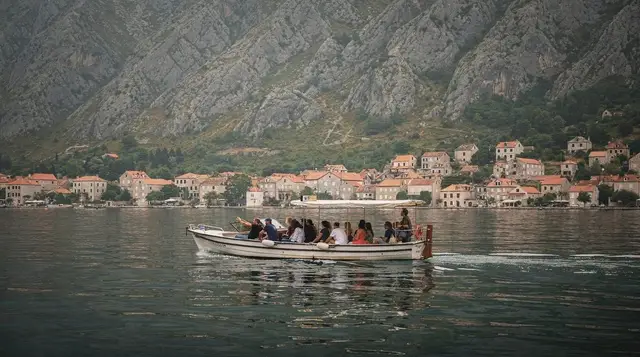
A guided day trip from Kotor that pairs old town Bar with Ada Bojana takes the driving decision off your hands and is worth considering for exactly that reason: someone else deals with the coast-road traffic and the parking, and you get a fixed itinerary instead of an open-ended afternoon.
a guided day trip pairing old town Bar with Ada BojanaPublic transport does not make this easier. Coastal buses connect Ulcinj and Bar reasonably frequently, but the last few kilometres onto the island are not well covered, so travellers without a car generally rely on a transfer, a taxi negotiated in advance, or one of the organised tours. See our broader notes on getting around Montenegro without a car if you are trying to plan the whole trip around public transport and transfers.
Sand where everywhere else is pebble
The single biggest reason people bother with the drive is the sand. Almost the entire Bay of Kotor and most of the coast down to Petrovac is pebble, shingle or bare rock, a direct result of the ria geology: steep limestone slopes plunging into deep, narrow water rather than a river delta depositing fine sediment. Ada Bojana and its neighbour Velika Plaza, a straight run of roughly twelve kilometres of sand immediately to the north, are the exception. If you have spent a week picking your way over stones at Mogren or Jaz, the difference underfoot is immediate.
The sand comes with dunes, low scrub and reed beds rather than a manicured promenade. Development is light: some beach bars and simple sun-lounger concessions, a scatter of huts, and long stretches where there is no infrastructure at all. That is deliberate as much as it is neglect; conservation designations around the delta have kept large-scale hotel building off the island, unlike the seafront at Bečići or Rafailovići.
For a fuller picture of how Montenegro’s beaches split between sand and shingle before you commit to the drive, see our comparison of pebble versus sand beaches along the whole coast.
The naturist beach, and what is and is not naturist
Ada Bojana’s reputation as a naturist destination goes back to the Yugoslav era, when the island was developed as an organised FKK (Freikörperkultur, “free body culture”) resort, drawing visitors from across Europe long before mass beach tourism reached the rest of the Montenegrin coast. That history still shapes the place: a designated naturist stretch remains active on the island, with its own facilities and a loyal, largely returning clientele.
It is not the whole island, and it is certainly not the whole area. Velika Plaza, the long sand beach just north of Ada Bojana, is predominantly a textile beach used by ordinary families, and the two should not be confused when you are planning where to set up for the day. Entrances are signposted, but ask locally or check current maps before you settle in if it matters to you which section you are on.
Wind, kitesurfing and windsurfing
The open exposure of this stretch of coast, combined with consistent afternoon winds funnelled down from the interior, has made the Ulcinj–Ada Bojana area one of the more established windsurfing and kitesurfing spots in the eastern Adriatic. Conditions are generally more reliable here than anywhere in the sheltered bay around Kotor, where the surrounding mountains block most of the wind. If watersports are the point of the detour rather than just lying on sand, read our dedicated windsurfing in Ulcinj guide for the specifics on schools, seasons and rental costs before you go.
Fish restaurants on stilts
One of the more distinctive things to do here has nothing to do with the beach itself: eating at one of the small restaurants built on wooden platforms over the river channel, reached on foot along a boardwalk or by a short boat crossing. These grew out of the same fishing tradition that shaped the island, and they still serve what comes out of the Bojana and the sea at its mouth: grilled mullet, eel, sea bass and mixed fish platters, usually simply prepared and priced closer to a working fishing village than a tourist strip on the main coast road. As with fish restaurants anywhere, choose one with people in it over one that is empty, and expect the day’s catch to determine the menu more than a fixed printed list.
Boat trips on the delta
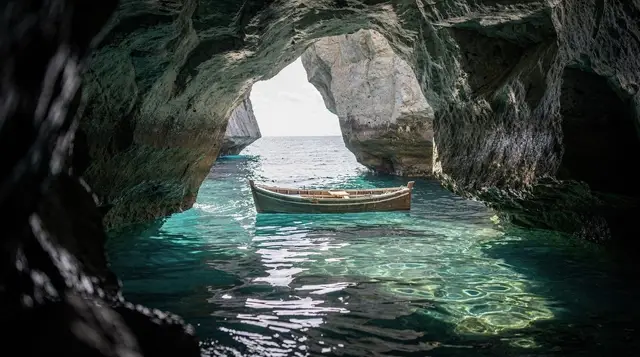
The Bojana delta is a wetland of real ecological interest, not just a beach backdrop. Reed beds, sandbanks and the mixing of fresh and salt water support a wide range of birdlife, and short boat trips run out from the settlement to explore the channels, sometimes billed locally as an “Amazon of Europe” style trip through the delta’s backwaters.
a boat trip through the Bojana delta’s channelsFor visitors specifically interested in the birdlife rather than the beach, a dedicated guided outing is a better use of time than hoping to spot something interesting from a sunbed.
a guided birdwatching outingAda Bojana or Velika Plaza
Most visitors staying nearby end up choosing between the two rather than trying to cover both properly in one day.
| Ada Bojana | Velika Plaza | |
|---|---|---|
| Character | Naturist section plus quieter, wilder stretches | Long, mostly textile family beach |
| Length | Small island, short beach frontage | Roughly 12 km of continuous sand |
| Facilities | Sparse: a handful of beach bars, huts, stilt restaurants | More sunbed concessions and beach clubs, especially near Ulcinj end |
| Best for | Naturist swimming, a genuinely different feel, birdwatching | Watersports, families, simply a lot of open sand |
| Crowds | Moderate even in August | Busier near access points, empty stretches further along |
Practicalities: parking, timing, facilities
Parking is informal rather than a managed car park with fixed pricing; expect gravel or sand pull-offs near the settlement and the more developed beach access points, tighter in peak season. There is no single admission fee for the beach as a whole — sections with sunbeds and umbrellas charge for those in the usual way, while the open sand and naturist areas are free to use once you have parked and walked in.
Facilities thin out the further you get from the settlement: toilets and showers exist near the beach bars, but do not expect them on the quieter dune stretches. Bring water, sun protection and cash, since card acceptance at the smaller huts and restaurants is inconsistent this far from the main tourist circuit.
Money and connectivity work the same way here as everywhere else in the country; if you have not already sorted a SIM or checked where cash machines are reliable outside the bay, our general notes on money and ATMs in Montenegro cover the practical side.
When to go
The same broad season applies here as to the rest of the Montenegrin coast: swimmable water roughly June to October, warmest in August, still comfortable into September. Given how far this island sits from Kotor, though, the calculation shifts a little more toward whether the whole southern stretch of coast fits your trip, rather than picking one day for the detour. Late May to mid-June and September carry the same advantages seen everywhere else on this coast — fewer people, lower prices, still-warm water — with the added benefit that the coast road through Budva and Bar is far less congested than in the peak of July and August, which matters more here than for a short hop within the bay.
Making it part of a longer trip, not a rushed day out
Given the driving time, Ada Bojana works best folded into a wider plan rather than bolted onto a Kotor-based itinerary as an afternoon extra. Two versions of that plan turn up most often. The first is a night or two based in Ulcinj or Bar partway through a longer Montenegro trip, using Ada Bojana, Velika Plaza and the old town at Stari Bar as the reason to be down there at all — our Stari Bar ruins guide covers the other half of that stop.
The second is treating it as one stage of a longer coastal loop that continues toward Shkodër and northern Albania, where the geography and the Bojana’s Albanian bank connect naturally to what you are seeing on the Montenegrin side.
Either way, weigh it against the rest of what a trip based around Kotor can realistically fit in. Our guide to how many days to spend in Kotor and the bay and the broader best beaches near Kotor roundup are worth reading before committing a full day to a five-hour round trip, and the beach and mountains week itinerary shows one way to sequence a longer stay so a stop this far south does not feel like a detour at all, just one stage of the route.
If a hire car and a full day of driving is not what you had planned for this stretch of the trip, a fixed guided itinerary removes the guesswork over parking, border-town traffic and where exactly to stop.
a guided day trip from Kotor covering Bar and Ada BojanaBeach & swimming tours on GetYourGuide
Verified deep-linked GetYourGuide tours. Book through these links and we earn a small commission at no cost to you.
GetYourGuide does not provide a product photo for this activity — the image shows the meeting point, photographed by us.