Canyoning in Montenegro: the Durmitor guide
What is canyoning in Montenegro and where does it happen?
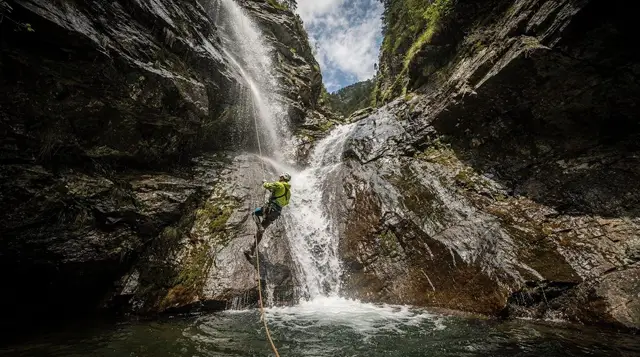
Canyoning here means abseiling and jumping through narrow limestone gorges around Durmitor, mainly the Nevidio and Mrtvica canyons, wearing a wetsuit for water that stays cold into August. Trips run as guided half-days from Zabljak or Pluzine, not as a Kotor day trip, and require a certified guide because flash floods can close a canyon within an hour.
Where canyoning actually happens in Montenegro
Canyoning is not a Kotor activity in the way a bay boat tour or a walk up to San Giovanni fortress is. It happens around the Durmitor massif, in narrow limestone gorges cut by glacial-fed rivers, and the closest bases for it are Zabljak and, for the Nevidio canyon specifically, the smaller town of Pluzine to the west. If your trip is centred on Kotor, this is a Durmitor excursion, not a half-day add-on you can slot in without moving your base.
The two canyons operators run trips on are Nevidio, near Savnik, and Mrtvica, closer to Kolasin. Both sit within a couple of hours of the Black Lake and the Tara Canyon, which is why most visitors treat canyoning as one piece of a Durmitor stopover rather than a standalone trip from the coast.
Nevidio: Montenegro’s best-known canyon
Nevidio means “the unseen” or “the invisible one” in the local dialect, and the name reflects how enclosed the gorge is — in places the walls close in to a couple of metres apart, and the sky disappears. It is the flagship canyoning route in the country: a genuine slot canyon with mandatory swims through cold pools, a series of abseils down wet rock, and jumps that operators size to around 6 to 8 metres depending on the pool below.
A typical Nevidio trip runs four to five hours from meeting point back to meeting point, of which two to three hours are inside the canyon itself. Groups are kept small — usually six to ten people per guide — because the terrain does not allow for a large party to move quickly, and a bottleneck at an abseil point is exactly the situation guides try to avoid if weather turns.
This Nevidio canyoning trip is the standard way to book the route with a certified local guide, gear included.
Mrtvica and the gentler options
Mrtvica canyon, nearer Kolasin, is the usual recommendation for a first canyoning trip or a mixed-ability group. The obstacles are shorter, the jumps lower, and the overall pace less demanding, though it still involves swimming, scrambling and at least one abseil. Some operators pitch it explicitly as family-friendly for older children and confident swimmers, which Nevidio is not.
A family-oriented canyoning route near Rikavac and Medurecki follows this gentler model, with shorter obstacle sections suited to teenagers and less-experienced adults.
If you would rather sample more than one canyon on the same trip, a tour covering several of the country’s canyons strings together shorter sections at more than one site instead of committing the whole day to Nevidio alone. It’s a reasonable compromise if you want the canyoning experience without the full physical and time commitment of Nevidio.
Why it is more physical than rafting
It’s worth being blunt about this because operators are not always upfront about it when selling both activities side by side. Rafting on the Tara Canyon is mostly sitting in an inflatable boat, paddling on command and floating between rapids — accessible to most reasonably healthy adults with no particular fitness. Canyoning is a different order of effort: you are climbing over wet, uneven rock, hauling yourself out of deep pools without a rope in places, abseiling under your own control on a harness, and swimming repeated stretches, some against current, for two to three continuous hours.
Expect sore forearms, calves and shoulders the next day even if you go to the gym regularly. If your itinerary already includes the Black Lake circuit or a day of mountain biking around Durmitor, think about spacing canyoning apart from those rather than stacking three physically demanding days back to back.
| Activity | Physical demand | Typical duration | Water contact |
|---|---|---|---|
| Canyoning (Nevidio) | High | 4–5 hrs door to door | Constant, cold, swimming required |
| Canyoning (Mrtvica) | Moderate | 3–4 hrs door to door | Frequent, shorter swims |
| Tara rafting (half-day) | Low to moderate | 3–4 hrs door to door | Splashes, seated in raft |
| Hiking to Black Lake | Low | 1–2 hrs | None |
Why a certified guide is not optional
Durmitor’s canyons sit below a large, steep limestone catchment, and rain that falls well upstream can raise water levels in a narrow gorge faster than anyone inside it can react. This is the central safety issue with canyoning here: it is not the jumps or the abseils that cause the serious incidents on record in Nevidio, it is unguided or under-supervised groups caught by a rise in water they had no way to see coming from inside the walls.
Licensed operators check the forecast and river gauges before every departure and will cancel or reroute a trip if conditions look unsafe, even on a day that looks clear from Zabljak. Do not attempt Nevidio or Mrtvica independently, and be wary of any operator who cannot show current certification — ask directly if it is not obvious from their listing. Wetsuits, helmets and harnesses should be included as standard; if a company is not supplying full technical gear, that is a red flag, not a discount.
Season, water temperature and what to pack
Trips run roughly June to September, once the spring snowmelt has eased enough for safe passage — early in the season the canyons can simply be running too high to enter. Even at the height of summer the water stays cold, fed by snowmelt and shaded gorge walls, which is why every operator issues a full wetsuit rather than leaving it optional.
Bring closed-toe shoes you don’t mind getting soaked — trainers work, sandals do not, since you need them to stay on through jumps and scrambles. Wear a swimsuit underneath your regular clothes, and bring a full change of clothes plus a towel for the drive back. Cash covers anything not included, such as photo packages some operators sell at the end of the trip. For the wider packing list for a Montenegro trip beyond canyoning gear, see the what to pack guide.
Getting there from Kotor
This is the part that catches people out: Kotor to Zabljak or Pluzine is roughly three to three and a half hours by car, mostly on mountain roads, so a canyoning trip is not a same-day round trip from the coast in any practical sense. Most visitors either base themselves around Zabljak for a night or two, or join canyoning as part of a longer loop through Durmitor National Park that also takes in the Black Lake, Djurdjevica Tara Bridge and possibly Kolasin on the way back toward the coast.
If you’re driving yourself, check the car rental guide before committing — a small hire car is fine for the main routes, but some approach roads to canyon meeting points are unpaved. If you’d rather not manage the logistics, a combined Black Lake, Tara Canyon and bridge day trip covers the sightseeing side of a Durmitor visit with transport included, which some travellers pair with a separate, dedicated canyoning booking rather than trying to combine both in one day.
For planning how many days a proper Durmitor stopover needs alongside the coast, see the guide on how many days to spend in the Kotor and Bay area, or the national parks grand tour itinerary if you want Durmitor built into a longer loop.
What a morning in the canyon feels like
Most trips start the same way: you meet the guide, try on a wetsuit, helmet and harness, and get a short briefing on hand signals, how to position your body on a jump and what to do if someone slips. Take that briefing seriously even if it feels repetitive. Inside a slot canyon you will not always hear the guide over the sound of water, so the signals are what keep the group moving together.
The first obstacles are usually the easiest, and good guides use them to gauge the group. How people handle the first small jump or the first short abseil tells the guide who needs a steadier hand later on. If you are nervous, say so at the start rather than at the lip of a drop. Guides would much rather adjust the order of the group or offer a lower alternative than coax someone off a ledge they are not ready for.
Between obstacles there is a lot of walking, wading and scrambling, and this is where the cold gets to you. Keep moving, stay close to the person ahead of you and drink what you are offered at the exit. The sensation of dropping into a deep, clear pool in a narrow gorge, with the walls rising on both sides, is what people remember afterwards, and it is the reason the effort feels worth it.
Choosing between the routes and the operators
The simplest way to choose is to start with who is in your group. For fit adults who are comfortable in water and want the full experience, Nevidio is the one that justifies the trip to the mountains. For mixed groups, teenagers or anyone anxious about heights, the gentler routes described above are the better call, and nobody in the group will feel they got the lesser trip.
Look at what a listing actually states rather than at the photographs. A serious operator names the canyon, the group size, the equipment supplied and the cancellation policy for bad weather. If a booking page is vague on any of these, treat it as a reason to look elsewhere. The four bookable options linked in this guide all go through the same booking platform, so you can compare the descriptions side by side before you commit, and read the cancellation terms before paying.
Book ahead in July and August, when the Durmitor region is at its busiest, and keep a spare day in your schedule. A canyon closed for high water means a trip moved to another day, and a rigid itinerary turns that into a lost activity instead of a minor reshuffle. If you are weighing the region as a whole, the Durmitor National Park guide shows what else is worth staying for, and the Lake Skadar versus Durmitor comparison helps if you are still deciding between the lake and the mountains.
Building canyoning into a Durmitor stay
Because the drive from the coast is long, the sensible way to do this is to treat canyoning as the anchor of a mountain stopover. Put the canyon on the first full day you are in the area, while you are fresh and while there is still room in the schedule if the weather forces a postponement. Leave the gentler activities for afterwards: a slow walk around the Black Lake, a viewpoint stop or a meal in Zabljak suit tired legs far better than another demanding outing.
A day of rafting on the Tara pairs naturally with canyoning, since both are water activities and share the same region, but they are different enough that doing both in one trip feels like variety rather than repetition. The Tara Canyon itself is worth seeing from above as well as from the river, and the zipline over the Tara bridge offers a very different angle on the same landscape for those who still have energy.
If you are travelling without a car, the logistics are harder but not impossible. The guide to getting around Montenegro without a car and the bus guide explain what is realistic, and a booked excursion with transport is often the least stressful way to reach the mountains from the coast.
Looking after yourself before and after
Eat a proper meal a couple of hours before the trip, but nothing heavy. Hydrate even though you will be surrounded by water, because cold exertion hides thirst. Remove jewellery and anything you would hate to lose, and secure glasses with a strap or leave them in the dry bag if you can manage without them. Tell the guide about any injury, medical condition or medication in advance: knees, shoulders and backs take real strain on rocky ground.
Afterwards, change out of the wet gear quickly and put on something warm, even on a hot afternoon, because the chill arrives once you stop moving. Plan something undemanding for the rest of the day. If you need to know where to find help for minor injuries or what to carry in a small first-aid kit, the health and pharmacies guide covers the basics, and the travel budget guide is useful for fitting an activity day into your overall spending.
When you head back toward the coast, the Njegusi village stop on the old mountain route is a pleasant way to ease back into the Bay of Kotor, and the Lovcen National Park road offers views that reward a slow drive after a day of effort.
Practical summary
- Where: Nevidio canyon (near Savnik) and Mrtvica canyon (near Kolasin), both in the Durmitor region.
- Base: Zabljak or Pluzine, not Kotor — allow 3 to 3.5 hours’ drive from the coast.
- Season: roughly June to September; closed after heavy rain or high snowmelt.
- Duration: 3 to 5 hours door to door, 2 to 3 hours inside the canyon.
- Fitness: swimming ability required; more demanding than rafting, comparable to a strenuous hike.
- Guiding: a certified guide is not optional given flash-flood risk — never attempt independently.
- Cost: roughly 45 to 75 EUR per person for a half-day, gear included.
Adventure & outdoor activities on GetYourGuide
Verified deep-linked GetYourGuide tours. Book through these links and we earn a small commission at no cost to you.
GetYourGuide does not provide a product photo for this activity — the image shows the meeting point, photographed by us.