Mountain biking Durmitor: marked trails and glacial lakes
Can you mountain bike around Durmitor National Park?
Yes. Durmitor has a network of marked mountain bike trails linking Black Lake, smaller glacial lakes and alpine pastures between roughly 1,400m and 1,800m altitude. The main season runs June to September, since snow can linger on higher routes into late spring. Bikes, including e-bikes, can be rented in Žabljak rather than carried up from the coast.
Why Durmitor works for mountain biking
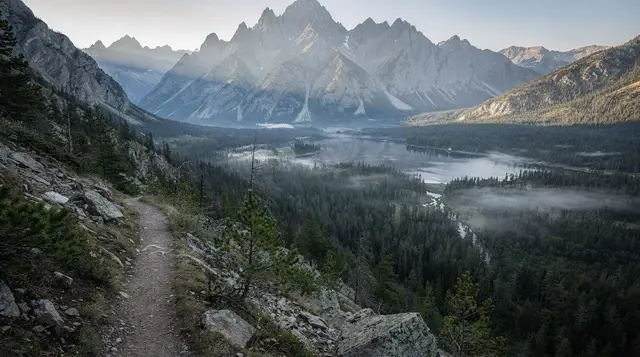
Durmitor National Park sits at 3 to 3.5 hours from Kotor, which rules it out as a day trip and turns it into its own base for a night or two, usually in Žabljak, the small town at the park’s edge. What makes the area worth the drive for cyclists specifically is the terrain: a plateau of glacial lakes and alpine pastures sitting between roughly 1,400m and 1,800m, ringed by peaks that push past 2,500m, with dirt tracks and old shepherd paths connecting most of it. It is a different kind of riding to anything near the coast, where the terrain is either flat coastal road or steep hiking ground with no realistic cycling option.
The core of the network radiates from Black Lake (Crno jezero), a short, mostly flat loop that most visitors do on foot but that also works as an easy warm-up ride or a gentle option for anyone travelling with less confident cyclists. From there, marked routes climb toward Sedlo pass, the smaller Škrka lakes, and the high pastures used for summer grazing, gaining several hundred metres of altitude over loose rock and packed earth. These are proper mountain bike routes, not gravel-road cruising, and they reward a bike with suspension and a rider who has done some off-road cycling before.
None of this is a manicured bike park. Trails are shared with hikers, shepherds moving livestock and the occasional 4x4, and waymarking follows the same system as the park’s hiking network: painted marks and junction signs, adequate but not dense. A GPS track downloaded in advance, or at minimum an offline map on a phone, is worth having, since some pasture junctions are easy to miss when several faint tracks converge.
Renting a bike in Žabljak instead of bringing one
The practical decision most visitors face first is whether to bring a bike from the coast or rent on arrival. Bringing one from Kotor, Budva or Tivat means strapping it to or into a car for the drive over Njeguši and the old road, or via the Sozina tunnel and Podgorica, both routes running 3 to 3.5 hours each way on roads that are already narrow and winding without the extra width of a bike rack.
Renting in Žabljak avoids all of that. The town has a handful of shops offering standard mountain bikes and, increasingly, e-bikes, both aimed squarely at riders who want to tackle the altitude gain toward the passes without training for it in advance. A Durmitor e-bike rental in Žabljak is worth considering specifically for the climbs above Black Lake; the vertical gain toward Sedlo or the higher pastures is real, and assisted pedalling turns a demanding half-day into a manageable one, particularly for anyone not used to riding at 1,600m or above.
Standard mountain bike hire is cheaper and fine for the Black Lake loop and gentler pasture tracks, but worth pairing with a look at your own fitness and the day’s planned altitude gain before committing. Shops in Žabljak can generally advise on which loop suits which bike, since they know the current state of the trails better than any guidebook.
What the riding actually looks like
Three tiers of route cover most of what visitors ride:
| Route type | Distance | Elevation | Suited to |
|---|---|---|---|
| Black Lake loop | 3.5–4 km | Minimal, mostly flat | Any bike, families, first-timers |
| Pasture tracks toward Sedlo area | 10–15 km round trip | 300–500m gain | Mountain bike, moderate fitness |
| Higher passes and Škrka lakes approach | 15–25 km round trip | 500–800m gain | Mountain bike or e-bike, real off-road experience |
These figures vary by exact route chosen and are not fixed park distances, but they give a sense of the jump in effort between the lake loop and anything heading toward the passes. Surfaces shift constantly: packed earth through forest, loose limestone scree on exposed sections, short stretches of paved or gravel access road near Žabljak itself. A bike with at least front suspension handles this far better than a hybrid, which is one reason rental shops steer casual riders toward the flatter loops and keep the mountain bikes for people asking about the passes specifically.
Weather changes fast at this altitude. A clear morning in Žabljak can turn to cloud and wind on an exposed pass by early afternoon, and afternoon storms are common in summer. Starting early, checking the forecast the night before, and carrying a windproof layer even in August are all worth doing rather than assuming the valley’s weather holds up on the ridges.
Season and snow
June to September is the window most riders should plan around. Snow can sit on the higher pastures and around the passes into late May and occasionally early June after a heavy winter, which closes off the more ambitious routes even when Žabljak itself is snow-free and green. Early September tends to be the most comfortable month for effort at altitude: air is cooler than July or August, the worst of the crowds around Black Lake has thinned, and the pastures are still accessible before any early autumn snow.
July and August bring the most reliable weather but also the most foot traffic on the Black Lake loop, since this is peak season for Durmitor National Park generally and for Žabljak as a base. It is rarely crowded enough to matter on the higher pasture tracks, where hikers and cyclists thin out fast once the terrain steepens.
Combining a ride with the rest of Durmitor
Most visitors are not in Žabljak purely for mountain biking. The Black Lake area also anchors hiking routes, and the wider park includes the Tara Canyon rim, one of the deepest gorges in Europe, and rafting on the Tara river itself lower down. A day given over to biking pairs naturally with a separate day for rafting: a multi-day Tara river rafting trip with meals included covers the canyon from the water rather than the rim, and works well as a second activity bracketing a bike day rather than competing with it.
For a broader look at the park’s climbing and high-altitude routes beyond cycling, a guided via ferrata route through Durmitor National Park covers exposed rock sections with fixed cable protection, a different kind of exertion to riding but drawing on the same alpine terrain. Neither of these substitutes for the biking itself, but together they make a strong case for staying two or three nights rather than rushing through as a single overnight from the coast.
Anyone weighing whether Durmitor’s altitude and effort level suit their trip against a gentler alternative should look at Biogradska Gora near Kolašin, a smaller national park built around its own glacial lake with flatter forest trails; a Kolašin day tour through Biogradska Gora and the Bjelasica mountains gives a lower-effort comparison point without the multi-hour drive back to altitude that a return trip to Durmitor requires.
Choosing a pace and planning a day in the saddle
The most common mistake on a first ride here is to treat the plateau like a coastal outing, with a late start and no margin. Altitude makes every climb feel longer than the map suggests, and the legs that cope easily with a hilly ride near the sea can tire quickly once the track leaves the lake and begins to rise. A sensible day starts early, keeps the hardest climb for the cooler morning hours, and leaves the afternoon for a slow return, a swim-free picnic beside a lake or a coffee back in town.
Plan the route as a sequence of options rather than a single commitment. Begin with the easy loop around the lake to check the bike, the brakes and your own breathing. If everything feels good, continue toward the pasture tracks. If the weather looks unsettled or the group is tiring, the lake loop remains a pleasant place to finish. This staged approach suits mixed groups especially well, because the stronger riders can add a climb while others stay on the flat, and everyone meets again at the water.
Take food seriously. Between Žabljak and the high pastures there is little in the way of services, so a packed lunch, plenty of water and something sweet for the final climb are more useful than any piece of equipment. Riders who have spent a few days at altitude usually find the effort easier, so if your schedule allows two or three nights in the area, put the longest ride on the second or third day rather than the first.
Riding etiquette on shared tracks
The trails here are working landscape as well as recreation. Shepherds still move animals across the pastures in summer, and a herd on a narrow track has priority over any cyclist. Slow down well before a bend, stop completely when animals are on the path, and pass only when the person guiding them signals that it is fine. Dogs that accompany flocks can be protective, so keep a calm distance and do not ride straight at them.
Walkers deserve the same courtesy. The same paths serve the hiking routes around Black Lake, and a bell or a friendly greeting as you approach from behind avoids startled encounters. Descents on loose rock are where most accidents happen, so brake early, keep speed modest on blind corners and remember that help is far away. Leave gates as you found them, take your rubbish back to town and stay on existing tracks so that the pastures recover from one season to the next.
Fitting a ride into a longer Montenegro trip
Because Durmitor is far from the coast, it rewards a deliberate place in the itinerary rather than a rushed visit. Travellers who base themselves in the bay can fold it into a loop of the interior, as outlined in the national parks grand tour, or pair mountain days with seaside days as in the beach and mountains week. Both show how a few nights in the highlands balance a coastal stay without turning the whole holiday into a drive.
If you are still deciding between the lake country and the high plateau, the comparison of Lake Skadar and Durmitor helps weigh the two, and the general Durmitor National Park guide covers the park beyond cycling. Travellers without a car should read the advice on getting around Montenegro without a car, since reaching the mountains by public transport takes more planning than reaching the coast. Those driving themselves will find the practical points in the car rental guide useful, and anyone watching the weather and crowds across the year can check Montenegro by season.
After the ride
A day at altitude finishes best without a rush. Back in Žabljak, there is time to stretch, wash off the dust and sit down to a hearty mountain meal, which in this part of the country tends to mean dairy, grilled meat and bread rather than the seafood of the bay. If you want to taste what the highlands share with the coast, the guides to Njeguši smoked ham and cheese and to Montenegrin rakija are good starting points for what to look for on a menu.
Check the bike for damage before returning it, mention any problem honestly, and ask the shop about conditions for tomorrow. Local advice is the most reliable source for which tracks are dry, which are muddy and which are best left for another day. Many riders find that the second day on the same bike, with the saddle adjusted and the route better understood, is the most enjoyable of the trip.
Getting there and getting around
The drive from Kotor runs 3 to 3.5 hours by either the coastal-to-interior route via Njeguši and Cetinje, or via the Sozina tunnel toward Podgorica and then north, both converging on mountain roads that are narrow, exposed in places and best avoided after dark or in poor weather. Public transport to Žabljak is limited and not built around cyclists carrying equipment, which is a further argument for renting locally rather than trying to bring a bike by bus.
Once in Žabljak, the town itself is walkable, and rental shops are generally a short walk from the main accommodation cluster. Bikes are typically rented by the hour, half-day or full day, and shops can advise on route conditions that change through the season, including any recent trail damage from storms or livestock movement that a fixed map cannot capture.
Practicalities for a mountain biking trip to Durmitor
| Item | Detail |
|---|---|
| Season | June to September; early September often best |
| Base town | Žabljak |
| Drive from Kotor | 3–3.5 hours |
| Easiest route | Black Lake loop, 3.5–4 km, flat |
| Hardest common routes | Sedlo pass / Škrka lakes approaches, 500–800m gain |
| Bike rental | Standard and e-bikes available in Žabljak |
| Park entry | Ticketed, covers hikers and cyclists |
| Key hazard | Fast-changing weather at altitude, loose rock on descents |
A national park entry ticket applies to cyclists using the marked network, not just cars or hikers at the main gates, and is generally sold at access points or in Žabljak itself. Carrying cash for this, and for any bike rental deposit, is worth planning for, since card payment is not guaranteed to be reliable this far from the coast.
For anyone building a longer loop through the interior rather than a single overnight, Durmitor connects onward toward Kolašin and Pljevlja, letting a mountain biking stop become one stage of a wider mountains-and-national-parks route through Montenegro’s interior rather than an isolated detour from the coast.
Mountain excursions on GetYourGuide
Verified deep-linked GetYourGuide tours. Book through these links and we earn a small commission at no cost to you.
GetYourGuide does not provide a product photo for this activity — the image shows the meeting point, photographed by us.