Albania day trip from Kotor: Shkodër and Rozafa Fortress
Can you do a day trip to Albania from Kotor?
Yes. Shkodër is the realistic target, about two and a half hours from Kotor via Ulcinj and the border south of it. It has enough for a half-day visit: Rozafa Fortress, the old bazaar and a noticeably different atmosphere from the Montenegrin coast. A hire car needs specific cross-border paperwork, which is why many visitors book a tour instead.
Most people basing themselves in Kotor treat Dubrovnik and Mostar as the obvious cross-border trips and never look south. That’s a gap worth closing, because Albania starts less than an hour past Ulcinj, and Shkodër, its fourth-largest city, is close enough for a genuine day trip. It is also different enough from the Montenegrin coast in ten minutes flat — the currency changes, the driving style changes, the call to prayer is audible from parts of the old town — that it doesn’t feel like an extension of the same holiday.
Why Shkodër, not Tirana
Tirana is roughly four hours from Kotor each way, which turns a day trip into an eight-hour round trip before you’ve spent any time in the city itself. Shkodër is the sensible alternative: close enough to leave after breakfast and be back for a late dinner in Kotor old town, with three to four usable hours on the ground.
It’s also a legitimate destination in its own right, not a consolation prize. Shkodër was Albania’s cultural and commercial centre for much of the Ottoman and early independence periods, has one of the country’s largest lakes on its doorstep, and sits under a fortress that predates the Venetians. The old bazaar street, Kolë Idromeno, has been restored with the kind of café culture you’d expect from a university city — Shkodër has a long-established art and music school — rather than a museum-piece old town.
There is also a practical reason to prefer Shkodër if this is your first time leaving Montenegro by land. The route is straightforward, the town is compact enough to cover on foot, and nothing in the plan depends on a tight booking slot. If the border takes longer than you hoped, you lose a little lunch time rather than a pre-paid entry. That flexibility is worth more than it sounds on a day when you are already trusting a queue you cannot see.
Who this trip suits, and who should skip it
The Albania day trip works best for travellers who have already seen the Bay and want contrast. If you have walked the walls, done the old town walking route and eaten well, a day in a different country resets the holiday. It is a good fit for curious adults, for anyone interested in history that sits outside the Venetian story, and for people who enjoy a slightly rougher, less polished city.
It suits some travellers less well. Anyone who dislikes long sitting days in a vehicle, or who is travelling with very young children, may find the combination of drive and border queue tiring. The Kotor with kids guide lists easier days out nearer the Bay. If your time in the region is short, Kotor in one day is a better use of a single free day than a border run.
Getting there: route, timing, the border itself
The drive from Kotor runs along the coast through Budva and Bar to Ulcinj, then inland to the border crossing south of the town, and on to Shkodër. Reckon on two hours and thirty minutes of driving time for the roughly 150 km, before any border delay.
| Stage | Distance / time |
|---|---|
| Kotor to Ulcinj | 2 h, ~110 km |
| Ulcinj to the border | 15–20 min |
| Border crossing | 15–60+ min, seasonal |
| Border to Shkodër | 30–40 min |
The border crossing itself is a full international border, not the semi-formality some visitors expect between two Balkan neighbours. Both directions mean a passport check, and Albania is outside the EU, outside Schengen and outside the EU customs area, exactly as Montenegro is — so none of the queue-jump lanes or automated gates you might have used at an EU external border apply here. Early morning crossings, ideally before 9am, are consistently faster than midday ones. July and August add real delay, especially on weekends, when traffic from Kosovo and North Macedonia also funnels through on the way to the Albanian coast.
A sensible way to approach the day is to treat the border as a fixed cost you pay twice. Bring water and a snack, keep your passport and any car documents together in one easy-to-reach place, and avoid planning anything in Shkodër that cannot move. Phones can be switched to airplane mode or roaming turned off during the queue, so a surprise charge does not arrive while you are waiting. Drivers should share the plan with whoever is in the car, so everyone knows who holds which document when an officer leans in.
On the way back, the same logic applies in reverse. Leave Shkodër with a margin rather than at the last possible moment, because the return queue is the part of the day most likely to run long. Reading the Montenegro by season guide helps you judge how busy the roads and crossings are likely to be at the time of year you travel.
The paperwork a hire car actually needs
This is the part that catches people out, because it’s genuinely different from the Dubrovnik border run most Kotor visitors are used to. Croatia is in the EU; a standard Montenegrin rental agreement usually covers it without a second thought. Albania is a separate country outside that framework, and Montenegrin rental agencies handle it inconsistently.
Before you commit to a self-drive Albania day trip, confirm three things with the rental desk in writing, not verbally:
- Cross-border permission. Some contracts exclude Albania by default, or restrict it to certain vehicle classes. Ask specifically about Albania, not “neighbouring countries.”
- Green card insurance. You need a green card (an international motor insurance certificate) that lists Albania among the covered countries. Without it, you may be uninsured the moment you cross, whatever the rental contract says about permission.
- A cross-border authorisation letter. Border officials on the Albanian side sometimes ask for a document proving the car isn’t stolen and that you have the owner’s permission to take it out of Montenegro. Some agencies charge a small daily fee for this paperwork; budget for it rather than being surprised at the counter.
If any of this feels uncertain, or the agency can’t produce the documents same-day, it’s a real reason to book a guided tour instead rather than risk a refusal at the border with a car full of luggage and a return flight to think about.
Rozafa Fortress: the reason most people come
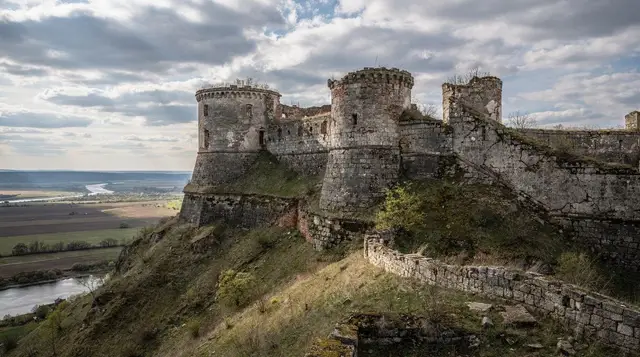
Rozafa sits on a rocky hill above the confluence of the Buna and Drin rivers, a couple of kilometres south of central Shkodër. The site has been fortified since Illyrian times, was rebuilt by the Venetians and later held by the Ottomans, and the surviving walls, cisterns and a small museum inside date mostly from those later periods rather than antiquity.
The climb up is short compared with San Giovanni above Kotor — a paved path rather than thirteen hundred uneven steps — and takes most visitors 15 to 20 minutes at an easy pace. The reward is one of the better viewpoints in the region: Lake Shkodër to the north, the braided river plain below, and on a clear day the mountains that separate Albania from Montenegro’s own interior. There’s a small entrance fee, payable in lek at the gate.
The fortress takes its name from a local legend about a woman named Rozafa, said to have been walled into the foundations to make the structure stand — a story locals will tell you unprompted if you ask, and one of the few pieces of Albanian folklore that travels well in translation.
Go up early in the visit if you can, while your legs are fresh and before the stone has soaked up the day’s heat. The walls offer little shade, so a hat and water are more useful than any guidebook. Take your time at the cisterns and the inner courtyards; they are where the layers of Illyrian, Venetian and Ottoman building are easiest to read. If you enjoyed the views from San Giovanni fortress, you will recognise the pleasure of seeing a whole landscape laid out from one stone vantage point, only here the water is a lake and two rivers instead of a bay.
The lake itself is worth a thought. Lake Shkodër is shared with Montenegro, and the Montenegrin shore is covered in the Lake Skadar boat tour guide and on the Lake Skadar destination page. Seeing the Albanian side from the fortress makes the other half of the same lake easier to picture, and it is a good reason to visit both in a single trip.
Shkodër old town: what to actually do with two hours
Beyond the fortress, Shkodër’s centre rewards an unhurried walk rather than a checklist. Kolë Idromeno Street, the pedestrianised core of the old town, is lined with Austro-Hungarian-era buildings now holding cafés and small shops, and it’s genuinely pleasant to sit with a coffee and watch a city that isn’t performing for tourists in the way Budva old town or Kotor’s cruise-day crowds sometimes are.
The Marubi National Museum of Photography, a short walk off the main street, holds one of the Balkans’ oldest photographic archives, built up by an Italian-Albanian family across three generations from the 1850s onward. It’s a small, well-curated museum and one of the better indoor options if the weather turns.
Shkodër’s Franciscan and Orthodox churches, several rebuilt after being closed or repurposed during the communist era, sit within a few minutes’ walk of the mosque near the bazaar — a visible reminder that Albania’s religious mix (majority Muslim, with significant Catholic and Orthodox communities) doesn’t map onto Montenegro’s at all. It’s one of the clearest signs, alongside the currency and the road signage, that you’ve actually left the country rather than driven to a further-flung corner of it.
What’s different from Montenegro, practically
A few things change the moment you cross, and it’s worth having them sorted before you’re standing at a till in Shkodër working it out.
| Montenegro (Kotor) | Albania (Shkodër) | |
|---|---|---|
| Currency | Euro | Lek (euro accepted in some tourist spots, poor rate) |
| EU/Schengen status | Neither | Neither |
| Passport needed | N/A at home | Yes, both directions |
| Time zone | CET/CEST | CET/CEST — no change |
| Typical driving style | Coastal, congested in season | More assertive; fewer road markings observed |
Withdraw or change some lek before relying on cards everywhere — small cafés, parking attendants and market stalls in Shkodër are cash-first in a way the Kotor waterfront generally isn’t any more. Mobile roaming from a Montenegrin SIM may or may not carry over depending on your provider; check before you cross if you’ll need maps or messaging on the road, and see the Montenegro SIM card guide for context on what to expect back on the Montenegrin side.
Sample shape of the day
A workable day starts with an early breakfast and a calm drive south, with the border as the main unknown. Once across, head straight for Rozafa while the light is good, then come down into town for lunch. After the meal, the bazaar street and the photography museum fill the afternoon without any rushing, and a final coffee gives you a buffer before the return drive. Aim to be on the road back with plenty of daylight, since the coastal stretch past Ulcinj is more pleasant when you can see it. If you want to break the return, the Ulcinj old town guide suggests a place to stop for the sunset and a drink before the final leg toward the Bay.
Combining Albania with other plans on the same day is not realistic. Our two countries in one day guide explains how to pair Croatian and Montenegrin stops, but adding a third country on top of that is asking for trouble. Keep Albania as the single headline of its day and give the next day to something slower, such as a lazy morning on one of the best beaches near Kotor.
Self-drive or a guided tour
a full-day guided trip from the coast to Shkodër removes the insurance and paperwork question entirely, since the operator’s vehicle is already cleared for the crossing, and most itineraries build in a guide who can explain Rozafa’s layered history on the spot rather than from a plaque. The trade-off is a fixed schedule and a shared vehicle, which matters less on a route where the border itself is the main variable in timing anyway.
For travellers who want more than an afternoon in Shkodër, a couple of operators run it as the gateway to Albania’s northern mountains rather than a standalone stop.
An overnight trip from Shkodër into Theth and the Albanian Alps turns the border crossing into the start of a genuine mountain excursion rather than a there-and-back day, and a longer version, a three-day Albanian Alps mountain itinerary out of Shkodër, is worth considering if you’re building a longer loop rather than staying anchored to Kotor. Neither of these makes sense as a single-day plan; they’re for travellers willing to sacrifice a night or two of their Montenegro base.
If Albania doesn’t end up appealing but you still want a full day out of Kotor with a border crossing and a different country’s food and architecture, a private day trip to Mostar and the Kravica waterfalls covers similar emotional ground — a genuinely different country, reached in a similar drive time — without the cross-border car paperwork, since it runs into Bosnia and Herzegovina via Croatia on an EU-adjacent route most rental companies handle without complication.
Whichever option you pick, decide before you travel rather than at the rental desk or on the coast road. A tour is the calmer choice for a first crossing, while self-driving rewards those who like control and have the documents sorted well in advance. Compare the cost of the cross-border paperwork against the tour price honestly, and remember that car rental in Montenegro varies a lot between agencies. If you would rather leave the driving to someone else on other days too, the Montenegro without a car guide shows what is possible by bus and organised transfer.
Is a day trip actually enough
Three to four hours in Shkodër is enough to climb Rozafa, walk the old bazaar and have a proper lunch — enough to say you’ve seen the country and its most accessible city, not enough to understand it. If the drive, the border and the paperwork have piqued more interest than they’ve used up, Shkodër also works as the first stop on a longer Albanian Alps loop through Theth and Valbona, which several Kotor-based operators run as multi-day add-ons rather than day trips. For a single day out from the Bay of Kotor, though, Shkodër and Rozafa Fortress are the realistic ceiling, and worth doing precisely because so few visitors staying in Kotor or Budva bother.
Before you go, it’s worth reading up on common tourist scams around Kotor and car rental in Montenegro generally — the cross-border insurance question above is the single biggest gap between a smooth Albania day trip and a stressful one, and it’s entirely avoidable with a five-minute conversation at the rental desk before you leave Tivat or Kotor.
Best day trips from Kotor on GetYourGuide
Verified deep-linked GetYourGuide tours. Book through these links and we earn a small commission at no cost to you.
GetYourGuide does not provide a product photo for this activity — the image shows the meeting point, photographed by us.